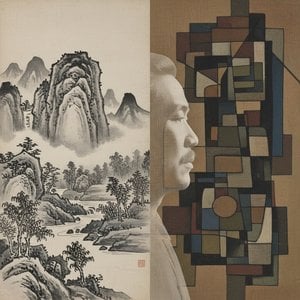
El Tejedor de Mitos y Memorias
Lee Yun-gi (1947–2010) ocupó un espacio excepcional en el paisaje cultural coreano, actuando como un puente entre las profundidades de la mitología antigua y las realidades viscerales de la existencia moderna. Nacido en Gunwi-si, Corea del Sur, su vida temprana fue moldeada por las complejas tensiones de una nación que navegaba su identidad de posguerra. Si bien la historia suele recordarlo como un titán de la literatura —un novelista galardonado y un prolífico traductor que llevó los intrincados laberintos de Umberto Eco a los lectores coreanos—, su alma artística buscó la expresión a través de un medio más táctil. Para Lee, las fronteras entre la palabra escrita y el lienzo pintado eran fluidas; ambos servían como recipientes para explorar las repercusiones psicológicas del conflicto, el desplazamiento y el poder perdurable de la conexión humana.
Su viaje creativo estuvo profundamente marcado por sus observaciones durante la guerra de Vietnam, una experiencia que dio origen a su debut literario en 1977, Hayan Hellikop. Este primer encuentro con las sombras de la guerra encendió una preocupación de por vida con los temas del trauma y la supervivencia. A medida que maduraba, sus horizontes intelectuales se expandieron mediante estudios formales en la Universidad Estatal de Michigan, donde se sumergió en la literatura comparada y los estudios religiosos. Este rigor académico le permitió dominar el arte de la traducción, llegando a publicar más de 150 obras que incluían el pesado peso simbólico de los mitos griegos y romanos. Esta profunda inmersión en los arquetipos clásicos proporcionó el vocabulario fundacional para su arte visual, permitiéndole infundir sus pinturas con un sentido de atemporalidad y verdad universal.
Textura, Simbolismo y la Narrativa Visual
En su transición desde la precisión de la traducción hacia la libertad expresiva de la pintura, Lee Yun-gi desarrolló un enfoque estilístico que trataba tanto de la sensación física como de la representación visual. Su obra se caracteriza por un uso notable de la textura, donde capas de pigmento se construyen sobre el lienzo para crear una profundidad palpable y escultórica. Esta técnica no se limita a representar un sujeto; invita al espectador a sentir el peso de la historia y la aspereza de la memoria. En piezas celebradas como Blue-eyed Owl, Lee utiliza el simbolismo aviar —un motivo recurrente en su obra— para evocar una sensación de sabiduría vigilante y la conexión etérea entre lo terrenal y lo divino.
La capacidad del artista para combinar elementos dispares es, quizás, su mayor logro. Sus pinturas a menudo reflejan la estructura de su prosa, utilizando variaciones sutiles en el color y un impasto pesado para impulsar una narrativa sin necesidad de una representación explícita. En series como la Migrant Bird Series, explora los temas conmovedores del desplazamiento y la búsqueda del hogar, reflejando los cambios sociopolíticos de la península coreana. A través de su uso de la luz y la sombra, Lee crea paisajes que se sienten tanto íntimamente personales como míticamente vastos, convirtiendo el lienzo en un espacio donde la lucha individual se encuentra con la experiencia humana colectiva.
Un Legado de Diálogo Intercultural
La importancia histórica de Lee Yun-gi reside en su papel como mediador cultural. Al traducir las complejidades del pensamiento occidental al vernáculo coreano, y posteriormente traducir esos mismos arquetipos a un lenguaje visual, fomentó un diálogo intercultural único. Su trabajo resistió el consuelo fácil de la descripción simple, optando en su lugar por un uso dinámico del diálogo —tanto literal en sus libros como metafórico en sus pinturas— para desafiar e involucrar a su audiencia. Abordó la vida con un sentido característico de optimismo e ingenio, negándose a sucumbir a la desesperación de la crueldad humana, eligiendo en cambio centrarse en la resolución del conflicto a través de la creatividad.
En última instancia, el legado de Lee Yun-gi es uno de profunda síntesis. Sigue siendo una figura significativa en el arte contemporáneo coreano porque logró fusionar con éxito la precisión analítica de un erudito con el poder emotivo de un narrador. La obra de su vida se erige como un testimonio de la idea de que, ya sea mediante la meticulosa traducción de un texto o la aplicación densa de pintura sobre un lienzo, el objetivo final del artista es descubrir las verdades universales que nos unen a todos a través del tiempo y la geografía.
Preguntas y respuestas
¿Dónde puedo ver todas las obras de Lee Yun-Gi?
Puede explorar todas las obras de Lee Yun-Gi en este sitio web desde la página de Todas las obras de arte del artista.
¿Puedo ordenar las obras de Lee Yun-Gi por color?
La página Índice de color organiza las obras de Lee Yun-Gi por color.
¿Dónde se pueden explorar las obras de Lee Yun-Gi agrupadas por palabras clave?
Explora las obras de Lee Yun-Gi mediante palabras clave en su página de Por palabras clave. Cada palabra clave agrupa las obras relacionadas.