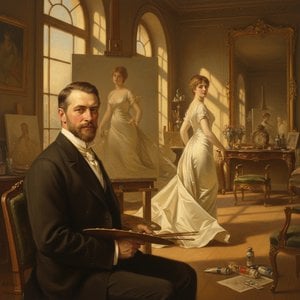
Un brillo fugaz entre la deuda y el declive
John Vanderbank (1694–1739) permanece como una figura envuelta tanto en la admiración como en el pesar dentro de los anales del retrato inglés. Nacido en el seno de una familia de tejedores de tapices hugonotes en Londres, sus primeros años estuvieron marcados por la exposición a tradiciones artísticas arraigadas en la Europa continental, una influencia formativa que moldearía su estilo distintivo. La implicación de su padre en la Soho Tapestry Weaving Factory le inculcó una comprensión del oficio y de las realidades comerciales, factores que finalmente contribuyeron a la compleja trayectoria de su carrera. Este legado de fina labor textil probablemente nutrió su agudo ojo para las texturas y los lujosos tejidos que más tarde representaría con tal maestría en sus pinturas al óleo.
Desde 1711 hasta 1720, Vanderbank perfeccionó sus habilidades bajo la tutela de Sir Godfrey Kneller en la Academia de James Thornhill en Great Queen Street, absorbiendo las técnicas del retrato clásico defendidas por el célebre escultor y pintor. Este periodo formativo consolidó su conexión con un floreciente entorno artístico, preparándolo para sus propios y ambiciosos proyectos. Cabe destacar que se asoció con Louis Cheron para establecer una academia en St Martin’s Lane, una empresa que, lamentablemente, fracasó debido a la inestabilidad financiera y obstaculizó la capacidad de Vanderbank para alcanzar su pleno potencial. A pesar de estos reveses estructurales, los cimientos establecidos por Kneller le proporcionaron un vocabulario técnico que le permitió navegar con éxito por la alta moda de las eras de Jorge I y Jorge II.
La maestría del carácter y la técnica
A pesar de las sombras proyectadas por sus luchas personales, Vanderbank poseía un talento innegable que imponía respeto entre sus contemporáneos. Su obra demostró una sensibilidad extraordinaria para capturar los matices psicológicos de sus sujetos, dando como resultado retratos imbuidos de carácter e inmediatez. A diferencia de los retratistas más rígidos o formulistas de su época, Vanderbank buscaba insuflar vida al modelo, utilizando un dibujo hábil y técnicas sutiles de sombreado —sello distintivo de la influencia de Kneller— para crear profundidad y presencia. Su capacidad para equilibrar la grandiosidad exigida por la aristocracia con un sentido genuino de la emoción humana lo convirtió en un nombre muy solicitado durante el apogeo de su reputación.
Más allá del ámbito del retrato formal, la producción artística de Vanderbank abarcó diversos medios y proyectos que hicieron gala de su versatilidad. Fue particularmente famoso por sus contribuciones a la ilustración de libros, dando vida a gigantes de la literatura a través de su pincel y su pluma. Sus obras más notables incluyen:
- Ilustraciones para el Don Quijote de Cervantes: donde capturó la esencia caprichosa y, a la vez, trágica del caballero.
- Representaciones relacionadas con Sir Isaac Newton: demostrando su capacidad para abordar temas de profundo peso intelectual.
Un legado trágico de intemperancia
La tragedia de la vida de Vanderbank reside en la brecha entre su inmenso potencial y su destino final. George Vertue, cronista de su época, comentó con fama que “solo la intemperancia impidió que Vanderbank fuera el más grande retratista de su generación”. Esta conmovedora observación resalta la ironía trágica de un artista prodigioso consumido por el exceso: un estilo de vida de extravagancia y falta de moderación que lo sumió en repetidas dificultades financieras. La misma pasión que probablemente alimentó su vitalidad creativa sirvió también como el motor de su perdición, conduciéndolo a una vida de deudas e inestabilidad.
Este ciclo de brillantez y declive culminó finalmente en una muerte prematura a la temprana edad de 45 años, causada por la tuberculosis. Su fallecimiento marcó el fin de una carrera que alguna vez prometió redefinir el arte inglés. Fue sepultado en la iglesia de Marylebone, dejando tras de sí un cuerpo de obra que sirve como testimonio de un talento que ardió con fuerza pero con brevedad. Hoy en día, sus retratos siguen siendo documentos históricos significativos, que ofrecen una ventana al tejido social y a las sensibilidades estéticas de la Inglaterra de principios del siglo XVIII, preservados a través del poder perdurable de su pincelada.
Preguntas y respuestas
¿Dónde se pueden explorar las obras de John Vanderbank clasificadas por tema?
El Índice temático de John Vanderbank es una página que organiza las obras del artista según sus temas.
¿Dónde y cuándo nació John Vanderbank?
John Vanderbank nació en Londres en 1694.
¿Puedo explorar las obras de John Vanderbank por paleta de colores?
Para encontrar obras de John Vanderbank con una paleta específica, visite la página de Por paletas de colores del artista.