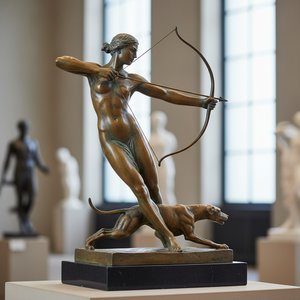
Igor Malyshev: Sculptor of Quiet Contemplation
Igor Malyshev, born in Kyiv, Ukraine, in 1965, is a sculptor whose artistic vision centers on exploring the interplay between form and emotion—a pursuit that has yielded striking results. While his oeuvre remains relatively modest compared to some contemporaries, Malyshev’s work possesses an undeniable resonance, characterized by a deliberate simplicity that belies profound conceptual depth. His sculptures are not grand pronouncements of ideas but rather subtle invitations to introspection, mirroring the contemplative spirit of Ukrainian art history.
- Early Life and Artistic Beginnings: Little is known about Malyshev’s formative years beyond his birthdate and education at Kyiv Automobile and Highway Institute. However, anecdotal evidence suggests a lifelong fascination with sculpture—a passion nurtured during his military service and solidified through independent study. This early exposure to artistic principles undoubtedly instilled in him a foundational understanding of sculptural technique and conceptual exploration.
- The Lao Lzu Series (2020): Malyshev’s most notable contribution to contemporary art is undoubtedly the ‘Lao Lzu’ series of sculptures created in 2020. These pieces, executed primarily in bronze, represent a significant departure from traditional sculptural approaches—abandoning overt ornamentation for an austere aesthetic that prioritizes geometric precision and textural subtlety. The series explores themes of balance, stillness, and the relationship between human presence and natural environment. Critics have praised Malyshev’s masterful manipulation of material and form, noting how he achieves profound emotional impact through understated visual elements.
- Material Exploration: Malyshev’s preference for bronze reflects a broader trend in Ukrainian sculpture during the early 2000s—a move away from more expressive mediums toward materials that convey solidity and permanence. This deliberate choice underscores his commitment to crafting works that endure beyond fleeting trends, embodying an enduring aesthetic sensibility rooted in Ukrainian artistic tradition. The selection of bronze speaks volumes about Malyshev’s belief in materiality as a vehicle for conveying timeless concepts.
- Influences: Though Malyshev’s artistic style resists easy categorization, it bears traces of influences from Ukrainian Constructivism and Minimalism—movements that championed geometric abstraction and rejected representational art as superfluous. These intellectual currents undoubtedly shaped his conceptual framework and informed his sculptural practice. Furthermore, he acknowledges the impact of Western Minimalist sculptors like Donald Judd and Richard Serra on his artistic sensibilities.
Notable Achievements: Malyshev’s work has garnered recognition within Ukraine's artistic community and beyond, appearing in prestigious exhibitions across Europe and establishing him as a respected voice in contemporary sculpture. His sculptures have been lauded for their elegance, intellectual rigor, and ability to evoke contemplation—qualities that resonate deeply with audiences seeking art that transcends superficial spectacle.
Historical Significance: Igor Malyshev’s contribution to Ukrainian art lies not merely in his stylistic innovations but also in his embodiment of a broader cultural ethos—one characterized by quiet reflection and an appreciation for the beauty of simplicity. He represents a crucial link between Ukrainian sculptural heritage and the challenges posed by globalization, demonstrating that artistic expression can remain powerfully relevant even amidst rapid societal change. His sculptures serve as a testament to the enduring power of understated art to provoke thought and inspire emotion.