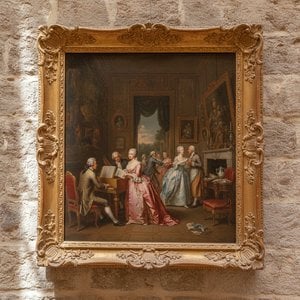
Un retratista de la Edad de Oro de Ámsterdam
Hillebrand Dirk Loeff (1774-1845) se erige como un testimonio del fervor artístico que caracterizó a la Ámsterdam del siglo XIX, específicamente a su ilustre “Edad de Oro”. Nacido en el seno de una familia profundamente arraigada en la tradición artística, los años formativos de Loeff transcurrieron absorbiendo las corrientes estilísticas de su época, principalmente bajo la tutela de luminarias como Johann Herman Ehrenberg y Johann Jacob Ludiente Duyvelshoff. Estos mentores inculcaron en él no solo una notable destreza técnica, sino también un profundo aprecio por los ideales neoclásicos, un movimiento que defendía la razón, el orden y la belleza idealizada, reflejando así el panorama intelectual de la Europa durante la era napoleónica.- Formación temprana y reconocimiento académico: La dedicación de Loeff a las artes lo impulsó rápidamente hacia la membresía de la Amsterdamse Tekenaar Academie (Academia de Dibujo de Ámsterdam), una prestigiosa institución que fomentaba la excelencia y nutría el talento emergente. Además, fue distinguido con la distinción de miembro en organizaciones como Felix Meritis —una sociedad dedicada a la promoción de las artes y las ciencias— y la Koninklijke Akademie van Beeldende Kunsten (Real Academia de Bellas Artes), consolidando así su posición dentro de la élite artística.
- Pintura de género y retratística: La obra de Loeff giraba predominantemente en torno a dos géneros: el retrato y las escenas de género. Sus retratos capturaban la dignidad y el refinamiento de las familias aristocracias, plasmados meticulosamente con sombreados sutiles y detalles precisos, características emblemáticas de la técnica neoclásica. Simultáneamente, produjo evocadoras representaciones de la vida cotidiana en Ámsterdam, retratando mercados bulliciosos, reuniones conviviales e íntimos interiores domésticos. Estas pinturas de género ofrecen vislumbres invaluables de las costumbres sociales y las sensibilidades artísticas de su era.
Obras notables y estilo artístico
Entre las creaciones más celebradas de Loeff se encuentra el “Retrato de Maria Adriana van der Sluys, esposa de Hermanus Martinus Eekhout”, completado entre 1830 y 1838. Esta obra maestra ejemplifica su dominio de los principios neoclásicos —con una paleta contenida que predominan los tonos apagados— y una atención meticulosa a la precisión anatómica y a los pliegues de los ropajes. La expresión serena del retrato y su elegante atuendo transmiten un aura de compostura aristocrática, reflejando los estándares estéticos prevalecientes del periodo. El estilo de Loeff priorizó consistentemente la claridad y el equilibrio, favoreciendo composiciones que comunicaban emoción sin recurrir a una ornamentación excesiva.- Influencia y legado: La influencia de Loeff se extendió más allá de sus contemporáneos inmediatos; ejerció como maestro para Ehrenberg y Duyvelshoff, transmitiendo su conocimiento artístico y moldeando las carreras de futuros artistas. Su pertenencia a prominentes sociedades artísticas —incluyendo la Koninklijke Nederlandse Akademie van Wetenschappen (Real Academia Neerlandesa de las Ciencias) y la Société Royale des Beaux-Arts— subrayó su compromiso con el discurso intelectual y el avance artístico.
- Significado histórico: La obra de Loeff contribuye significativamente a nuestra comprensión de Ámsterdam durante la era romántica, capturando un momento en el tiempo donde la innovación artística se entrelazaba con el conservadurismo social. Sigue siendo una figura importante en la historia del arte neerlandés, representando la culminación de los ideales neoclásicos y encarnando el espíritu de una ciudad en su apogeo.
Preguntas y respuestas
¿Qué obras de Hillebrand Dirk Loeff son las más vistas?
Las estadísticas sobre las obras de Hillebrand Dirk Loeff están disponibles en la página de Estadísticas del artista.
¿Puedo estudiar el uso del color de Hillebrand Dirk Loeff en toda su obra?
El uso del color de Hillebrand Dirk Loeff en las obras listadas en este sitio web puede estudiarse en la página ADN de la Paleta del artista.
¿Cómo se divide la trayectoria de Hillebrand Dirk Loeff en periodos?
La Trayectoria de Hillebrand Dirk Loeff es una línea de tiempo con desplazamiento vertical que presenta las obras del artista en orden cronológico, agrupadas en capítulos por periodos de su carrera.