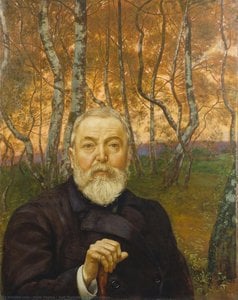
El Alma de la Selva Negra: La Vida y Visión de Hans Thoma
Hans Thoma se erige como una figura singular en la historia del arte alemán, reconocido por sus evocadores paisajes y retratos que capturan el espíritu de la región de la Selva Negra, un lugar profundamente arraigado en su visión artística. Nacido en Bernau bei Berlin en 1839, emprendió un viaje artístico marcado por una devoción inquebrantable a las tradiciones y al folclore de su patria. Su vida fue un delicado equilibrio entre la observación meticulosa y un profundo sentido del idealismo romántico, creando un cuerpo de obra que se siente tanto arraigado en la tierra como elevado por una cualidad onírica.
Los años formativos de Thoma fueron moldeados por los ritmos sencillos de la vida rural; el oficio de su padre como relojero le inculcó una precisión y una extraordinaria atención al detalle que más tarde permearían cada pincelada. En 1859, se matriculó en la Academia de Karlsruhe, donde fue guiado por maestros como Johann Wilhelm Schirmer y Ludwig Des Coulbres. Este periodo estableció su dominio fundacional de las técnicas de la pintura de paisaje. Si bien sus viajes posteriores por Düsseldorf, París, Italia, Múnich y Frankfurt lo expusieron a un torbellino de diversas corrientes artísticas, estos encuentros internacionales solo sirvieron para consolidar su compromiso con la captura de la esencia de la vida rural alemana y la belleza atemporal de la naturaleza.
Un Tapiz de Influencia y Técnica
El estilo distintivo de Thoma desafía las categorizaciones fáciles, aunque posee afinidades inconfundibles con el movimiento prerrafaelita. Al igual que las obras de Dante Gabriel Rossetti o John Everett Millais, Thoma priorizó la captura de las condiciones atmosféricas y la transmisión de emociones profundas a través de sutiles variaciones tonales y paletas de colores luminosas. Su fascinación por los detalles minuciosos del mundo natural —la textura de una hoja, la luz filtrándose a través de un dosel forestal o la presencia silenciosa de vacas pastando— refleja una dedicación al realismo que con frecuencia se ve templada por una visión imaginativa, casi mística.
El linaje de los maestros alemanes también desempeñó un papel fundamental en la formación de su estética. Las obras de Alberto Durero y Lucas Cranach el Viejo sirvieron como profundas influencias, informando sus decisiones compositivas y su capacidad para representar contornos precisos y sombreados cuidadosos. Esta mezcla de precisión clásica y sentimiento romántico le permitió crear escenas que se sentían tanto históricamente arraigadas como emocionalmente inmediatas. Ya fuera a través de un dibujo en blanco y negro como su Youthful Self Portrait o un paisaje vibrante y saturado de color como Autumn Tree in front of Wiesental, la destreza técnica de Thoma permaneció centrada en la búsqueda de la verdad dentro de la naturaleza.
Legado y Significado Artístico
A lo largo de su carrera, Thoma alcanzó un nivel de reconocimiento que lo situó en el corazón de la escena artística alemana. Su capacidad para evocar serenidad a través de verdes exuberantes y cielos esponjosos —como se observa en obras como Landscape With Cloud— demuestra una sensibilidad casi impresionista hacia la luz y el aire. Él no se limitó a pintar paisajes; pintó la atmósfera de una cultura y un territorio, convirtiendo la Selva Negra en un símbolo de paz perdurable y belleza pastoral.
La importancia histórica de Hans Thoma reside en su capacidad para tender un puente entre las rigurosas tradiciones académicas del siglo XIX y la creciente emocionalidad del arte moderno. Sus logros incluyen:
- Maestría del Paisaje: La creación de un lenguaje visual definitivo para el campo alemán que fusionó el realismo con el Romanticismo.
- Versatilidad Técnica: La capacidad de transitar sin esfuerzo entre dibujos precisos y detallados y paisajes pictóricos y atmosféricos.
- Preservación Cultural: El registro del folclore, las tradiciones y el esplendor natural de la región de la Selva Negra durante un período de rápidos cambios industriales.
Hoy en día, la obra de Thoma continúa resonando en aquellos espectadores que buscan consuelo en lo idílico y lo eterno. Sus pinturas permanecen como ventanas a un mundo donde la naturaleza y la humanidad existen en una danza armoniosa y bellamente detallada.
Preguntas y respuestas
¿Puedo estudiar el uso del color de Hans Thoma en toda su obra?
El perfil cromático de la obra de Hans Thoma se puede consultar en su página de ADN de la Paleta.
¿Dónde se pueden ver las obras de Hans Thoma agrupadas por movimiento artístico?
Puedes ver los movimientos en los que trabajó Hans Thoma en la página de Todos los movimientos del artista, donde las obras se agrupan por movimiento.
¿En qué ciudad y país nació Hans Thoma?
Hans Thoma nació en Bernau bei Berlin, Alemania.