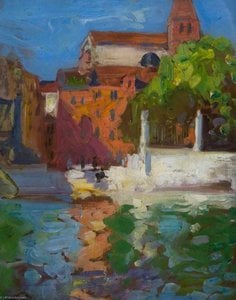
El Legado Vibrante de Francis Campbell Cadell
Nacido en la refinada atmósfera de Edimburgo en 1883, Francis Campbell Cadell estaba destinado a una vida impregnada por las artes. Como hijo del estimado cirujano Dr. Francis Cadell y de Mary Hamilton Boileau, su crianza en el número 22 de Ainslie Place, dentro del prestigioso Moray Estate, le proporcionó un trasfondo de sofisticación cultural. Este entorno, enriquecido por la presencia teatral de su hermana, la renombrada actriz Jean Cadell, nutrió una sensibilidad que más tarde definiría su enfoque ante el lienzo. Desde la temprana edad de dieciséis años, Cadell buscó el pulso del mundo del arte moderno, viajando a París para estudiar en la Académie Julian. Fue dentro de la atmósfera vibrante y experimental de la capital francesa donde su identidad artística comenzó a cohesionarse, alejándose del academicismo rígido hacia una expresión más liberada de la luz y el matiz.
La evolución de la técnica de Cadell se vio profundamente moldeada por la llegada del fauvismo. Inspirado por las radicales paletas cromáticas de maestros como Matisse, Cadell adoptó un estilo que priorizaba la resonancia emocional por encima de la mera precisión fotográfica. Se convirtió en una figura clave entre los Scottish Colourists (Coloristas Escoceses), un grupo celebrado por su capacidad para infundir paisajes e interiores con un uso rítmico, casi musical, del pigmento. Su pincelada, a menudo audaz y decidida, buscaba capturar la esencia fugaz de la luz al incidir sobre una superficie, ya fuera en las escarpadas costas de Iona o en la pulida elegancia de un salón de Edimburgo. Este dominio del color le permitió transformar escenas ordinarias en estudios extraordinarios de atmósfera y estado de ánimo.
Un Maestro de la Luz y la Interioridad
La obra de Cadell es, quizás, más celebrada por su exquisita representación de los interiores de la alta sociedad y la serena dignidad de la vida doméstica. Poseía una habilidad singular para plasmar las texturas de la seda, el brillo de la porcelana y el suave resplandor de la luz de la tarde filtrándose a través de una ventana. Estas obras no son meros retratos de habitaciones, sino paisajes psicológicos que reflejan la elegencia y los matices sociales de la Escocia de principios del siglo XX. Sus composaciones suelen presentar un sofisticado juego entre la forma estructurada y el color fluido, creando una sensación de vitalidad moderna dentro de entornos tradicionales.
Más allá de los confines del salón, Cadell encontró una profunda inspiración en el mundo natural. Sus paisajes, particularmente aquellos que capturan la belleza agreste de las islas Hébridas, demuestran una faceta distinta de su genio. En estas obras, la influencia del impresionismo francés y del fauvismo se funde con un profundo aprecio localizado por el terreno escocés. Los siguientes elementos caracterizan sus contribuciones artísticas más significativas:
- Audacia Cromática: Un uso intrépido del color puro y sin adulterar para definir la forma y la profundidad.
- Interiores Luminosos: La creación de espacios atmosféricos que evocan una sensación de elegancia atemporal.
- Maestría Textural: Un dominio experto de las propiedades físicas de la pintura para simular luz y tejido.
- Espíritu Modernista: Un rechazo al sentimentalismo victoriano en favor de una experiencia sensorial más directa.
Un Espíritu Inconvencional y una Trascendencia Duradera
La personalidad de Francis Campbell Cadell era tan impactante como su paleta. Conocido por su ingenio y un cierto intelecto rebelde, es famoso por haber abrazado su identidad como pintor zurdo. Al enfrentarse al escepticismo de los tradicionalistas que cuestionaban sus métodos poco convencionales, invocaba con ironía la grandeza de Miguel Ángel, utilizando el precedente histórico para silenciar a sus críticos. Este desafío característico a la convención era un reflejo de su misión artística: liberarse del asfixiante dominio de la tradición académica y perseguir una realidad más auténtica y colorida.
Aunque su vida fue relativamente corta, terminando en 1937, el impacto de Cadell en la historia del arte británico permanece indeleble. Ayudó a tender un puente entre la tradición del paisaje escocés y las innovaciones radicales de la vanguardia europea. Hoy en día, sus obras son apreciadas no solo por su belleza estética, sino como documentos históricos vitales de un período de inmensa transición cultural. A través de sus vibrantes retratos y paisajes expansivos, Cadell continúa invitando a los espectadores a un mundo donde el color es el lenguaje primordial de la emoción y la luz es la arquitecta definitiva de la forma.
Preguntas y respuestas
¿Dónde se encuentran las obras de Francis Campbell Cadell organizadas por color?
La página Índice Espectral organiza las obras de Francis Campbell Cadell por color.
¿En qué periodo histórico trabajó Francis Campbell Cadell?
Francis Campbell Cadell trabajó durante el periodo Edad Moderna. Este periodo sitúa la actividad del artista en la historia.
¿Dónde se encuentran las obras de Francis Campbell Cadell agrupadas por palabras clave?
La página Por palabras clave de Francis Campbell Cadell agrupa las obras del artista por sus palabras clave.