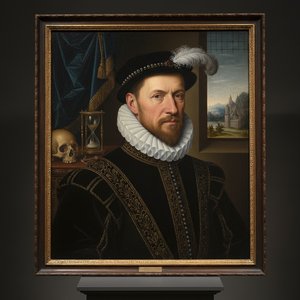
El testigo silencioso del Renacimiento de Augsburgo
En el corazón vibrante y bullicioso de la Augsburgo del siglo XVI, una ciudad que latía con la energía económica del comercio europeo, vivió un artista cuyo pincel capturó el alma misma del Alto Renacimiento. Christoph Amberger (c. 1505 – 1562) no fue simplemente un pintor de figuras, sino un meticuloso cronista de la dignidad humana y la narrativa divina. Nacido en un linaje de artesanos —hijo de un cantero y nieto de un tallador de madera— Amberger heredó un profundo respeto por la precisión táctil del arte. Esta crianza fundamental en las tradiciones de la artesanía alemana proporcionó los cimientos sobre los cuales construiría una carrera definida por la claridad, el realismo y una inquebrantable atención al detalle.
La trayectoria del talento de Amberger se vio alterada irrevocablemente a través de su aprendizaje bajo la tutela del legendario Hans Holbein el Joven. De Holbein, Amberger heredó más que una simple habilidad técnica; absorbiendo un lenguaje psicológico específico, una forma de representar el rostro humano que permitía al retratado respirar a través del óleo y el pigmento. Esta mentoría le inculcó un dominio del realismo nítido, permitiéndole navegar el delicado equilibrio entre capturar el parecido físico y transmitir el carácter interno de sus sujetos. Su obra se convirtió en un puente entre la tradición del norte de Europa, caracterizada por el detalle meticuloso, y los florecientes ideales humanistas que recorrían el continente.
Un viaje a través de la fe y el humanismo
La evolución artística de Amberger se enriqueció significativamente gracias a sus viajes, especialmente su estancia en el norte de Italia entre 1525 y 1527. Al sumergirse en la atmósfera artística de Venecia y Florencia, se encontró bajo la sombra de gigantes como Leonardo da Vinci y Miguel Ángel. Esta exposición al Renacimiento italiano dotó a su obra de una nueva dimensión, infundiendo sus raíces alemanas con una comprensión sofisticada de la composición y la gracia monumental del sur. A su regreso a Augsburgo, esta síntesis de estilos le permitió entablar relación con los mecenas más poderosos de la ciudad, incluyendo al legendario mercader Jakob Fugger y al estadista Konrad Peutiner.
Quizás su contribución más perdurable al canon de la historia del arte es su profundo compromiso con la narrativa bíblica. Su célebre serie, La historia de José, se erige como un testimonio de su capacidad para transformar las escrituras en un diálogo visual. A través de doce magníficos lienzos, Amberger relata meticulosamente la vida de José, utilizando la resonancia simbólica para explorar temas de virtud, providencia y fe. Estas no son meras ilustraciones de un texto; son mundos cuidadosamente construidos donde cada pliegue de tela y cada sombra sirven para profundizar la narrativa teológica, logrando que las historias antiguas se sientan inmediatas y profundamente humanas.
El legado de un maestro retratista
Más allá de sus narrativas religiosas, el legado de Amberger está grabado en los rostros de las figuras más influyentes de la época. Su retratística sirvió como un registro histórico vital de los titanes políticos y económicos de su tiempo. Al capturar la apariencia de individuos tales como el Emperador Carlos V y los prominentes miembros de la dinastía Fugger, proporcionó una ventana a las estructuras de poder del siglo XVI. Sus retratos se caracterizan por:
- Profundidad psicológica: Una capacidad profunda para capturar la gravedad y el intelecto de sus sujetos.
- Precisión material: Una representación exquisita de las texturas, desde los pesados terciopelos hasta el brillo frío de la armadura.
- Espíritu humanista: Un enfoque en el individuo como una figura central de importancia dentro del orden cósmico y social.
Aunque tal vez no buscó la fama ostentosa de algunos de sus contemporáneos, Christoph Amberger permanece como una figura indispensable del Renacimiento alemán. La obra de su vida representa una intersección armoniosa entre la precisión del norte y la gracia italiana, dejando tras de sí un cuerpo de trabajo que continúa resonando con la fuerza silenciosa de un maestro que supo ver lo divino en los detalles de la experiencia humana.
Preguntas y respuestas
¿Cuántas obras de Christoph Amberger hay disponibles para explorar?
Puede explorar 22 obras de arte obras de Christoph Amberger en la página Todas las obras.
¿En qué periodo histórico trabajó Christoph Amberger?
Christoph Amberger trabajó durante el periodo Renacimiento. Este periodo sitúa la actividad del artista en la historia.
¿Cuál es el lugar y el año de nacimiento de Christoph Amberger?
Christoph Amberger nació en Berlín en 1505.