early life and training
Charles Louis Müller, born in Paris on December 22, 1815, embarked on his artistic journey under the tutelage of luminaries like Léon Cogniet and Baron Gros at the École des Beaux-Arts—a prestigious institution that nurtured talent and fostered innovation. This formative period instilled in him a profound understanding of neoclassical principles and established a foundation for his future endeavors. Müller’s dedication to mastering technique and capturing emotion would prove instrumental in shaping his distinctive artistic style.notable works and achievements
Müller's artistic career commenced with “Christmas Morning” (1837), an early testament to his burgeoning skill, immediately attracting attention within Parisian art circles. Recognizing his potential, he secured a directorial role at Gobelin Tapestries from 1850 to 1853—a position that allowed him to contribute significantly to the revival of French textile artistry and elevate its aesthetic standards. In 1864, Müller ascended to membership in the Académie des Beaux-Arts, succeeding Jean Hippolyte Flandrin—a distinguished honor reflecting his reputation as a respected artist and intellectual. His acceptance into this esteemed institution solidified his place within the artistic landscape of France.key works and their significance
Müller’s oeuvre is marked by masterpieces that encapsulate both historical narrative and emotional depth. “Helio Gabalus” (1841) stands as an exemplary illustration of neoclassical grandeur, skillfully portraying a dramatic scene from Roman history with meticulous detail. Similarly, “Primavera” (1846) captures the vibrant beauty of springtime—a celebration of color and light that embodies Romantic ideals. "Haydée" (1848), a portrait commissioned for Princess Louise Bonaparte, showcases Müller’s versatility in portraying character and conveying psychological nuance. Notably, “Lady Macbeth” (1855) delves into the tormented psyche of Shakespeare's iconic villain—demonstrating Müller’s ability to translate literary themes into visual form. "Calling Out The Last Victims Of The Reign Of Terror At The Prison Of Saint Lazare" (1855), a poignant depiction of imprisoned revolutionaries, underscores Müller’s commitment to documenting historical events with sensitivity and artistic integrity. Finally, “Vive L'Empereur” (1855)—inspired by Méry’s poem—captures the fervor surrounding the Battle Before Paris in 1814—a pivotal moment in French history rendered with dramatic flair.contribution to the louvre and other museums
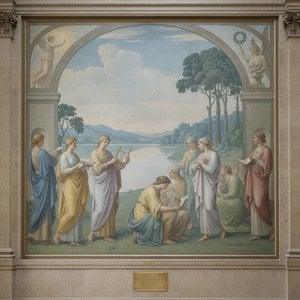
Müller’s artistic legacy extends beyond individual paintings; he profoundly impacted Parisian cultural heritage through his monumental frescoes adorning the Salle d'État and Galerie d'Apollon within the Louvre—a testament to his ambition and artistic vision. These canvases continue to inspire awe and admiration, serving as enduring symbols of French artistic excellence. Furthermore, Müller’s work graces the ceiling of Salon Denon, enriching the museum’s collection with masterpieces that embody the spirit of Romanticism. key links from WahooArt.com:- charles louis müller's profile on WahooArt.com
- jean louis forain's two women on bicycles, a contrasting style to müller's work
Preguntas y respuestas
¿Qué tan populares son las obras de Charles Louis Müller?
La página de Estadísticas de Charles Louis Müller presenta estadísticas calculadas a partir de las obras del artista listadas en este sitio web.
¿Dónde se encuentran las obras de Charles Louis Müller agrupadas por paleta?
Para encontrar obras de Charles Louis Müller en una paleta específica, utilice la página de Por paletas de colores del artista.
¿Puedo estudiar el uso del color de Charles Louis Müller en toda su obra?
El perfil cromático de la obra de Charles Louis Müller se muestra en la página Genoma de la Paleta del artista.