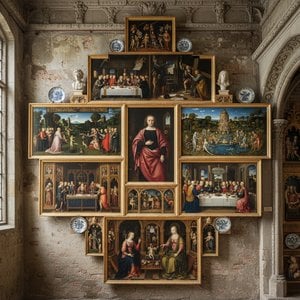
La escarcha etérea: La vida y el legado de César van Loo
César van Loo, nacido como Jules César Denis van Loo en el vibrante corazón de París en 1743, permanece como una de las voces más evocadoras de la escuela francesa de finales del siglo XVIII. Si bien su linaje lo vinculaba a una prestigiosa dinastía de pintores de ascendencia flamenca, poseía un alma artística que buscaba trascender la mera imitación de sus predecesores. Aunque era el heredero de una tradición de retratismo y excelencia decorativa, van Loo se labró un nicho singular en el mundo del arte, alejándose de los rostros pulidos de la aristocracia para capturar la majestuosidad silenciosa y palpitante del mundo natural. Su trayectoria fue una de profunda transformación, evolucionando desde un estudiante del esplendor rococó hasta convertirse en un maestro del realismo atmosférico y los paisajes invernales. Los cimientos de su técnica se establecieron bajo la mirada atenta de dos titanes del arte francés: François Boucher e Jean-Honoré Fragonard. De estos maestros heredó un dominio sofisticado del disegno y el colore, aprendiendo a manipular la luz y el pigmento para crear escenas de gracia y movimiento. Sus primeras obras resplandecían con la delicada ornamentación y las paletas pastel características de la era rococó; sin embargo, incluso en estos años formativos, emergía una sensibilidad más profunda. No le interesaba meramente lo decorativo; le cautivaba cómo la luz interactuaba con la textura y cómo los sutiles cambios en la atmósfera podían evocar una sensación de profunda soledad o de asombro silencioso.Maestría de la atmósfera y los paisajes invernales
A medida que su carrera maduraba, el enfoque de van Loo se desplazó hacia lo sublime, particularmente a través de sus célebres paisajes invernales. Fue en estas vistas congeladas donde verdaderamente encontró su voz, yendo más allá del escenario idealizado para abrazar un realismo meticuloso y casi táctil. Poseía una capacidad asombrosa para representar el peso de la nieve caída, la estructura cristalina de la escarcha y la forma en que un sol pálido e invernal proyecta largas sombras de tintes azulados sobre una llanura desolada. Sus lienzos se convirtieron en ventanas hacia un mundo de quietud, donde el frío penetrante del aire resulta casi palpable para el espector. Sus paisajes servían a menudo como meditaciones sobre el tiempo y la naturaleza cíclica de la existencia. Un motivo recurrente en su obra era la inclusión de ruinas antiguas, parcialmente devoradas por la nieve o reclamadas por los elementos. Estas estructuras desmoronadas actuaban como símbolos conmovedores de decadencia y regeneración, yuxtaponiendo la permanencia de la piedra con los fugaces cambios estacionales del paisaje. Mediante esta técnica, van Loo tendió un puente entre los ideales clásicos de su formación y el floreciente interés romántico por el poder emocional de la naturaleza.Significancia histórica y triunfo artístico
El cenit de su reconocimiento profesional estuvo marcado por prestigiosos nombramientos y una presencia duradera en las grandes colecciones de Europa. Su designación como Directeur Général señaló su posición dentro del establecimiento artístico francés, pero nunca perdió la intimidad observacional que definía su estilo personal. Su obra continúa siendo estudiada por su brillantez técnica y su capacidad para transmitir estados emocionales complejos a través de medios puramente ambientales. El legado perdurable de César van Loo puede resumirse en varias contribuciones clave a la historia de la pintura:- Innovación en el género: Elevó el paisaje invernal de un elemento decorativo secundario a un medio profundo para la expresión psicológica y atmosférica.
- Síntesis técnica: Combinó con éxito las delicadas tradiciones colorísticas del Rococó con un enfoque riguroso y realista de la luz natural y la textura.
- Profundidad simbólica: A través del uso de ruinas y transiciones estacionales, introdujo capas de significado intelectual sobre la mortalidad y lo sublime en la pintura de paisaje.
- Independencia artística: Al elegir firmar sus obras simplemente como "Cesar van Loo", afirmó una identidad distinta y separada de su famoso padre y tío, estableciéndose como un pionero por derecho propio.
Preguntas y respuestas
¿En qué ciudad y país nació César Vanloo?
César Vanloo nació en París, en Italia.
¿Puedo ordenar las obras de César Vanloo por color?
Las obras de César Vanloo pueden explorarse por color en la página Índice Espectral del artista.
¿Dónde puedo ver las obras de César Vanloo en una galería 3D?
Es posible realizar una visita virtual: la página Museo 3D de César Vanloo presenta las obras del artista en una galería tridimensional.