Asesoría de arte gratuita

x
Comprar impresión Comprar impresiónEncargar reproducción Encargar reproducción EnviarEnviar
DetallesDetalles Añadir a favoritos Añadir a favoritos DescargarDescargar SimilaresSimilares RadiografíaRadiografía Presentación de diapositivasPresentación de diapositivas

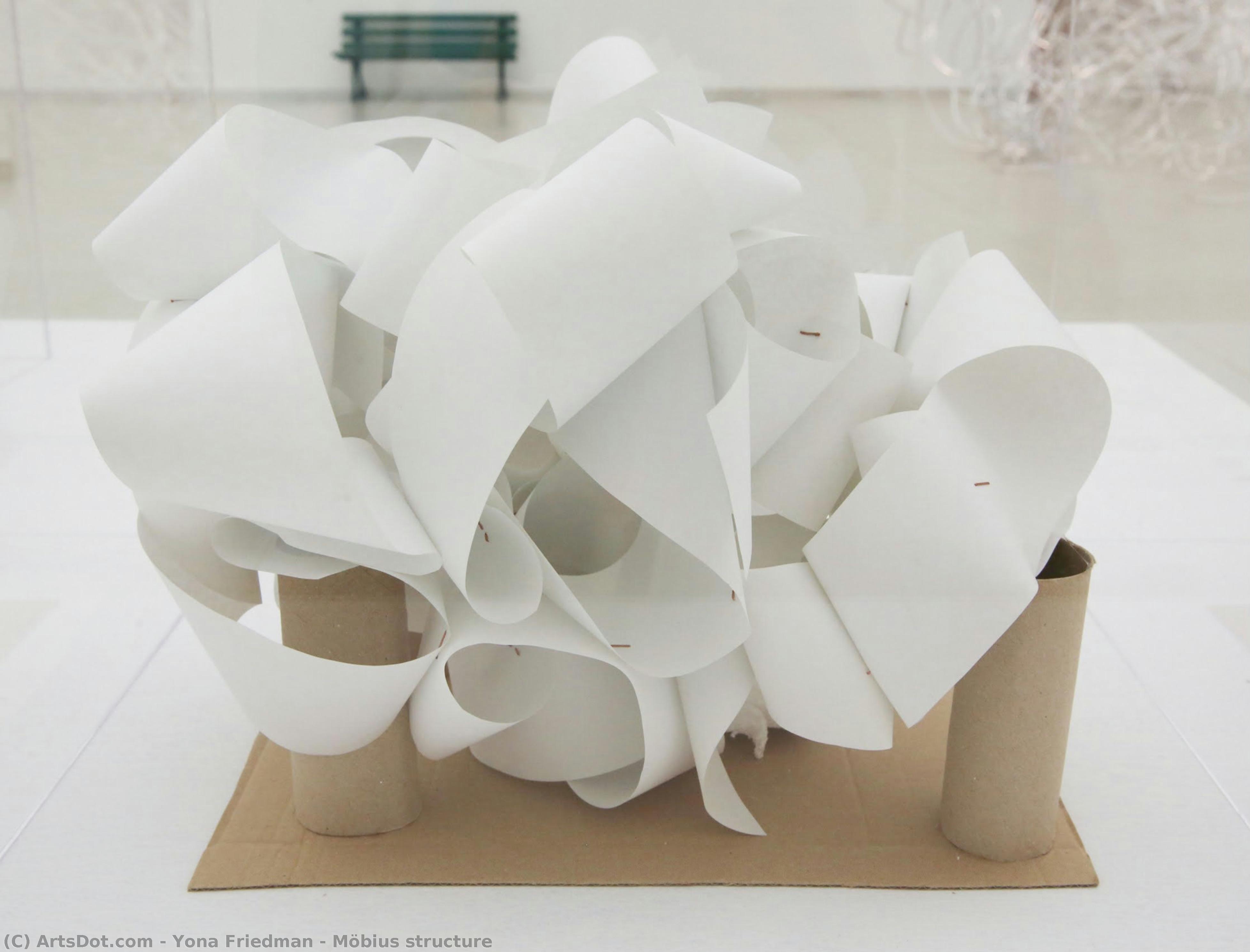
Möbius structure

Explore the visionary architecture of Yona Friedman (1923-2020). Pioneer of 'mobile architecture' & utopian urbanism, his designs challenge convention. Discover his influential theories and unique artworks.

Adquiera una imagen digital de alta resolución y optimizada, muy superior a la vista previa en línea.

Cada archivo es preparado meticulosamente por nuestros especialistas internos mediante el uso de herramientas avanzadas y un experto retoque manual. Nos aseguramos de que cada imagen posea una claridad excepcional, una precisión cromática impecable y un detalle minucioso.

El archivo final se entrega por correo electrónico en un plazo de 72 horas, optimizado para su uso inmediato en entornos profesionales, editoriales y de impresión. Esta es la misma calidad en la que confían los estudios de diseño, las editoriales y las galerías de primer nivel.

Imagen Digital

Descarga un archivo de alta resolución para exhibición personal, impresión y proyectos creativos.

Precio total

$9.99

Incluido en cada pedido de imagen digital

Entrega digital experta, garantizada.

Al elegir WahooArt.com, no solo está adquiriendo una imagen; está recibiendo una obra de arte digital mejorada profesionalmente, elaborada con precisión y respaldada por una garantía de satisfacción. Esto es todo lo que incluye su pedido, automáticamente:

shipping_icon
Entrega rápida por email

Recibirá su archivo de imagen digital en alta resolución por correo electrónico en un plazo de 72 horas tras realizar su pedido, listo para su uso inmediato.

canvas_icon
Archivo digital optimizado con IA

Su obra de arte se optimiza profesionalmente mediante herramientas avanzadas de IA y edición manual, garantizando el máximo detalle, claridad y precisión cromática.

insurance_icon
Reenvío gratuito de por vida

¿Has borrado o perdido tu archivo por error? No te preocupes: te lo volveremos a enviar en cualquier momento, sin coste adicional.

tax_icon
Sin cargos de importación - Siempre

Disfrute de su obra de arte al instante sin aduanas, aranceles ni gastos de envío; las descargas digitales siempre están libres de impuestos.

color_icon
Garantía de fidelidad de color

Garantizamos que su imagen digital refleje los colores originales con la mayor fidelidad posible, mediante el uso de herramientas profesionales y gestión del color.

return_icon
Garantía de satisfacción de 60 días

Si no está satisfecho con su imagen digital, la revisaremos o le reembolsaremos el 100% en un plazo de 60 días, sin preguntas.

guarantee_icon
100% Garantía de devolución de dinero

¿No está satisfecho? Obtenga un reembolso completo dentro de los 60 días posteriores a la recepción de su archivo digital, sin preguntas.

discount_icon
Descuentos por pedidos al por mayor

Compra 3 imágenes, ahorra 10% - Compra 5, ahorra 15% - Compra 10+, ahorra 20%. Ideal para proyectos creativos, galerías y agencias.

Descripción del coleccionable

Yona Friedman describes his unrealized projects as a parabola. His autonomous world, ensconced between art and legend, predicts a brand new way of life in civil society. From this point of view, Friedman is an uncompromising realist. Buildings and their inhabitants were an expression of freedom of choice. He let construction workers model exteriors based on their own predilections, leaving interior spaces for occupants to design and create. Although it was said that Friedman was too

Biografía del artista

Yona Friedman (1923–2020): Architect of Mobile Utopia

Yona Friedman (5 June 1923 – 20 February 2020) was a Hungarian-born French architect, urban planner and designer. He was influential in the late 1950s and early 1960s, best known for his theory of ‘mobile architecture,’ which envisioned a radical reimagining of cities as dynamic systems capable of adapting to evolving needs and conditions. Friedman’s pioneering approach challenged conventional architectural dogma and cemented his place as a visionary figure in the history of modernism.

Early Life and Education

Born in Budapest, Hungary, into an ethnic Jewish family grappling with antisemitic legislation during the period of Nazi occupation, Friedman faced considerable obstacles pursuing higher education. Despite these difficulties, he persevered, securing admission to Technische Universität Wien (TU Wien) where he studied architecture—a formative experience that instilled in him a lifelong fascination with spatial exploration and experimentation. Following his graduation in 1948, Friedman embarked on a journey of artistic discovery, relocating to Israel in 1957 at the invitation of Jean Prouvé, cementing his connection to the burgeoning Bauhaus movement’s spirit of innovation.

The Genesis of Mobile Architecture

Friedman's intellectual breakthrough arrived in 1956 with the publication of *Mobile Architecture,* a manifesto that fundamentally altered perceptions of urban design and architectural practice. Rejecting static structures as inherently inflexible and unresponsive, Friedman argued for a paradigm shift toward “mobile architecture”—a concept he elaborated upon through intricate drawings and diagrams—where buildings could expand outwards to accommodate growth without sacrificing their core identity. This audacious proposition drew inspiration from the principles of Gestalt psychology and explored connections between mathematics, geometry, and spatial perception. He envisioned cities as interconnected networks of structures that would adapt to changing populations and circumstances, prioritizing human comfort and fostering a sense of collective dynamism.

Collaborations with Archigram and Superstudio

Friedman’s theoretical framework quickly gained traction within the influential Team 10 architectural group—a collective dedicated to challenging established norms and advocating for humanist values in design. He collaborated closely with fellow architects Richard Rogers, Ernő Goldfinger, Dennis Lasdun, and Alison Macintosh on projects that embodied the spirit of Team 10's rebellious idealism. Notably, Friedman’s partnership with Archigram produced groundbreaking experimental buildings—such as Habitat ’67—that pushed the boundaries of structural engineering and architectural aesthetics. Similarly, his collaboration with Superstudio resulted in iconic artworks—like *Container Structures II*—which utilized paper cutouts to generate mesmerizing visual patterns—a precursor to future urban landscapes and a testament to Friedman’s ability to transform conceptual ideas into tangible realities.

Recognition and Legacy

Throughout his prolific career, Friedman received numerous accolades for his contributions to architecture and urban planning, including the Austrian Frederick Kiesler Prize for Architecture and the Arts in 2018—a prestigious honor recognizing his enduring influence on architectural thought. His drawings were exhibited internationally, captivating audiences with their meticulous detail and evocative exploration of spatial relationships. Friedman’s work continues to inspire architects and artists alike, serving as a reminder that innovation stems from questioning assumptions and embracing imaginative possibilities. He passed away peacefully in Paris in February 2020 at the age of 96, leaving behind an indelible mark on the history of modern architecture—a legacy characterized by unwavering optimism and a steadfast belief in the transformative power of design to shape human experience.
yona friedman

yona friedman

1923 - 2020 , Hungary

Información clave

  • Artistic Movement Or Style: Mobile Architecture
  • Artists Or Movements Influenced By This Artist: ['Spatial City']
  • Artists Who Influenced This Artist:
    • Jean Prouvé
    • Archigram
    • Superstudio
  • Date Of Birth: 1923
  • Date Of Death: 2020
  • Full Name: Yona Friedman
  • Nationality: Hungarian-French
  • Notable Artworks:
    • Container Structures II
    • Möbius structure
  • Place Of Birth: Budapest, Hungary