Vista previa Vista previa en RA Encargar reproducción pintada a mano Ver versión en imagen digital Compartir
Ver detalles Guía Añadir a favoritos Descargar Ver artículos similares Radiografía Presentación de diapositivas Estadísticas

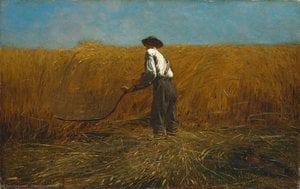
After the hunt

Winslow Homer’s masterful Realism captures rural American life in ‘After the Hunt,’ portraying fishermen hauling in a fox alongside loyal dogs—a poignant snapshot of 1892's burgeoning national identity. Explore this iconic piece and bring Homer’s evocative vision home.

Explore el arte cautivador de Winslow Homer (1836-1910), un maestro del Realismo Americano reconocido por sus poderosas pinturas marinas, paisajes y representaciones de la vida en el siglo XIX. Descubre obras icónicas como 'Breezing Up' y su influencia perdurable en Ame...

Giclée / Impresión de arte

Impresiones giclée o en lienzo de calidad de museo con producción rápida y opciones de acabado flexibles. ( Encargar reproducción pintada a mano Ver versión en imagen digital)

P118B $10
P118H $10
P118W $10
P438Z $10
P508JH $12
P508YH $12
P805H $10
P805Z $10
P919BZ $10
P919G $10
P919XJ $10
P959ZH $10
P968JZ $12
W106C $8
W218G $10
W218JH $8
W218Y $10
W307PJ $10
W316G $10
W316PJ $8
W316Y $10
W398PJ $8
W4111J $10
W500HY $15
W500JH $15
W692G $12
W849H $8
W940BG $15
W953PJ $8

Estándar
personalizado
CM
INCH

Elija entre nuestros tamaños predefinidos que respetan las proporciones originales de la obra.

ancho
altura

Puede introducir sus propias dimensiones para adaptarse a un marco o espacio específico. Si el tamaño seleccionado no coincide con las proporciones de la imagen original, recortaremos la obra de arte o extenderemos la imagen con un borde con efecto espejo o de color sólido. Se enviará una maqueta digital para su aprobación antes de que comience la producción.
Tenga en cuenta que la vista previa en pantalla no refleja el recorte o la extensión real. Solo la maqueta mostrará con precisión la composición final.
Aunque existen tamaños personalizados, recomendamos seleccionar una dimensión de la lista predefinida para preservar las proporciones originales.

Envío a todo el mundo () en 2 semanas en lugar de las 4/5 semanas estándar. (27 septiembre)

why_choose_icon
Envío exprés gratuito a todo el mundo
why_choose_icon
Lienzo de lino de alta calidad
why_choose_icon
Seguro de envío completo
why_choose_icon
Garantía de reembolso de impuestos aduaneros
why_choose_icon
Garantía de fidelidad cromática exacta
why_choose_icon
Política de devolución de 100 días (solo por defectos)
why_choose_icon
Garantía de devolución del 100% del dinero
why_choose_icon
Oferta por volumen

Precio total

$ 68

reproduction

After the hunt

Giclée / Impresión de arte

Tamaño de la reproducción

-

Precio total

$ 68

Datos clave

  • Location: The Metropolitan Museum of Art
  • Year: 1892
  • Title: After the Hunt
  • Notable elements or techniques: Detailed depiction of hunting scene
  • Medium: Watercolor
  • Movement: Realism
  • Influences: Hudson River School

Cuestionario de arte

Cada pregunta tiene una única respuesta correcta.

Pregunta 1:
What artistic style is Winslow Homer’s ‘After the Hunt’ primarily characterized by?
Pregunta 2:
The painting depicts a scene of what activity?
Pregunta 3:
What is notable about Homer’s early artistic training compared to many European artists of his time?
Pregunta 4:
The canoe-like boat shape suggests what purpose for the depicted voyage?
Pregunta 5:
Which of the following best describes the overall atmosphere conveyed by ‘After the Hunt’?

After the Hunt: A Snapshot of American Romanticism

Winslow Homer’s “After the Hunt,” completed in 1892, stands as a quintessential example of American Realism—a movement that deliberately rejected the idealized narratives favored by European artistic circles. Unlike canvases depicting grand historical events or mythological tales, Homer focused on capturing everyday life with unflinching honesty and meticulous detail, mirroring the spirit of his time.

  • Subject Matter: The painting depicts a solitary fisherman hauling in his catch—a magnificent fox—after a successful hunt. Alongside him is another man patiently awaiting the return of their companions, two dogs diligently guarding the prize. This scene isn’t merely about sport; it's an observation of rural American life and the connection between humanity and nature.
  • Style: Homer’s style embodies Realism, prioritizing accurate representation over artistic embellishment. He eschewed dramatic lighting or exaggerated perspective, opting for muted colors and a subdued palette that faithfully reproduce the textures and nuances of the natural world—particularly the weathered wood of the boat and the fur of the fox.
  • Technique: Homer employed watercolor on canvas, a technique he honed throughout his prolific career. Watercolor allowed him to achieve remarkable luminosity and subtlety, capturing the fleeting effects of light and shadow with exceptional precision. The artist’s brushstrokes are visible, conveying a sense of immediacy and spontaneity that contributes to the painting's emotional resonance.

Historical Context: The Rise of American Identity

Painted during Homer’s peak creative period, “After the Hunt” reflects the burgeoning confidence of the United States following Reconstruction. Artists like Homer were increasingly interested in portraying scenes from American life—the working class, rural landscapes, and maritime traditions—as a means of defining national identity. This painting aligns with broader trends toward depicting the tangible realities of the nation’s experience.

  • Influence: Homer's work draws inspiration from luminaries like Philip Morris and Maxfield Parrish, artists who championed Romantic ideals while grounding their visions in meticulous observation.
  • Symbolism: The fox itself carries symbolic weight—representing cunning, perseverance, and the rewards of diligent effort. Simultaneously, it embodies the beauty and vulnerability of wildlife within a rapidly changing environment. Homer’s careful depiction underscores the importance of respecting nature's rhythms and acknowledging its profound impact on human existence.

Emotional Impact: Quiet Contemplation Amidst Action

"After the Hunt" transcends mere documentation; it evokes a palpable sense of tranquility amidst purposeful activity. Homer’s masterful use of color and composition creates an atmosphere of contemplative stillness—contrasting sharply with the energetic pursuit of the fox. The painting invites viewers to pause and consider the dignity inherent in simple labor and the enduring fascination with the natural world.

  • Mood: The subdued palette and subtle brushstrokes contribute to a mood of quiet reflection, emphasizing the importance of observation and appreciation for beauty found in everyday life.
  • Legacy: Homer’s “After the Hunt” remains a powerful testament to American Realism's commitment to portraying authentic experience—a legacy that continues to inspire artists and collectors alike.

Biografía del artista

**vida temprana y carrera**

Winslow Homer, una figura destacada del arte estadounidense del siglo XIX, nació el 3 de octubre de 1836 en Cambridge, Massachusetts. Su viaje artístico comenzó como ilustrador comercial, evolucionando finalmente hasta convertirse en un maestro pintor al óleo, celebrado por sus cautivadoras representaciones de paisajes y vistas marinas.

**estilo artístico y obras notables**

Caracterizado por la solidez y textura de sus pinturas al óleo, el trabajo de Homer ofrece una perspectiva profunda sobre la vida y la naturaleza americana. Algunas de sus obras notables incluyen:
  • *Inocencia* (alrededor de 1890), un ejemplo conmovedor de su habilidad para capturar la esencia de las emociones humanas.
  • *Bodegón con fruta* (1883), que muestra su atención al detalle y el uso del color.
  • *El hombre de ciencia* (1895), un testimonio de su capacidad para representar la forma humana con profundidad y sutileza.

**contribución al arte americano**

Como artista auto-haciendo, la prolífica producción de Homer en pintura al óleo y acuarela ha dejado una huella indeleble en la historia del arte estadounidense. Su toque más ligero, particularmente en acuarela, captura hermosamente el ocio y el trabajo de sus frecuentes retiros de trabajo.

**legado e influencia**

**La influencia de Winslow Homer en el realismo americano es innegable.** Su obra continúa inspirando a artistas y entusiastas del arte por igual, ofreciendo una ventana única al alma de América durante el siglo XIX. Como parte integral de la colección WahooArt.com, sus obras ahora son accesibles a un público global.

**conclusión**

El legado artístico de Winslow Homer sirve como una reflexión atemporal sobre la vida y la belleza de los paisajes americanos. A través de su obra, nos recuerda el poder perdurable del arte para capturar la esencia de la experiencia humana.
  • Visualice la extensa colección de Winslow Homer en WahooArt.com.
  • Aprenda más sobre la historia del arte y sus figuras influyentes en Wikipedia.

**referencias**

Winslow Homer

Winslow Homer

1836 - 1910 , Estados Unidos de América

Datos clave

  • Artistas Influenciados: ['Posterior Realismo Americano']
  • Artistas Que Influyeron:
    • Barbizon School
    • Gustave Courbet
    • Jean-François Millet
  • Fecha De Muerte: 1910
  • Fecha De Nacimiento: 3 de octubre de 1836
  • Lugar De Nacimiento: Boston, EE.UU.
  • Movimiento Artístico: Realismo Americano
  • Nacionalidad: Estadounidense
  • Nombre Completo: Winslow Homer
  • Obras Notables:
    • Inocencia
    • Bodegón con fruta
    • El hombre de ciencia
    • Breezing Up
    • The Gulf Stream
Explore obras de arte organizadas por temas, estilos y características.