Asesoría de arte gratuita

x
Comprar impresión Comprar impresiónComprar imagen en alta resolución Comprar imagen en alta resolución EnviarEnviar
DetailsDetails Añadir a favoritos Añadir a favoritos DescargarDescargar SimilaresSimilares X-RayX-Ray Presentación de diapositivasPresentación de diapositivas

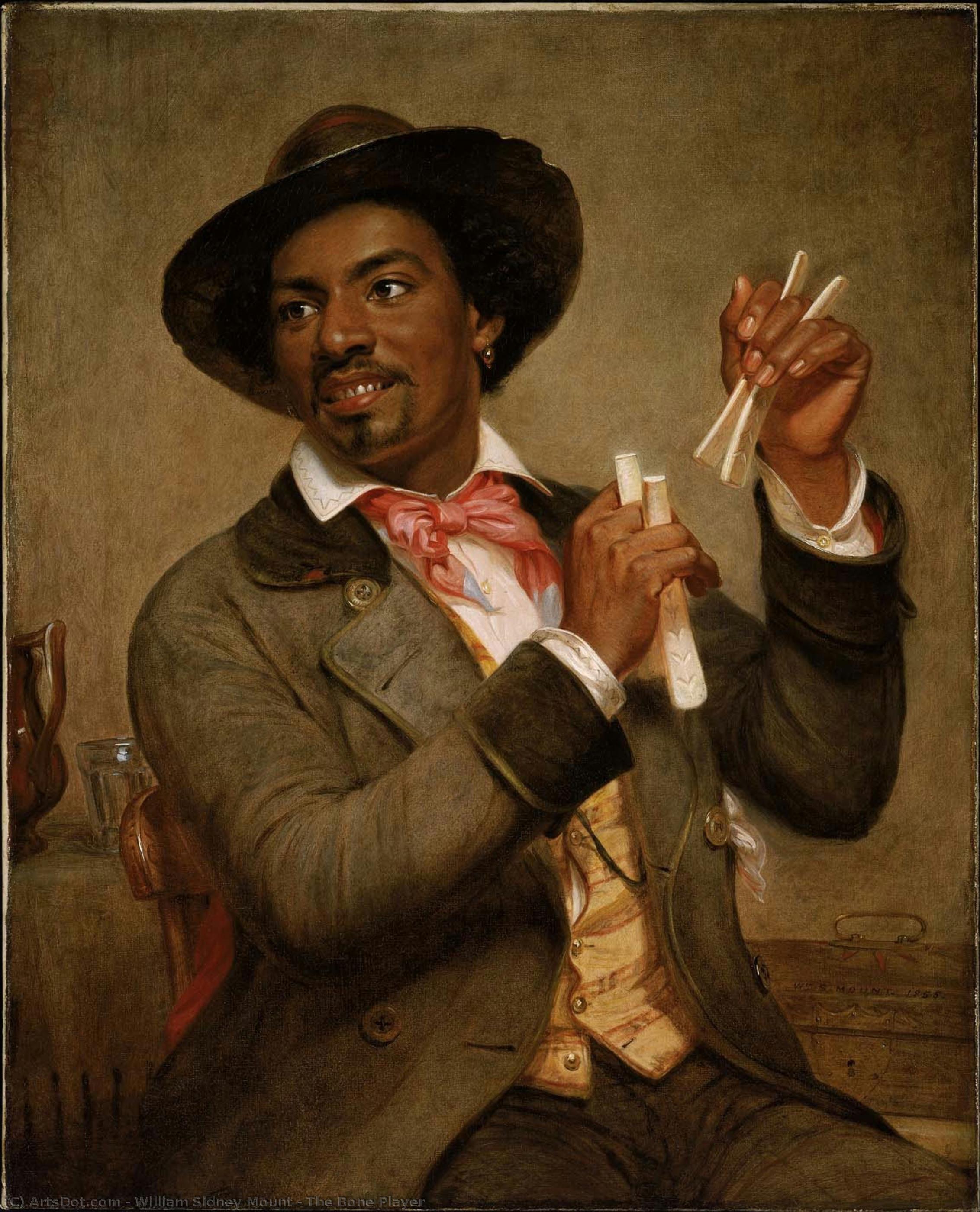
The Bone Player

William Sidney Mount’s ‘The Bone Player,’ a captivating 1856 genre painting, portrays a dignified African American musician with chopsticks – a unique detail reflecting Victorian stereotypes. Explore this remarkable piece and its historical context.

Descubre a William Sidney Mount (1807-1868), pionero de la pintura estadounidense que capturó la vida rural en Long Island con realismo y encanto.

Reproducción al óleo hecha a mano

Óleo sobre lienzo pintado a mano en el tamaño y marco de su elección, realizado por encargo por nuestros artistas.


P118B $10
P118H $10
P118W $10
P438Z $10
P508JH $12
P508YH $12
P805H $10
P805Z $10
P919BZ $10
P919G $10
P919XJ $10
P959ZH $10
P968JZ $12
W106C $8
W218G $10
W218JH $8
W218Y $10
W307PJ $10
W316G $10
W316PJ $8
W316Y $10
W398PJ $8
W4111J $10
W500HY $15
W500JH $15
W692G $12
W849H $8
W940BG $15
W953PJ $8

Standard
custom
CM
INCH

Elija entre nuestros tamaños predefinidos que respetan las proporciones originales de la obra.

ancho
altura

Puede ingresar sus propias dimensiones para adaptarse a un marco o espacio específico. Si el tamaño seleccionado no coincide con las proporciones de la imagen original, recortaremos la obra o extenderemos la pintura con elementos adicionales pintados a mano. Se le enviará una maqueta digital para su aprobación antes de comenzar la producción.
Tenga en cuenta que la vista previa en pantalla no refleja el recorte o la extensión reales. Solo la maqueta mostrará con precisión la composición final.
Si bien existen tamaños personalizados, recomendamos seleccionar una dimensión de la lista predefinida para preservar las proporciones originales.

Ejemplos de lo que se puede personalizar: Reemplace el rostro con una foto del cliente; Agregue una mascota (por ejemplo, cambie un gato por un perro); Incluya un mensaje oculto en el fondo; Cambie el paisaje o los elementos del fondo.
Tras realizar el pedido, el equipo de WahooArt.com enviará un correo electrónico al cliente para solicitar instrucciones y proporcionarle una vista previa del boceto.

Entrega mundial () en 3-4 semanas en lugar de las 5 semanas estándar. (2 julio). Sin compromisos con la calidad.

why_choose_icon
Envío exprés gratuito a todo el mundo
why_choose_icon
Lienzo de lino de alta calidad
why_choose_icon
Seguro de envío total
why_choose_icon
Garantía de reembolso de impuestos aduaneros
why_choose_icon
Garantía de fidelidad de color
why_choose_icon
Política de devolución de 60 días (solo por defectos)
why_choose_icon
Garantía de devolución del 100% del dinero
why_choose_icon
Descuento por pedido múltiple

Precio total

-

reproduction

The Bone Player

Técnica de reproducción

Tamaño de la reproducción

-

Precio total final

-

Datos clave

  • Subject or theme: African American Musicianship
  • Notable elements or techniques: Ivory, wood, bone instruments; Detailed facial features
  • Artistic style: Realistic Portraiture
  • Artist: William Sidney Mount
  • Year: 1856
  • Dimensions: 91.76 x 73.98 cm
  • Title: The Bone Player

Test de arte

Solo hay una respuesta correcta para cada pregunta.

Pregunta 1:
What artistic style is William Sidney Mount’s *The Bone Player* primarily associated with?
Pregunta 2:
Why was *The Bone Player* commissioned by Goupil and Company?
Pregunta 3:
Scholars debated whether *The Bone Player* represents a stereotypical depiction of African Americans or a sensitive portrait of an individual. What evidence supports this debate?
Pregunta 4:
What was Mount’s primary motivation for creating *The Bone Player*, considering his own musical interests?
Pregunta 5:
What broader historical context influenced Mount’s decision to portray an African American musician?

Descripción de la obra

The Bone Player: A Portrait of Musical Identity Amidst Victorian Stereotypes

William Sidney Mount’s *The Bone Player* stands as a fascinating testament to the artistic landscape of mid-nineteenth century America—a blend of portraiture and genre painting that simultaneously celebrates individual character and reflects prevailing societal attitudes toward African American musicians. Born in Long Island, Mount honed his craft alongside his brother, a skilled painter specializing in portraits and signage, before pursuing formal training at the National Academy of Design in New York City. By 1856, he had firmly established himself as one of the nation’s foremost artists, recognized for his ability to capture the essence of everyday life with remarkable realism. Mount embarked on this ambitious project—two depictions of African American musicians destined for lithographic reproduction in Europe—following a commission from Goupil and Company. This undertaking wasn't merely about commercial success; it was deeply intertwined with intellectual currents shaping the era, notably theories of evolution which positioned African Americans as possessing innate musical aptitude surpassing that of Caucasians. Recognizing the potential market appeal of such imagery – both to European audiences captivated by exoticism and to American sensibilities eager to define national identity – Mount skillfully navigated the complexities of artistic representation within a politically charged climate surrounding slavery. The painting itself presents a man seated comfortably, holding chopsticks with an air of quiet contemplation. He wears a scarlet bow tie and boasts a neatly groomed mustache, details meticulously rendered by Mount—a deliberate departure from stereotypical depictions prevalent in genre paintings of the time. Unlike many artists of his era who employed caricature to portray African Americans as caricatured figures, Mount treated his subject with respect and nuance, emphasizing his distinctive facial features – high cheekbones, white teeth, and a refined mustache – suggesting an individual portrait rather than a generalized type. The inclusion of instruments like ivory chopsticks—a symbol associated with African American minstrels—further reinforces the painting’s thematic focus on musical skill as opposed to broader biographical information. Adding to the intrigue is the backdrop: bottles of liquor positioned strategically, alongside two books and cups – elements that contribute to an intimate domestic scene. These props subtly underscore the sitter's social milieu and invite contemplation about his life beyond his musical talent. Scholars have debated whether *The Bone Player* embodies a genuine portrayal of an individual or merely reflects Victorian stereotypes concerning African American intellect and artistic inclination. While Mount’s title— “The Bone Player”—indicates an emphasis on musical proficiency, the careful delineation of physical characteristics argues for a more humanist approach. Ultimately, Mount's masterpiece transcends its historical context to offer a poignant meditation on identity and representation. It exemplifies his masterful technique – blending realism with psychological insight – securing its place as a landmark achievement in American genre painting and demonstrating an artist’s awareness of the cultural currents shaping his time. Its enduring appeal lies not only in its aesthetic beauty but also in its capacity to provoke thoughtful discussion about perceptions of race and artistry during the tumultuous years leading up to the Civil War.

Stylistic Considerations: Genre Painting Meets Portraiture

Mount's approach distinguishes *The Bone Player* from many contemporary artistic endeavors. Rather than adhering strictly to formal portrait conventions—characterized by idealized poses and meticulous attention to detail—he embraced the tenets of genre painting, a movement that championed depictions of everyday life with an emphasis on capturing authentic emotion and atmosphere. This stylistic choice reflects Mount’s broader artistic philosophy: to elevate the commonplace into something beautiful and meaningful. The artist skillfully combined elements of both genres, resulting in a composition that is simultaneously intimate and socially conscious. The muted color palette—dominated by earthy tones—contributes to the painting's subdued yet contemplative mood. Mount employed meticulous brushwork, layering thin glazes to achieve remarkable luminosity and textural richness. This technique—characteristic of American Realism—allowed him to convey subtle nuances of expression and capture the tactile qualities of the sitter’s clothing and surroundings. Furthermore, Mount’s compositional arrangement—centered around the figure—creates a focal point that draws the viewer's eye inward, fostering a sense of connection with the subject.

Historical Context: Victorian Stereotypes and Evolutionary Thought

*The Bone Player* emerged during a period marked by intense intellectual debate concerning racial hierarchies and evolutionary theories. The prevailing belief was that African Americans possessed inherent musical talent surpassing that of Europeans due to their perceived proximity to “primitive” instincts—a notion championed by figures like Herbert Spencer. Mount’s decision to portray his subject as an individual, rather than adhering to stereotypical representations prevalent in genre painting, speaks to this broader intellectual landscape. He deliberately avoided caricature, opting instead for a dignified depiction that acknowledged the sitter's humanity and challenged prevailing prejudices. The commission from Goupil and Company—a Parisian printing firm eager to capitalize on European fascination with exotic cultures—further underscores the painting’s significance within its historical context. Mount understood that images of African American musicians would resonate powerfully with audiences abroad, bolstering his reputation as a commercially astute artist while simultaneously engaging in a dialogue about societal perceptions of race.

Symbolism: Instruments and Domestic Tranquility

The inclusion of instruments like ivory chopsticks—a symbol associated with African American minstrels—serves as more than mere decorative element; it encapsulates the painting’s central theme – musical skill as opposed to biographical information. This deliberate choice reflects Mount's artistic sensitivity and his awareness of cultural conventions shaping Victorian society. Simultaneously, the domestic setting—characterized by bottles of liquor, books, and cups—suggests a scene of quiet contemplation and social comfort. These props invite viewers to consider the sitter’s life beyond his musical talent, prompting reflection on themes of identity, leisure, and human connection.

Emotional Impact: Dignity and Observation

Ultimately, *The Bone Player* succeeds in conveying a profound sense of dignity and observation—qualities that define Mount's artistic legacy. Unlike many artists of his time who prioritized spectacle or melodrama, he focused on capturing the quiet beauty of everyday life with remarkable empathy. The painting’s understated palette, meticulous brushwork, and carefully considered compositional arrangement contribute to its emotional resonance, inviting viewers to contemplate the complexities of human experience within a specific historical context. It remains a powerful reminder that art can illuminate both individual character and broader societal concerns—a testament to Mount's enduring artistic vision.

Obras similares


Biografía del artista

William Sidney Mount: Pionero de la Pintura de Género Americana

  • Nacimiento: 26 de noviembre de 1807, Setauket, Long Island, Nueva York
  • Fallecimiento: 19 de noviembre de 1868, Setauket, Nueva York
  • Nacionalidad: Estadounidense
  • Conocido por: Pintura de género, paisajes, retratos y diseño de violines

Primeros Años y Formación Artística

  • William Sidney Mount nació en una familia con inclinaciones artísticas. Su padre, Thomas Shepard Mount, operaba una granja, tienda y taberna, mientras que su tío, Micah Hawkins, era un compositor, dramaturgo, mimico y poeta. Este entorno fomentó el interés temprano de William tanto en el arte como en la música.
  • Inicialmente, se formó con su hermano mayor, Henry Smith Mount, un pintor de letreros en Nueva York City. Durante este tiempo, perfeccionó sus habilidades en dibujo y pintura.
  • Mount asistió a la exposición de la Academia Americana de las Bellas Artes en 1825, lo que influyó significativamente en su dirección artística. Comenzó a centrarse en representar escenas de la vida cotidiana, alejándose de los retratos tradicionales y los temas históricos.
  • En 1829, estableció su propio estudio en Nueva York City, marcando un paso importante en su carrera como artista independiente.

Estilo Artístico y Obras Destacadas

  • Mount es celebrado por ser uno de los primeros artistas estadounidenses en especializarse en la pintura de género, que representa escenas de la vida cotidiana. Su trabajo capturó la esencia de la rural Long Island durante el siglo XIX, representando agricultores, músicos, bailarines y otros miembros comunes de la sociedad dedicados a sus actividades diarias.
  • Características Clave: El estilo de Mount se caracteriza por el realismo, la atención al detalle y un enfoque en capturar momentos auténticos. A menudo representaba escenas con una sensación de calidez y humor, celebrando los placeres simples de la vida rural.
  • Obras Destacadas:
    • The Banjo Player (1856): Un conmovedor retrato de un músico afroamericano tocando el banjo, que muestra el compromiso de Mount con la representación de individuos diversos con dignidad.
    • The Long Story (también conocida como The Tough Story): Representa a un hombre absorto en un periódico, capturando un momento de contemplación tranquila y destacando la importancia de la lectura y la información en la vida cotidiana.
    • Dancing on the Barn Floor (1831): Una animada escena de juerga rural, que muestra la capacidad de Mount para capturar el movimiento y la emoción a través de sus pinceladas.
    • Right and Left: Una divertida representación de un combate de boxeo, que demuestra la habilidad de Mount para retratar la interacción humana y capturar momentos fugaces.

Influencia y Legado

  • El trabajo de William Sidney Mount influyó significativamente en el desarrollo del arte estadounidense. Al centrarse en la pintura de género, ayudó a establecerla como un género importante dentro del panorama artístico estadounidense.
  • Sus realistas representaciones de la vida rural allanaron el camino para futuras generaciones de artistas que buscaban capturar la esencia de la identidad y la cultura estadounidenses.
  • La representación de afroamericanos en las pinturas de Mount fue innovadora para su época, desafiando los estereotipos prevalecientes y abogando por la igualdad y el respeto.
  • Es recordado como un pionero del realismo estadounidense y un cronista de la vida rural en Long Island, cuyo trabajo continúa resonando con el público hoy en día. Su legado se extiende más allá del mundo del arte, reflejando un compromiso con la representación de personas comunes con dignidad y celebrando las simples alegrías de la vida.

Años Posteriores y Continuas Búsquedas Artísticas

  • En 1860, Mount construyó un estudio portátil en un carro tirado por caballos, lo que le permitió viajar libremente por Long Island y pintar escenas directamente de la vida. Este estudio móvil le permitió capturar momentos espontáneos e interactuar con las personas que representaba.
  • Además de su carrera pictórica, Mount también fue un músico e inventor consumado. Tocaba el violín, componía música y diseñó varias versiones de su propio violín, al que llamó "Cradle of Harmony" (Cuna de Armonía).
  • Falleció el 19 de noviembre de 1868 en Setauket, Nueva York, dejando atrás un rico legado artístico que continúa inspirando y cautivando a las audiencias. Su casa y estudio ahora están designados como Monumento Histórico Nacional, preservando su espacio creativo para futuras generaciones.
William Sidney Mount

William Sidney Mount

1807 - 1868 , Estados Unidos de América

Datos clave

  • Fecha De Fallecimiento: 19 de noviembre de 1868
  • Fecha De Nacimiento: 26 de noviembre de 1807
  • Lugar De Nacimiento: Setauket, EE. UU.
  • Movimiento Artístico: Pintura de género americana
  • Nacionalidad: Estadounidense
  • Nombre Completo: William Sidney Mount
  • Obras Notables:
    • El tocador de banjo
    • La larga historia
    • Baile en el granero
Explore obras de arte organizadas por temas, estilos y características.