x
Comprar pintura hecha a mano Comprar pintura hecha a manoComprar imagen Comprar imagen EnviarEnviar
DetallesDetalles Añadir a favoritos Añadir a favoritos DescargarDescargar SimilaresSimilares Presentación de diapositivasPresentación de diapositivas

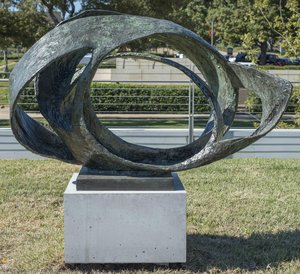
Figure lying on its side (Version V)

William Kenneth Armitage's 'Figure Lying on Its Side (Version V)' is a poignant bronze sculpture exploring themes of vulnerability and human form. Discover its geometric beauty and profound emotional depth.

Descubre a William Kenneth Armitage (1916-2002), escultor británico célebre por sus figuras de bronce semiabstractas y el estilo 'geometría del miedo'. Explora obras icónicas como "Both Arms" y su legado artístico.

Giclée / Impresión de arte

Impresiones giclée o en lienzo de calidad de museo con producción rápida y opciones de acabado flexibles. (Comprar pintura hecha a mano Comprar pintura hecha a manoComprar imagen Comprar imagen)

Estándar
a medida
CM
INCH

Elija entre nuestros tamaños predefinidos que respetan las proporciones originales de la obra.

ancho
altura

Puede introducir sus propias dimensiones para adaptarse a un marco o espacio específico. Si el tamaño seleccionado no coincide con las proporciones de la imagen original, recortaremos la obra de arte o extenderemos la imagen con un borde con efecto espejo o de color sólido. Se enviará una maqueta digital para su aprobación antes de que comience la producción.
Tenga en cuenta que la vista previa en pantalla no refleja el recorte o la extensión real. Solo la maqueta mostrará con precisión la composición final.
Aunque existen tamaños personalizados, recomendamos seleccionar una dimensión de la lista predefinida para preservar las proporciones originales.

Envío a todo el mundo () en 2 semanas en lugar de las 4/5 semanas estándar. (4 septiembre)

why_choose_icon
Envío exprés gratuito a todo el mundo
why_choose_icon
Lienzo de lino de alta calidad
why_choose_icon
Seguro de envío total
why_choose_icon
Garantía de reembolso de impuestos aduaneros
why_choose_icon
Garantía de fidelidad cromática exacta
why_choose_icon
Política de devolución de 60 días (solo por defectos)
why_choose_icon
Garantía de devolución del 100% del dinero
why_choose_icon
Descuento por cantidad

Precio total

$ 68

reproduction

Figure lying on its side (Version V)

Giclée / Impresión de arte

Dimensiones de la reproducción

-

Precio total final

$ 68

Datos clave

  • Artist: William Kenneth Armitage
  • Medium: Bronze
  • Artistic style: Geometry of Fear
  • Title: Figure lying on its side (Version V)
  • Dimensions: 38.1 x 82.5 x 22.3cm
  • Influences: Ancient art
  • Notable elements: Geometric, semi-abstract

Test de arte

Cada pregunta tiene una única respuesta correcta.

Pregunta 1:
What is the primary subject of William Kenneth Armitage’s sculpture, ‘Figure Lying on Its Side (Version V)’?
Pregunta 2:
In what year was ‘Figure Lying on Its Side (Version V)’ created?
Pregunta 3:
William Kenneth Armitage is known for his use of which primary material in his sculptures?
Pregunta 4:
The sculpture’s style, often described as ‘Geometry of Fear,’ reflects which broader artistic trend?
Pregunta 5:
Which of the following best describes Armitage’s approach to representing the human figure?

The Sculptor's Introspection: William Kenneth Armitage’s “Figure Lying on Its Side”

William Kenneth Armitage’s “Figure Lying on Its Side (Version V)” isn’t merely a sculpture; it’s a distilled essence of human experience, rendered in the cool, enduring solidity of bronze. Completed in 1957, this piece stands as a pivotal work within Armitage's oeuvre, embodying his signature style – a deliberate simplification of the human form coupled with an underlying current of unease and existential questioning. The sculpture immediately commands attention not through overt drama, but through its quiet intensity; it’s a study in restraint, inviting prolonged contemplation rather than immediate judgment.

Armitage, emerging from the austerity of post-war Britain, was deeply influenced by the anxieties of his time. His work reflects this, eschewing traditional heroic representations and instead focusing on the vulnerability inherent within the human condition. The figure itself is remarkably ambiguous – neither definitively male nor female, young nor old – existing in a state of suspended animation, caught between repose and imminent movement. This deliberate lack of specificity allows viewers to project their own emotions and experiences onto the sculpture, fostering a deeply personal connection.

A Geometry of Fear: Armitage’s Artistic Language

Armitage's style is often described as “Geometry of Fear,” a term coined by critics to capture the way he employed sharp angles and fragmented forms to convey a sense of disorientation and psychological tension. “Figure Lying on Its Side” exemplifies this perfectly. The figure’s limbs are elongated, almost skeletal, creating a feeling of precariousness and vulnerability. The subtle curve of the torso is countered by the rigid lines of the chair-like structure attached to its side – an element that simultaneously grounds the sculpture and reinforces its sense of confinement. The bronze itself, chosen for its durability and ability to capture minute details, contributes significantly to the work’s impact; it possesses a tactile quality that invites touch while simultaneously conveying a sense of permanence.

Interestingly, Armitage drew inspiration from ancient art forms, particularly Cycladic sculpture – the enigmatic, abstract figures found on the Greek islands. These primitive forms, devoid of narrative and imbued with an almost ritualistic quality, resonate within Armitage’s work, suggesting a connection to primal human emotions and beliefs. The deliberate simplification of the figure echoes this ancient aesthetic, stripping away extraneous detail to reveal the core essence of form.

Symbolism and Interpretation: A Fragmented Self

The chair-like appendage attached to the figure’s side is particularly intriguing. It can be interpreted as a symbol of societal constraints, representing the pressures and expectations that shape our lives. Alternatively, it might suggest a yearning for connection or support – a desire to anchor oneself in a world often characterized by isolation. The figure's prone position further reinforces this sense of vulnerability, suggesting a state of surrender or perhaps even resignation.

Furthermore, the sculpture’s monochrome palette—a stark contrast against the warm tones of bronze—heightens its emotional impact. The absence of color forces viewers to focus on the form itself, intensifying the feeling of unease and prompting deeper reflection. The work is not about depicting a specific narrative; instead, it invites us to confront our own anxieties and uncertainties.

A Legacy of Quiet Intensity

“Figure Lying on Its Side (Version V)” remains a powerful testament to Armitage’s artistic vision – a poignant exploration of the human condition rendered in bronze. It's a work that rewards repeated viewing, revealing new layers of meaning with each encounter. Reproductions of this sculpture offer an accessible way to experience its profound emotional resonance, bringing its quiet intensity into homes and galleries alike. Its enduring appeal lies not in grand gestures or dramatic displays, but in its ability to capture the subtle complexities of human existence – a reminder that even in moments of vulnerability, there is beauty and significance to be found.


Biografía del artista

A Life Sculpted in Bronze: The World of Kenneth Armitage

William Kenneth Armitage, known to the art world as Kenneth Armitage, emerged from the industrial heartland of Leeds, England, in 1916, a year steeped in the shadows of the First World War. His journey toward becoming one of Britain’s most significant sculptors of the 20th century was not predetermined but forged through dedication, artistic exploration, and the disruptive forces of global conflict. Early talent blossomed at Leeds College of Art from 1934 to 1937, a foundation upon which he built further skills at the prestigious Slade School of Fine Art in London until 1939. However, the looming specter of war interrupted his studies as he answered the call to serve in the Royal Artillery. This period undoubtedly shaped his perspective, instilling a sense of resilience and perhaps contributing to the underlying tension often perceived within his work. Following demobilization, Armitage found himself drawn to education, taking on a pivotal role at the Bath Academy of Art from 1946 to 1956, where he headed the sculpture department, nurturing a new generation of artists while simultaneously refining his own distinctive style.

The Geometry of Fear and Human Form

Armitage’s artistic signature lies in his compelling exploration of the human figure rendered primarily in bronze. He didn't seek to replicate reality but rather to distill it, stripping away extraneous detail to reveal the essence of form and emotion. His sculptures are characterized by a semi-abstract quality; figures remain recognizable as human, yet they are simplified, stylized, and often fragmented. This wasn’t merely an aesthetic choice but a deliberate attempt to convey a sense of vulnerability and existential questioning that resonated with the post-war climate. Geometric shapes play a crucial role in his visual language, lending structure and a certain austerity to his figures. Critics coined the term ‘Geometry of Fear’ to describe the work of Armitage alongside contemporaries like Lynn Chadwick and Henry Moore, recognizing a shared preoccupation with anxiety, alienation, and the fragility of human existence. However, while acknowledging Moore's profound influence – particularly his exploration of the human form in space – Armitage forged his own path, embracing a more angular, geometric approach that set him apart. The echoes of ancient art also resonate within his work; he drew inspiration from the simplified forms and archaic qualities found in Ancient Egyptian and Cycladic sculptures, imbuing his pieces with a timeless quality. He believed that sculpture could express profound emotions without resorting to narrative or explicit symbolism—a conviction rooted in his belief that form itself possessed inherent expressive power.

Early Influences and Artistic Development

Armitage’s formative years were marked by exposure to the avant-garde movements of the time, notably Surrealism and Cubism. These influences instilled a fascination with fragmentation and distortion – techniques he would later adapt to his own sculptural idiom. His early carvings, though largely destroyed, foreshadowed the stylistic innovations that would define his mature oeuvre. The Slade School of Fine Art provided him with invaluable training in draughtsmanship and tonal painting, skills which complemented his sculptural pursuits and contributed to his ability to capture subtle nuances of emotion and gesture. Furthermore, Armitage’s involvement in teaching at Bath Academy of Art allowed him to cultivate a cohort of talented artists who would carry forward his legacy—a testament to his commitment to artistic education and mentorship.

Major Achievements and Recognition

Kenneth Armitage achieved international acclaim for his sculptural contributions to British art history. His monumental bronze sculptures, notably “Both Arms” and “Mother and Child,” stand as enduring symbols of human compassion and resilience. He was awarded Best International Sculpture under Age 45 at the Venice Biennale in 1958—a pivotal moment that cemented his reputation as a visionary artist. Armitage’s work has been exhibited extensively throughout Europe and North America, securing its place among the most celebrated sculptures of the mid-century period. In 1969 he was appointed Commander of the Order of the British Empire (CBE) recognizing his distinguished service to the arts and humanities. Finally, in 1994 Armitage was elected Associate Royal Academician—a prestigious honor bestowed upon him by the Royal Academy for his lifelong dedication to artistic excellence.

A Lasting Legacy

Kenneth Armitage passed away peacefully in London in 2002, leaving behind a profound artistic legacy that continues to inspire and provoke thought. His sculptures are celebrated not only for their aesthetic qualities but also for their ability to tap into universal human emotions – anxiety, loneliness, resilience, and the search for meaning. He wasn’t simply creating objects; he was initiating a dialogue about what it means to be human in a complex and often unsettling world. His work stands as a testament to the power of art to reflect, challenge, and ultimately transcend the limitations of our time. Today, his pieces are exhibited in major museums and public spaces across the UK and internationally, ensuring that his unique vision continues to resonate with generations to come. Armitage’s influence can be seen in the work of contemporary sculptors who continue to explore the boundaries between abstraction and figuration, demonstrating the enduring relevance of his artistic innovations.
Kenneth Armitage

Kenneth Armitage

1916 - 2002 , Reino Unido

Datos clave

  • Artistic Movement Or Style: Escultura semiabstracta
  • Artists Who Influenced This Artist:
    • Henry Moore
    • Barbara Hepworth
  • Date Of Birth: 18 Julio 1916
  • Date Of Death: 22 Enero 2002
  • Full Name: William Kenneth Armitage
  • Nationality: Británico
  • Notable Artworks:
    • Both Arms
    • Figura Lying on its Side (Version V)
    • Legs Walking
  • Place Of Birth: Leeds, Reino Unido