Vista previa Vista previa en RA Cambiar a formato impreso Ver versión en imagen digital Compartir
Ver detalles Guía Añadir a favoritos Descargar Ver artículos similares Radiografía Presentación de diapositivas Estadísticas

Fruit and a White Rose

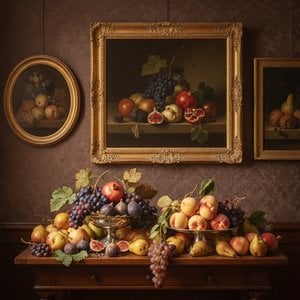
William James Glackens’ ‘Fruit and a White Rose’ (1930) captures a vibrant still life in the Ashcan School style, showcasing apples, grapes, and oranges on a table. Admire this realistic depiction of everyday beauty by a pioneering American artist – explore owning a piece of art history.

Descubre las realistas pinturas de William James Glackens (1870-1938), pionero del Ashcan School. Vibrantes escenas de Nueva York y París, capturando la vida cotidiana con detalle.

Reproducción al óleo hecha a mano

Óleo sobre lienzo pintado a mano en el tamaño y marco de su elección, realizado por encargo por nuestros artistas. ( Cambiar a formato impreso Ver versión en imagen digital)

P118B $10
P118H $10
P118W $10
P438Z $10
P508JH $12
P508YH $12
P805H $10
P805Z $10
P919BZ $10
P919G $10
P919XJ $10
P959ZH $10
P968JZ $12
W106C $8
W218G $10
W218JH $8
W218Y $10
W307PJ $10
W316G $10
W316PJ $8
W316Y $10
W398PJ $8
W4111J $10
W500HY $15
W500JH $15
W692G $12
W849H $8
W940BG $15
W953PJ $8

Estándar
personalizado
CM
INCH

Elija entre nuestros tamaños predefinidos que respetan las proporciones originales de la obra.

ancho
altura

Puede ingresar sus propias dimensiones para adaptarse a un marco o espacio específico. Si el tamaño seleccionado no coincide con las proporciones de la imagen original, recortaremos la obra o extenderemos la pintura con elementos adicionales pintados a mano. Se le enviará una maqueta digital para su aprobación antes de comenzar la producción.
Tenga en cuenta que la vista previa en pantalla no refleja el recorte o la extensión reales. Solo la maqueta mostrará con precisión la composición final.
Si bien existen tamaños personalizados, recomendamos seleccionar una dimensión de la lista predefinida para preservar las proporciones originales.

Ejemplos de lo que se puede personalizar: Reemplace el rostro con una foto del cliente; Agregue una mascota (por ejemplo, cambie un gato por un perro); Incluya un mensaje oculto en el fondo; Cambie el paisaje o los elementos del fondo.
Tras realizar el pedido, el equipo de WahooArt.com enviará un correo electrónico al cliente para solicitar instrucciones y proporcionarle una vista previa del boceto.

Envío a todo el mundo () en 3-4 semanas en lugar de las 5 semanas estándar. (22 septiembre). Sin comprometer la calidad.

why_choose_icon
Envío exprés gratuito a todo el mundo
why_choose_icon
Lienzo de lino de alta calidad
why_choose_icon
Seguro de envío completo
why_choose_icon
Garantía de reembolso de impuestos aduaneros
why_choose_icon
Garantía de fidelidad cromática exacta
why_choose_icon
Política de devolución de 100 días (solo por defectos)
why_choose_icon
Garantía de devolución del 100% del dinero
why_choose_icon
Oferta por volumen

Precio total

$ 272

reproduction

Fruit and a White Rose

Técnica de reproducción

Tamaño de la reproducción

-

Precio total

$ 272

Datos clave

  • Notable elements: Fruit, rose, detail
  • Location: Fort Lauderdale Museum
  • Artist: William Glackens
  • Subject or theme: Still life
  • Influences: Renoir
  • Title: Fruit and a White Rose
  • Medium: Oil on panel

Introduction to William James Glackens and ‘Fruit and a White Rose’

William James Glackens stands as a pivotal figure in American art, inextricably linked to the rise of the Ashcan School. This movement, born from a desire to depict unfiltered reality rather than idealized visions, sought to capture the pulse of urban life – its grit, its beauty, and its inherent contradictions. ‘Fruit and a White Rose,’ painted in 1930, exemplifies Glackens’ commitment to this aesthetic, offering a deceptively simple still life that resonates with profound historical and artistic significance. The painting, currently residing within the Museum of Art in Fort Lauderdale, United States, is more than just a depiction of fruit; it's a window into the sensibilities of an era grappling with modernity.

Composition and Technique: A Masterclass in Realism

Glackens’ masterful handling of oil on panel immediately draws the viewer into the scene. The composition is anchored by a prominent table, acting as both stage and backdrop to the vibrant arrangement of fruit. The artist's meticulous attention to detail is evident in the layering of textures – the smooth skin of the apples, the plumpness of the grapes, and the subtle variations in the oranges’ surfaces. Multiple apples are strategically placed, creating a sense of depth and inviting the eye to wander across the bowl. The use of color is particularly noteworthy; Glackens employs a restrained palette—muted reds, yellows, and browns—that enhances the realism rather than overwhelming it. This technique reflects a conscious decision to prioritize observation and direct representation over purely expressive gestures, aligning him with the core tenets of the Ashcan School.

Historical Context: The Ashcan School and the Spirit of New York

'Fruit and a White Rose' was created during a transformative period in American history. The 1930s witnessed rapid urbanization, industrial growth, and social change in New York City – themes frequently explored by Glackens and his contemporaries. The Ashcan School emerged as a reaction against the academic traditions of the time, seeking to portray the lives of ordinary people—immigrants, laborers, and artists—within the city’s bustling streets. The painting's subject matter – everyday objects arranged in a still life – subtly reflects this concern with the mundane, elevating it through Glackens’ skilled execution. The Burton Art Gallery’s founding in 1930 further underscores the artistic climate of the time, highlighting a dedication to showcasing contemporary art and historical artifacts.

Symbolism and Emotional Impact

Beyond its technical brilliance, ‘Fruit and a White Rose’ possesses a quiet emotional resonance. The inclusion of a white rose adds an element of delicate beauty to the otherwise robust scene, perhaps representing fleeting moments of grace or contemplation amidst the chaos of urban life. The arrangement itself – a collection of fruits ripe for consumption – can be interpreted as a symbol of abundance and nourishment, yet also hints at the transient nature of pleasure. Glackens’ ability to evoke such subtle emotions through seemingly simple imagery is a testament to his artistic vision and his profound understanding of human experience. The painting's enduring appeal lies in its capacity to connect with viewers on an intuitive level, prompting reflection on themes of beauty, mortality, and the everyday wonders of the world.


Biografía del artista

Un Pionero de la Escuela Ashcan

William James Glackens, una figura prominente en el arte americano, dejó una huella indeleble en la historia del arte con sus cautivadoras pinturas realistas. Nacido en Filadelfia, Pensilvania, en 1870, el viaje artístico de Glackens fue un testimonio de su inquebrantable pasión por capturar la esencia de la vida cotidiana.

Vida Temprana e Influencias

Los primeros años de Glackens estuvieron marcados por una inclinación innata hacia el arte, lo que le llevó a inscribirse en la Academia de Bellas Artes de Pensilvania. Bajo la tutela de Thomas Anshutz, un renombrado realista, Glackens perfeccionó sus habilidades, convirtiéndose finalmente en uno de los fundadores de la Escuela Ashcan. Este movimiento rechazó las convenciones artísticas tradicionales, centrándose en cambio en las realidades ásperas de la vida metropolitana.

Trayectoria Artística

El trabajo de Glackens se caracteriza por sus vibrantes escenas callejeras y representaciones de la vida cotidiana en el Nueva York y París pre-Primera Guerra Mundial, con tonos oscuros. Sus obras posteriores, influenciadas por Renoir, exhibieron un tono más brillante, reflejando su crecimiento como artista. Notablemente, Glackens también trabajó como ilustrador para periódicos y revistas en Filadelfia y Nueva York.
  • Vista de Haarlem con terrenos de blanqueo, una pintura de Jacob Isaakszoon van Ruisdael (Ruisdael), ejemplifica el nivel de detalle y artesanía que define el trabajo de Glackens. Esta pieza ahora forma parte de la colección del Museo Chrysler.
  • La obra maestra de Glackens, Los Compradores, es un testimonio de su habilidad para capturar la esencia de la vida urbana. Esta pintura se puede encontrar en la colección del Nuevo Realismo en WahooArt.com.

Legado e Impacto

Las contribuciones de Glackens al arte americano son multifacéticas, que se extienden más allá de su propio trabajo. Jugó un papel fundamental ayudando a Albert C. Barnes a adquirir pinturas europeas para la Fundación Barnes en Filadelfia. Esta colección se ha convertido en una piedra angular de la historia del arte americano. Obras clave y colecciones: * Los Compradores (Nuevo Realismo, óleo sobre lienzo, Museo Chrysler) * Vista de Haarlem con terrenos de blanqueo (Ruisdael, Castillo Sforza, Milán, Italia) Lecturas recomendadas: * [https://WahooArt.com/@/william-james-glackens](https://WahooArt.com/@/william-james-glackens) - explore la extensa colección de obras de Glackens en WahooArt.com. * [https://en.wikipedia.org/wiki/william_glackens](https://en.wikipedia.org/wiki/william_glackens) - profundice en la biografía detallada de William James Glackens en Wikipedia.

William James Glackens

William James Glackens

1870 - 1938 , Estados Unidos de América

Datos clave

  • Artistas Influyentes:
    • Thomas Anshutz
    • Renoir
  • Fecha De Nacimiento: 1870
  • Lugar De Nacimiento: Filadelfia, EE. UU.
  • Movimiento Artístico: Ashcan School, Realismo americano
  • Nacionalidad: Estadounidense
  • Nombre Completo: William James Glackens
  • Nombres Alternativos: William J Glackens
  • Obras Notables:
    • The Shoppers
    • Vista de Haarlem
Explore obras de arte organizadas por temas, estilos y características.