Una vida inmersa en el patrón y la innovación
William Frend De Morgan, nacido en Londres en 1839, fue una figura que desafió cualquier categorización sencilla. No era simplemente un alfarero, ni meramente un diseñador de azulejos, ni tampoco solo un novelista; era un polímata cuyo espíritu artístico permeó múltiples disciplinas. Nacido en un entorno intelectualmente estimulante —su padre, Augustus De Morgan, era un renombrado matemático, y su madre, Sophia Elizabeth Frend, una pensadora y escritora progresista—, el joven William recibió el aliento necesario para perseguir sus inclinaciones creativas. Aunque inicialmente se matriculó en las Royal Academy Schools, pronto apareció un sentimiento de desilusión que lo condujo hacia un camino más colaborativo y estéticamente afín. Este giro crucial se produjo con su encuentro con William Morris, una reunión que moldearía profundamente la trayectoria artística de De Morgan y lo sumergiría en el floreciente movimiento Arts and Crafts.
De la vitralería a la revelación cerámica
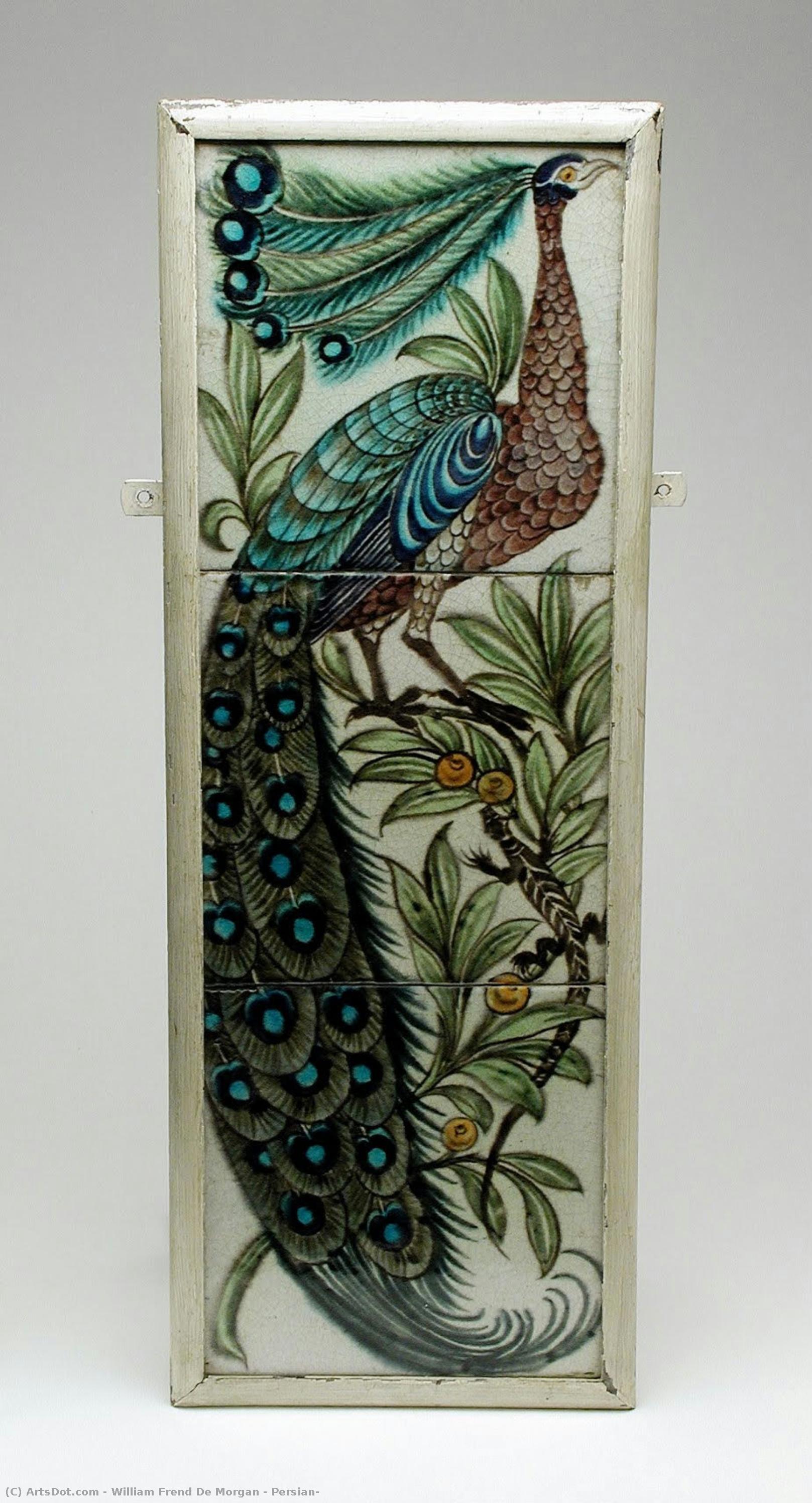
Las primeras exploraciones de De Morgan se centraron en la vidriería, trabajando junto a Morris & Co. y aportando diseños imbuidos de narrativas medievales y mitológicas. Sin embargo, fue la fascinación por el lustre —esa cualidad brillante e iridiscente que se encuentra en la antigua cerámica hispanomusulmana y la mayólica italiana— lo que verdaderamente encendió su pasión artística. Se dedicó a redescubrir las técnicas perdidas de la loza con lustre, experimentando meticulosamente con esmaltes y procesos de cocción. Esta búsqueda no consistía simplemente en replicar una estética; era una investigación científica impulsada por una curiosidad insaciable. Para 1872, De Morgan se había comprometido plenamente con la cerámica, estableciendo su propia alfarería en Chelsea. La década siguiente resultó notablemente fructífera, aunque marcada por desafíos técnicos. Combinó hábilmente azulejos de producción comercial con sus propias creaciones, desarrollando especialmente un azulejo de bizcocho de alta calidad, celebrado por sus irregularidades y durabilidad. Sus diseños durante este período comenzaron a cohesionarse en torno a motivos recurrentes: criaturas fantásticas, galeones, peces e intrincados patrones florales, todo ello plasmado en una distintiva paleta "persa" de azules profundos, turquesas, púrpura manganeso, verdes, rojo indio y amarillo limón.
Influencias orientales y florecimiento artístico
La visión artística de De Morgan estuvo profundamente informada por su profundo interés en el arte oriental, particularmente en la azulejería islámica. Esta fascinación no era una imitación superficial, sino un aprecio genuino por los complejos patrones geométricos, los colores vibrantes y la riqueza simbólica de estas tradiciones. Absorbió estas influencias, traduciéndolas a un lenguaje visual único que mezclaba la estética medieval con motivos orientales. Entre 1882 y 1900, De Morgan recibió encargos significativos, destacando la producción de elaborados paneles de azulejos para doce transatlánticos de la P&O bajo la dirección de T.E. Colcotto, así como trabajos anteriores para el yate Livadia del Zar Alejandro II. Estos proyectos a gran escala demostraron su capacidad para traducir diseños intrincados en esquemas decorativos expansivos. Su alfarería también floreció, abarcando platos grandes, cuencos para arroz y jarrones, a menudo dotados de vida gracias a las manos expertas de decoradores como Charles Passenger, Fred Passenger, Joe Juster y Miss Babb, artistas que ejecutaron fielmente los conceptos visionarios de De Morgan.
Un legado más allá de la cerámica
Aunque su alfarería y sus diseños de azulejos siguen siendo sus logros más celebrados, la energía creativa de William De Morgan se extendió al ámbito de la literatura. En sus últimos años, emprendió una segunda carrera como novelista, publicando nueve obras entre 1906 y 1917. Sus novelas, caracterizadas por diálogos realistas y un perspicaz comentario social, fueron bien recibidas durante su vida. El impacto de De Morgan resuena a través del atractivo perdurable de su arte. No se limitaba a replicar estilos históricos; estaba innovando, experimentando y forjando una estética única que continúa cautivando al público hoy en día. El Centro De Morgan en Londres se erige como un testimonio de su legado, preservando y exhibiendo sus notables contribuciones a las artes decorativas victorianas. Su obra encarna el espíritu del movimiento Arts and Crafts: un compromiso con la artesanía, la integridad artística y la integración armoniosa del arte en la vida cotidiana.
Fechas clave y obras notables
- 1839: Nacimiento en Gower Street, Londres.
- 1863: Comienzo de sus experimentos con vidriería y incursión en la alfarería.
- 1872: Establecimiento de su propia alfarería en Chelsea.
- 1882-1900: Encargos para producir paneles de azulejos para barcos de la P&O y el yate del Zar.
- 1906-1917: Publicación de nueve novelas.
- 1917: Fallecimiento en Londres.
- The Annunciation (presentado en WahooArt.com)
- Sunrise, Inverness Copse (de Paul Nash, presentado en WahooArt.com)
- Music Cabinet
- The Welsh Bible


 Cambiar a Impresión
 Enviar
 Compartir
 Detalles

 Descargar
 Similares
 Presentación de diapositivas
 Estadísticas


 Ver más


![Vida De Miguel De Cervantes Saavedra (life Of Miguel De Cervantes Saavedra). Libro V De La Edición De Don Quijote (biblioteca Nacional De España) [7] — Martín Fernández De Navarrete, Arte Académico](/media/artworks/images-thumb/8c/b6/8cb67a4dd450447373a546c8dd039e57.jpg)


