


 Oil On CanvasWallArtAcademic art
 189319th Century
 191.0 x 122.0 cm
Impresiones giclée o en lienzo de calidad de museo con producción rápida y opciones de acabado flexibles. ( Comprar pintura hecha a mano Comprar imagen)





























Elija entre nuestros tamaños predefinidos que respetan las proporciones originales de la obra.

Puede introducir sus propias dimensiones para adaptarse a un marco o espacio específico. Si el tamaño seleccionado no coincide con las proporciones de la imagen original, recortaremos la obra de arte o extenderemos la imagen con un borde con efecto espejo o de color sólido. Se enviará una maqueta digital para su aprobación antes de que comience la producción.
Tenga en cuenta que la vista previa en pantalla no refleja el recorte o la extensión real. Solo la maqueta mostrará con precisión la composición final.
Aunque existen tamaños personalizados, recomendamos seleccionar una dimensión de la lista predefinida para preservar las proporciones originales.
Envío a todo el mundo () en 2 semanas en lugar de las 4/5 semanas estándar. (6 septiembre)


Jeunesse
Dimensiones de la reproducción
In the realm of nineteenth-century Academic art, few works capture the ethereal intersection of the human and the divine as tenderly as William-Adolphe Bouguereau’s Jeunesse. Painted in 1893, this oil on canvas masterpiece serves as a profound meditation on innocence and the enduring spirit of youth. The composition centers on a woman of remarkable grace, her presence anchored by a luminous white dress and the delicate shimmer of a pearl necklace. She is not alone in her contemplation; flanking her are two celestial beings, angels whose gentle proximity suggests a shared secret or a whispered prayer. As she reaches up to hold the ears of these winged companions, a sense of profound intimacy emerges, drawing the viewer into a private moment of spiritual communion that transcends the boundaries of time.
The technical mastery displayed in Jeunesse is a testament to Bouguereau’s status as a titan of the French Academic school. His brushwork, though nearly invisible to the naked eye, achieves a level of hyper-realistic perfection that breathes life into the skin tones and the soft textures of the fabric. The artist employs a luminous color palette, where light does not merely strike the subjects but seems to emanate from within them. This technique creates a soft, pearlescent glow that enhances the painting's Neoclassical ideals of beauty and harmony. Every detail, from the subtle musculature of the angels to the decorative elegance of the vase in the background, is rendered with a precision that commands respect and invites prolonged study.
Beyond its surface beauty, Jeunesse is rich with symbolic resonance. The title itself, meaning "Youth," hints at a state of being rather than merely an age. The interaction between the woman and the angels symbolizes the connection between the earthly realm and the spiritual world, suggesting that purity of heart allows for a direct encounter with the divine. The pearls around her neck serve as symbols of wisdom and purity, while the serene atmosphere of the scene acts as an emotional sanctuary for the observer. For the collector or interior designer, this piece offers more than mere decoration; it provides an atmospheric anchor that can infuse a room with a sense of peace, sophistication, and timelessness.
Integrating a high-quality reproduction of such a significant work into a modern living space allows for a dialogue between historical grandeur and contemporary elegance. Whether placed in a sunlit gallery or a quiet study, the painting’s ability to evoke emotion remains undiminished. It stands as a breathtaking tribute to the era of Bouguereau, reminding us that even in a fast-paced world, there is an eternal value in stillness, beauty, and the pursuit of the sublime.

William-Adolphe Bouguereau recibió su formación artística en la École des Beaux-Arts de París. Estudió bajo la tutela de François-Edouard Picquenot, una influencia significativa en su desarrollo temprano. Bouguereau estuvo fuertemente influenciado por las obras de Rafael y Tiziano, evidente en sus ricas paletas de colores y composiciones detalladas. Esta base clásica moldeó su enfoque de la pintura a lo largo de su carrera.
El estilo artístico de Bouguereau se caracteriza por el realismo, capturando meticulosamente la emoción humana y la anatomía con una precisión notable. Fue un maestro en la representación de la forma femenina, a menudo retratando figuras mitológicas y escenas de género con una belleza idealizada. Algunas de sus obras más notables incluyen:
Las pinturas de Bouguereau a menudo presentaban temas mitológicos, escenas alegóricas e idealizaciones de mujeres, reflejando los gustos populares del público que asistía al Salón.
A pesar de alcanzar una inmensa popularidad durante su vida, la obra de Bouguereau cayó en desgracia a principios del siglo XX a medida que las tendencias artísticas se desplazaban hacia la abstracción y el modernismo. Sin embargo, su legado ha experimentado un importante resurgimiento en los últimos años. Los historiadores del arte y los coleccionistas ahora reconocen su destreza técnica y su dedicación a los valores artísticos tradicionales.
Las obras de Bouguereau se pueden encontrar en prestigiosos museos de todo el mundo:
Sus pinturas también forman parte de numerosas colecciones privadas, contribuyendo aún más a su atractivo perdurable.

1825 - 1905 , Francia
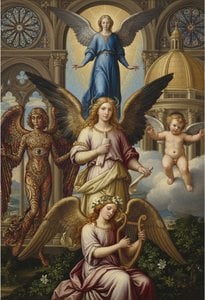
Explore the profound beauty of angelic figures in art history. From Renaissance masterpieces to celestial symbolism, our expert guide offers a sophisticated journey through the divine imagery of the Old Masters for discerning collectors and art enthusiasts.

Explore the refined world of Neoclassical portraiture. Discover the mastery of line, light, and order through an expert exploration of academic art history, from Jacques-Louis David to Jean-Antoine Houdon. Immerse yourself in the timeless elegance of classical realism.

Explore the profound elegance of Neoclassical art. Discover the principles of order, symmetry, and virtue through the works of masters like David and Mengs. Immerse yourself in a journey of classical grace and timeless aesthetic perfection.

 Ver en contexto
 Enviar
 Compartir
 Detalles

 Descargar
 Similares
 Radiografía
 Presentación de diapositivas
 Ver más







 La opción de vidrio solo está disponible en tamaños inferiores a 110 cm.


