A Moment Frozen in Earth and Light
Vincent van Gogh’s *The Farmer’s Dig* (1885), a seemingly simple depiction of a man laboring in a field, is far more than a pastoral scene. It's a concentrated distillation of the artist’s burgeoning emotional landscape, a testament to his evolving understanding of color and form, and a poignant reflection on themes of isolation, toil, and the enduring connection between humanity and the land. Painted during Van Gogh’s formative years in the south of France, this work represents a crucial step in his artistic development, showcasing a move away from purely representational art towards a deeply personal expression of feeling.

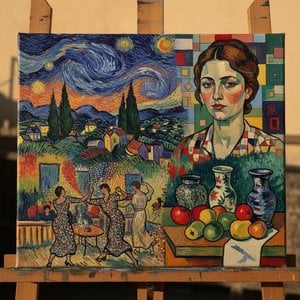
(Image Placeholder - Replace with an actual image of the artwork)
Impasto and the Language of Emotion
Van Gogh’s technique in *The Farmer’s Dig* is immediately arresting. He employs a thick, almost sculptural application of paint – a method known as impasto – that dominates the canvas. The shovel, the man's body, and even the surrounding earth are rendered with ridges and peaks of color, creating a tactile surface that invites close inspection. This isn’t merely about depicting texture; it’s about conveying emotion directly through the physicality of the paint itself. Each stroke is imbued with energy, reflecting the strenuous effort of the farmer and, perhaps, Van Gogh's own internal struggles.
- Color Palette: Dominated by earthy tones – ochres, browns, greens – punctuated by flashes of vibrant blue in the sky and a startlingly bright yellow in the shovel.
- Brushwork: Characterized by short, choppy strokes that build up layers of paint, creating a sense of movement and dynamism.
- Impasto Technique: The thick application of paint adds depth, texture, and a powerful emotional resonance to the scene.
Symbolism in the Rural Landscape
The painting’s symbolism is layered and open to interpretation. The solitary farmer, his back bent with labor, immediately evokes themes of hardship and perseverance. He represents not just physical toil but also a fundamental human condition – the struggle against nature and the acceptance of one's fate. The vastness of the field, rendered in muted tones, suggests both opportunity and isolation. The bright yellow shovel, a small point of intense color, could symbolize hope or perhaps the fleeting rewards of labor. Some scholars suggest that the painting reflects Van Gogh’s own feelings of alienation and his desire to find meaning within the simple rhythms of rural life.
“The farmer is not merely digging; he is wrestling with the earth itself,” one art historian noted, “a metaphor for Van Gogh's own battle against despair.”
A Bridge Between Realism and Expression
*The Farmer’s Dig* stands as a pivotal work in Van Gogh’s artistic journey. While rooted in realism – accurately depicting the appearance of the farmer and his surroundings – it transcends mere representation through its intensely emotional execution. It foreshadows the development of Post-Impressionism, where artists began to prioritize subjective experience over objective observation. This painting demonstrates Van Gogh's early attempts to translate his inner world onto canvas, laying the groundwork for his later, more radical explorations of color and form. It’s a powerful reminder that art can be both a mirror reflecting reality and a window into the soul.



 Vista previa
 Cambiar a formato impreso
 Compartir
 Compartir
 Ver detalles
 Guía
Guía

 Descargar
 Ver artículos similares
 Radiografía
 Presentación de diapositivas
 Estadísticas

 Leer más






































 La opción de vidrio solo está disponible en tamaños inferiores a 110 cm.




![Irises [1889]](/media/artworks/images-thumb/ca/85/ca85582a4fd1dc392efef83ec4dc3124.jpg)


