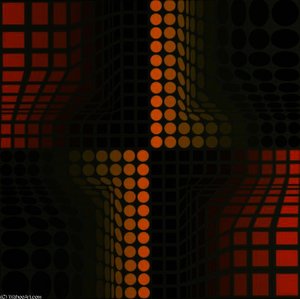
Impresiones giclée o en lienzo de calidad de museo con producción rápida y opciones de acabado flexibles. ( Comprar pintura hecha a mano Comprar imagen)





























Elija entre nuestros tamaños predefinidos que respetan las proporciones originales de la obra.

Puede introducir sus propias dimensiones para adaptarse a un marco o espacio específico. Si el tamaño seleccionado no coincide con las proporciones de la imagen original, recortaremos la obra de arte o extenderemos la imagen con un borde con efecto espejo o de color sólido. Se enviará una maqueta digital para su aprobación antes de que comience la producción.
Tenga en cuenta que la vista previa en pantalla no refleja el recorte o la extensión real. Solo la maqueta mostrará con precisión la composición final.
Aunque existen tamaños personalizados, recomendamos seleccionar una dimensión de la lista predefinida para preservar las proporciones originales.
Envío a todo el mundo () en 2 semanas en lugar de las 4/5 semanas estándar. (7 septiembre)


Pauk 101
Dimensiones de la reproducción
Victor Vasarely (1906-1997), born Győző Vásárhelyi in Pécs, Croatia, stands as a monumental figure in the history of 20th-century art. Often hailed as “the grandfather” of Op Art – Optical Art – he fundamentally reshaped our understanding of perception and artistic expression, transforming geometric abstraction into a captivating exploration of illusion and dynamism.
Vasarely’s journey began with an initial foray into medicine at Eötvös Loránd University in Budapest. However, his innate fascination for visual arts quickly superseded academic pursuits, propelling him toward painting and ultimately establishing him as one of the foremost innovators of Kinetic Art. His formative years were deeply influenced by the Bauhaus movement, fostering a conviction that art should serve practical function alongside aesthetic beauty – a philosophy that would permeate his entire artistic practice.
The pivotal moment in Vasarely’s artistic evolution arrived with his enrollment at Sándor Bortnyik’s Műhely workshop, where he encountered the groundbreaking ideas championed by Bauhaus. This encounter cemented his belief in the power of geometric abstraction to generate visual effects that defied conventional representation. He meticulously developed a systematic approach—a “mathematical system”—designed to produce images that stimulate retinal movement and create an illusion of depth without relying on traditional perspective.
Vasarely’s technique involved layering colored squares and rectangles onto canvases, creating patterns that appeared to shift and shimmer as viewers moved their eyes. This deceptively simple method yielded astonishing results—complex visual illusions that challenged the viewer's senses and questioned the very nature of reality. His work wasn’t merely decorative; it was a deliberate provocation, inviting contemplation on how our brains interpret visual information.
Among Vasarely’s most iconic creations are “Blue Study” and “Green Study,” masterpieces that exemplify the core principles of Op Art. These paintings demonstrate his masterful control over color and form, capturing the essence of optical illusion with remarkable precision.
Furthermore, Vasarely's influence extends far beyond the realm of painting. His aesthetic vision permeated graphic design, interior decoration, and even fashion, establishing him as a visionary who anticipated the trends of the latter half of the 20th century. He democratized visual experience by making complex geometric concepts accessible to a wider audience, leaving an indelible mark on the cultural landscape.
Today, reproductions of Vasarely’s artworks continue to inspire artists and designers alike. WahooArt.com offers exceptional quality prints that allow you to immerse yourself in the captivating world of Op Art—a testament to Victor Vasarely's enduring legacy as a pioneer of perceptual art.
Victor Vasarely (nacido Károly Vaszary) fue una figura clave en el desarrollo del Op Art y el arte cinético. Su obra buscaba trascender la pintura tradicional explorando ilusiones ópticas y creando experiencias visuales dinámicas. Nacido en Pécs, entonces parte de Austria-Hungría (ahora Croacia), su vida temprana incluyó estudiar medicina en la Universidad Eötvös Loránd de Budapest antes de dedicarse por completo al arte.
La contribución de Vasarely a la historia del arte es multifacética. Se movió más allá de las técnicas pictóricas tradicionales para crear obras que involucran activamente la percepción del espectador. Su enfoque sistemático desafió las nociones convencionales de creatividad artística y allanó el camino para el arte generado por computadora y el diseño digital. Al abrazar la reproducibilidad y las aplicaciones comerciales, Vasarely difuminó los límites entre el arte fino y la cultura popular, dejando una huella perdurable en ambos.

1906 - 1997 , Croacia
Explore the mesmerizing world of Victor Vasarely. Discover how his Bauhaus-inspired Op Art masters the science of perception through geometric abstraction and vibrant color. A sophisticated guide for discerning art collectors seeking to understand the legacy of optical illusion.

Embark on a visual journey through the mesmerizing world of Op Art. Discover the masters of optical illusion, explore geometric abstraction, and learn how to curate high-impact kinetic works for your private collection with expert guidance from art professionals.

Explore the profound world of optical art and masterpieces that redefine perception. From Vasarely’s geometric illusions to Farndon’s sensory reality, discover how legendary works challenge the eye and transform the viewer's experience through sophisticated abstraction.

Explore the profound spiritual depth of geometric abstraction. From Malevich's Suprematism to modern masters, our expert guide reveals how pure form and color command presence in fine art collections.

Discover the profound beauty of abstract art. Our expert guide explores geometric abstraction, Op Art, and Expressionism, offering connoisseurs deep insights into collecting and curating powerful, non-representational masterpieces for sophisticated interiors.

 Ver en contexto
 Enviar
 Compartir
 Detalles

 Descargar
 Similares
 Radiografía
 Presentación de diapositivas

 Ver más







 La opción de vidrio solo está disponible en tamaños inferiores a 110 cm.