


x

 Comprar impresión Comprar imagen en alta resolución
 Enviar
 Details
 Añadir a favoritos
 Descargar
 Similares
 X-Ray
X-Ray
 Presentación de diapositivas
Óleo sobre lienzo pintado a mano en el tamaño y marco de su elección, realizado por encargo por nuestros artistas.





























Elija entre nuestros tamaños predefinidos que respetan las proporciones originales de la obra.

Puede ingresar sus propias dimensiones para adaptarse a un marco o espacio específico. Si el tamaño seleccionado no coincide con las proporciones de la imagen original, recortaremos la obra o extenderemos la pintura con elementos adicionales pintados a mano. Se le enviará una maqueta digital para su aprobación antes de comenzar la producción.
Tenga en cuenta que la vista previa en pantalla no refleja el recorte o la extensión reales. Solo la maqueta mostrará con precisión la composición final.
Si bien existen tamaños personalizados, recomendamos seleccionar una dimensión de la lista predefinida para preservar las proporciones originales.
Entrega mundial () en 3-4 semanas en lugar de las 5 semanas estándar. (1 julio). Sin compromisos con la calidad.


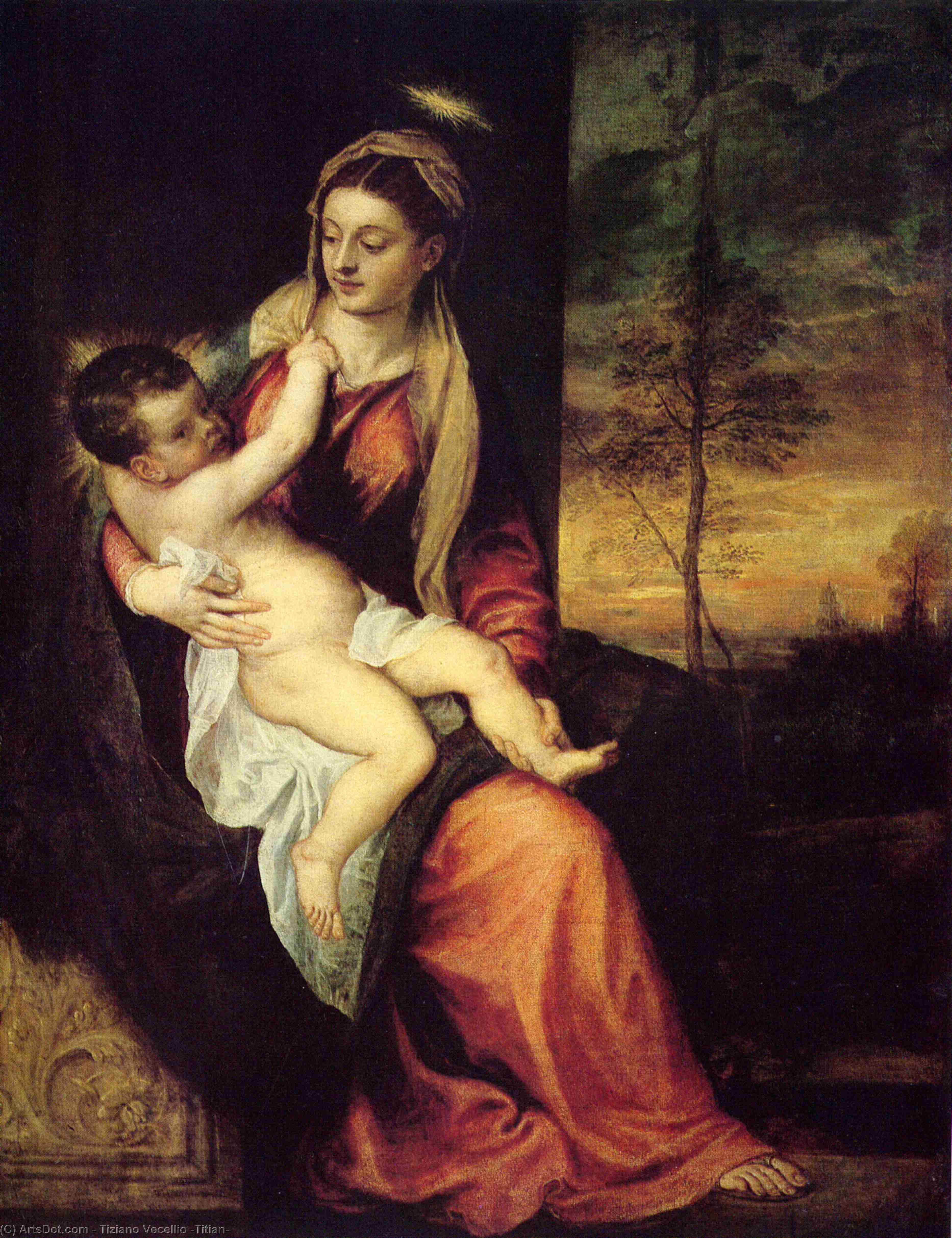
María con el Niño Jesús
Tamaño de la reproducción
La obra ‘María con el Niño Jesús’ de Tiziano, pintada en 1561, es mucho más que una simple representación de la Virgen María y su hijo; es una inmersión en el corazón mismo de la emoción renacentista y la maestría artística. Esta obra maestra al óleo sobre lienzo, nacida del fervor creativo de Venecia a finales del siglo XVI, continúa resonando en los espectadores siglos después. El poder de la pintura reside no solo en su temática —un símbolo universalmente reconocido del amor maternal y la gracia divina— sino también en el enfoque revolucionario de Tiziano hacia el color y la forma, sellos distintivos de su estilo manierista.
El genio de Tiziano no residía únicamente en su temática, sino también en su magistral manipulación del óleo. La pintura utiliza la técnica de superponer finas capas de color, construyendo profundidad y luminosidad con cada aplicación. Esto crea una notable sensación de volumen y textura, particularmente perceptible en los ropajes de María y las vestiduras del niño Jesús. El uso de rojos intensos, azules y dorados —característicos de los pigmentos venecianos— contribuye a la atmósfera opulenta y emocionalmente cargada de la obra. El lienzo mismo, preparado para el óleo, permitió a Tiziano alcanzar un nivel de detalle y brillantez inigualable por muchos de sus contemporáneos.
Más allá de sus cualidades estéticas, ‘María con el Niño Jesús’ está cargada de significado simbólico. La escena representa un momento crucial en la teología cristiana: la presentación de Jesús en el templo. La expresión serena de María y su abrazo protector simbolizan su fe inquebrantable y devoción. La inclusión de los dos árboles y el edificio al fondo hace una referencia sutil al Templo mismo, reforzando el contexto narrativo. El infante lactante es un poderoso símbolo de nutrición —tanto física como espiritual—, un tema central dentro de la iconografía cristiana.
Alojada originalmente en el Museo del Prado en Madrid, esta pintura representa la cúspide de la carrera de Tiziano y una piedra angular del arte renacentista. Su atractivo perdurable reside en su capacidad para evocar emociones profundas: compasión, reverencia y un sentido de belleza atemporal. Una reproducción de WahooArt.com le permite traer esta obra maestra a su hogar u oficina, experimentando de primera mano todo el impacto del genio de Tiziano.


Tiziano Vecellio, universally known as Titian, stands as a monumental figure of the Italian Renaissance—perhaps its most celebrated colorist and a master who redefined the possibilities of oil painting. Born around 1490 in Pieve di Cadore, nestled amidst the dramatic landscapes of the Venetian Alps, his journey from humble beginnings to international acclaim is a testament to prodigious talent and an unwavering dedication to artistic innovation. The exact date of Titian’s birth remains elusive, debated by scholars, but contemporary sources and his early stylistic development converge on estimates between 1488 and 1490.
His father, Gregorio Vecellio, was a military man—a profession that instilled in young Tiziano a disciplined spirit and an appreciation for observation. Lucia, his mother, nurtured him with affection and fostered his artistic inclinations. Recognizing their sons’ potential, the family arranged for Tiziano and Francesco to apprentice with Sebastiano Zuccato, a mosaicist—a decision that would irrevocably alter the course of art history. This formative experience exposed them to the meticulous craftsmanship required for creating intricate decorative panels, shaping their aesthetic sensibilities from an early age.
Titian’s artistic training continued under Giovanni Bellini, who was then Venice’s most prominent painter and a revered teacher. Bellini’s workshop fostered a tradition of Venetian painting characterized by lyrical beauty and subtle tonal harmonies—influences that would permeate Titian’s oeuvre throughout his life. Notably, he collaborated closely with Giorgione—a fellow Venetian artist whose groundbreaking style championed atmospheric perspective and psychological depth.
The partnership between Titian and Giorgione proved pivotal in shaping Titian’s artistic vision. Their collaboration on the exterior frescoes for the Fondaco dei Tedeschi—a bustling trading post frequented by German merchants—established a stylistic precedent that would endure for decades. The paintings showcased a remarkable sensitivity to light and color, reflecting Giorgione’s pioneering exploration of atmospheric perspective—a technique that aimed to convey the illusion of depth and realism.
Titian’s early works embody this Giorgionesque aesthetic—characterized by hazy landscapes, muted palettes, and an emphasis on capturing mood rather than precise detail. Paintings like *A Man with a Quilted Sleeve* exemplify his burgeoning talent for portraiture, skillfully portraying not only the physical likeness of his subjects but also their inner character—a hallmark of Venetian Renaissance painting.
Following Giorgione’s untimely death in 1510, Titian continued his artistic development under Giovanni Bellini’s guidance—though Bellini himself was gradually withdrawing from active painting. This period witnessed a gradual shift toward bolder compositions and more assertive color palettes—reflecting Titian’s growing confidence as an independent artist.
His monumental altarpiece for Santa Maria Gloriosa dei Frari—commissioned in 1518—marked a watershed moment in Venetian painting history. The ambitious undertaking demanded mastery of technique, compositional innovation, and chromatic brilliance—qualities that Titian possessed in abundance. This masterpiece cemented his reputation as Venice’s foremost painter and established him as a pioneer of monumental fresco painting.
Titian’s influence extended far beyond his own lifetime, shaping the artistic landscape of Europe for centuries to come. He became a cornerstone of the Venetian school—a movement that championed coloristic realism and psychological depth—inspiring artists across generations. From Rubens and Rembrandt to Delacroix and Monet, Titian’s techniques—particularly his innovative layering of pigments and his masterful manipulation of light—became models for aspiring painters.
His legacy endures not only in the masterpieces he created but also in the enduring fascination with color and emotion that characterizes Venetian art. Tiziano Vecellio—Titian—remains an unparalleled figure in the history of painting, a testament to artistic genius and an embodiment of the Renaissance spirit.

1490 - 1576 , Italia

Explore the rich history of the blue dress in Western art! Discover its symbolism, from Renaissance masterpieces to modern interpretations by artists like Martin & Schiele. Uncover cultural meanings and artistic techniques.

Explore the rich symbolism of the red dress in art history! From ancient power displays to iconic portraits like Cézanne’s 'Madame Cezanne', discover the cultural and artistic significance behind this captivating color. Expert analysis & insights.

Descubra la fascinante transformación del autorretrato en óleo, desde el 'selfie' hasta obras maestras contemporáneas. Guía experta para coleccionistas y amantes del arte. ¡Encuentre su obra única!

Descubre las 10 obras maestras al óleo que transformaron la historia del arte. Explora Van Gogh, Monet, Da Vinci y más. Reproducciones de alta calidad para decorar tu hogar con elegancia. ¡Encuentra tu obra favorita en !

Descubre las 25 obras maestras de Fra Angelico, el pintor renacentista que llenó el arte sacro de luz y fe. Explora su técnica, simbolismo y belleza en frescos e iconos. Encuentra reproducciones de alta calidad para decorar tu hogar con WahooArt.com.


Manténgase al día con las últimas noticias de arte, ofertas exclusivas e ideas de decoración.
Cuéntanos sobre tu proyecto y nuestros expertos en arte te ofrecerán 3 sugerencias de obras personalizadas.
Permítenos seleccionar 3 opciones solo para ti – ¡Gratis!
 Compartir









 Leer más información
 La opción de vidrio solo está disponible en tamaños inferiores a 110 cm.


