Ver en contexto Vista previa en RA Cambiar a impresiones Cambiar a imagen digital Enviar
Detalles Guía Añadir a favoritos Descargar Similares Radiografía Presentación de diapositivas Estadísticas

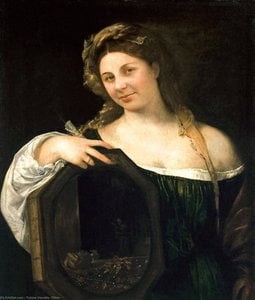
Amor Profano

‘Amor sagrado y profano’ de Tiziano, un impresionante retrato renacentista que captura la vanidad y la belleza con un claroscuro magistral; una obra maestra atemporal del titán veneciano.

Tiziano Vecellio, conocido como Titian, fue el pintor más destacado de la pintura veneciana del siglo XVI y pionero en el uso del color, dejando un legado artístico eterno.

Reproducción al óleo hecha a mano

Óleo sobre lienzo pintado a mano en el tamaño y marco de su elección, realizado por encargo por nuestros artistas. ( Cambiar a impresiones Cambiar a imagen digital)

Corner sample of the P118B picture frame: poliestireno moldeado, 5 cm wide and 3 cm thick
P118B €10
Corner sample of the P118H picture frame: poliestireno moldeado, 5 cm wide and 3 cm thick
P118H €10
Corner sample of the P118W picture frame: poliestireno moldeado, 5 cm wide and 3 cm thick
P118W €10
Corner sample of the P438Z picture frame: poliestireno moldeado, 5.5 cm wide and 3.5 cm thick
P438Z €10
Corner sample of the P508JH picture frame: poliestireno moldeado, 7 cm wide and 3.5 cm thick
P508JH €12
Corner sample of the P508YH picture frame: poliestireno moldeado, 7 cm wide and 3.5 cm thick
P508YH €12
Corner sample of the P805H picture frame: poliestireno moldeado, 5 cm wide and 3.5 cm thick
P805H €10
Corner sample of the P805Z picture frame: poliestireno moldeado, 5 cm wide and 3.5 cm thick
P805Z €10
Corner sample of the P919BZ picture frame: poliestireno moldeado, 7 cm wide and 3.5 cm thick
P919BZ €10
Corner sample of the P919G picture frame: poliestireno moldeado, 7 cm wide and 3.5 cm thick
P919G €10
Corner sample of the P919XJ picture frame: poliestireno moldeado, 7 cm wide and 3.5 cm thick
P919XJ €10
Corner sample of the P959ZH picture frame: poliestireno moldeado, 5 cm wide and 3 cm thick
P959ZH €10
Corner sample of the P968JZ picture frame: poliestireno moldeado, 6 cm wide and 4 cm thick
P968JZ €12
Corner sample of the W106C picture frame: madera maciza, 5 cm wide and 3 cm thick
W106C €8
Corner sample of the W218G picture frame: madera maciza, 5 cm wide and 3 cm thick
W218G €10
Corner sample of the W218JH picture frame: madera maciza, 5 cm wide and 3 cm thick
W218JH €8
Corner sample of the W218Y picture frame: madera maciza, 5 cm wide and 3 cm thick
W218Y €10
Corner sample of the W307PJ picture frame: madera maciza, 6 cm wide and 3 cm thick
W307PJ €10
Corner sample of the W316G picture frame: madera maciza, 6 cm wide and 3 cm thick
W316G €10
Corner sample of the W316PJ picture frame: madera maciza, 6 cm wide and 3 cm thick
W316PJ €8
Corner sample of the W316Y picture frame: madera maciza, 6 cm wide and 3 cm thick
W316Y €10
Corner sample of the W398PJ picture frame: madera maciza, 5 cm wide and 3 cm thick
W398PJ €8
Corner sample of the W4111J picture frame: madera maciza, 6.5 cm wide and 3.5 cm thick
W4111J €10
Corner sample of the W500HY picture frame: madera maciza, 7 cm wide and 5 cm thick
W500HY €15
Corner sample of the W500JH picture frame: madera maciza, 7 cm wide and 5 cm thick
W500JH €15
Corner sample of the W692G picture frame: madera maciza, 8 cm wide and 4 cm thick
W692G €12
Corner sample of the W849H picture frame: madera maciza, 5 cm wide and 3 cm thick
W849H €8
Corner sample of the W940BG picture frame: madera maciza, 7.5 cm wide and 4.5 cm thick
W940BG €15
Corner sample of the W953PJ picture frame: madera maciza, 6 cm wide and 3.5 cm thick
W953PJ €8

Tamaño estándar
a medida
CM
INCH

Elija entre nuestros tamaños predefinidos que respetan las proporciones originales de la obra.

ancho
altura

Indique el ancho y el alto que necesite para adaptarse a su marco o pared. Al tratarse de una obra pintada a mano, si requiere un tamaño con una proporción distinta, el artista puede pintar un poco más alrededor de la imagen o recortarla ligeramente; usted elige. Le enviaremos una maqueta digital para su aprobación antes de comenzar la pintura. La imagen que se muestra en esta página no refleja el resultado real; solo la maqueta lo hace.

Ejemplos de lo que se puede personalizar: Reemplace el rostro con una foto del cliente; Agregue una mascota (por ejemplo, cambie un gato por un perro); Incluya un mensaje oculto en el fondo; Cambie el paisaje o los elementos del fondo.
Tras realizar el pedido, el equipo de WahooArt.com enviará un correo electrónico al cliente para solicitar instrucciones y proporcionarle una vista previa del boceto.

Envío a todo el mundo () en 3-4 semanas en lugar de las 5 semanas estándar. (28 octubre). Sin comprometer la calidad.

Envío exprés gratuito a todo el mundo
Lienzo de lino de alta calidad
Seguro de envío total
Garantía de reembolso de aranceles aduaneros
Garantía de fidelidad cromática exacta
Política de devolución de 100 días (solo por defectos)
Garantía de devolución del 100% del dinero
Descuento por cantidad

Precio total

€ 239

Amor Profano

Técnica de reproducción

Dimensiones de la reproducción

-

Precio total final

€ 239

Datos clave

  • Subject or theme: Retratística
  • Artistic style: Colorismo
  • Notable elements or techniques: Claroscuro
  • Year: 1515
  • Dimensions: 65 x 51 cm
  • Location: Colección de la Galería Borghese

Una mirada a la vanidad renacentista

En las salas silenciosas y sagradas de la Galería Borghese, existe una ventana hacia una era pasada de opulencia e introspección. Amor Profano, pintado por Tiziano en 1515, es mucho más que un simple retrato; es una profunda meditación sobre la naturaleza fugaz de la belleza y las complejidades del deseo humano. Al contemplar esta obra maestra del Alto Renacimiento, el sujeto —una mujer de presencia impactante— parece emerger de las sombras de la historia. Ya sea que represente a la noble Isabella Gonzaga o a otra figura de la aristocracia veneciana, su esencia es capturada con una profundidad psicológica que trasciende el lienzo. La pintura invita al espectador no solo a observar, sino a participar en un diálogo silencioso sobre la identidad y el espejo del alma.

La brillantez técnica de Tiziano, el legendario Titán veneciano, se muestra en todo su esplendor a través de su uso revolucionario del claroscuro. Al manipular magistralmente la interacción entre sombras profundas y aterciopadas y luces suaves y luminosas, esculpe las facciones del sujeto con un realismo casi táctil. La forma en que la luz danza sobre el delicado encaje blanco de su escote y se asienta en los ricos pliegues esmeralda de su vestido verde demuestra un nivel de maestría que sigue siendo inigualable. Esta técnica hace más que definir la forma; crea una atmósfera de intimidad y drama, haciendo que el retrato se sienta vivo, como si el sujeto pudiera respirar en cualquier momento.

Simbolismo y el arte del reflejo

Cada elemento dentro de esta composición está impregnado del lenguaje simbólico de los siglos XV y XVI. Lo más cautivador es el espejo ovalado que sostiene la mujer, un emblema potente que sirve como punto focal tanto para la composición como para su significado. En la tradición renacentista, un espejo rara vez era solo un objeto de vanidad; representaba la introspección, el autoconocimiento y la inevitable contemplación de la mortalidad. Mientras su mirada se encuentra con su propio reflejo, al espectador se le recuerda la dualidad de la existencia humana: la exhibición externa del estatus social y el viaje interior del espíritu.

Los adornos del sujeto tejen aún más una narrativa de riqueza y prestigio. La sutil inclusión de elementos naturales, como la delicada flora anidada en su cabello ondulado, contrasta bellamente con las texturas pesadas y lujosas de su atuendo. Tanto para coleccionistas como para diseñadores de interiores, esta pintura ofrece un equilibrio sofisticado de textura y tono. Su fondo oscuro y atmosférico permite que los colores vibrantes del sujeto resalten, convirtiéndola en una pieza central ideal para una estancia que exija elegancia y profundidad intelectual. Poseer una reproducción de tal obra es traer un fragmento del Renacimiento veneciano a un espacio moderno, fomentando un entorno de gracia atemporal y belleza contemplativa.

Preguntas y respuestas

¿Se encuentra "Amor Profano" de Tiziano entre las obras más codiciadas del Alto Renacimiento?

"Amor Profano" destaca con un nivel de Icónico entre las obras del Alto Renacimiento en el catálogo.

¿Qué espacio armoniza con los colores de "Amor Profano" de Tiziano?

Con su paleta de Tonos tierra, "Amor Profano" de Tiziano es ideal para una Salón principal. Sus colores son parte de la razón de esta sugerencia.

¿Dónde se recomienda exhibir el formato Formato vertical de "Amor Profano"?

El formato Formato vertical de "Amor Profano" de Tiziano es ideal para un Salón principal. El formato y el espacio orientan conjuntamente la ubicación de una reproducción.


Biografía del artista

Tiziano Vecellio: The Venetian Titan

Tiziano Vecellio, universally known as Titian, stands as a monumental figure of the Italian Renaissance—perhaps its most celebrated colorist and a master who redefined the possibilities of oil painting. Born around 1490 in Pieve di Cadore, nestled amidst the dramatic landscapes of the Venetian Alps, his journey from humble beginnings to international acclaim is a testament to prodigious talent and an unwavering dedication to artistic innovation. The exact date of Titian’s birth remains elusive, debated by scholars, but contemporary sources and his early stylistic development converge on estimates between 1488 and 1490.

His father, Gregorio Vecellio, was a military man—a profession that instilled in young Tiziano a disciplined spirit and an appreciation for observation. Lucia, his mother, nurtured him with affection and fostered his artistic inclinations. Recognizing their sons’ potential, the family arranged for Tiziano and Francesco to apprentice with Sebastiano Zuccato, a mosaicist—a decision that would irrevocably alter the course of art history. This formative experience exposed them to the meticulous craftsmanship required for creating intricate decorative panels, shaping their aesthetic sensibilities from an early age.

Titian’s artistic training continued under Giovanni Bellini, who was then Venice’s most prominent painter and a revered teacher. Bellini’s workshop fostered a tradition of Venetian painting characterized by lyrical beauty and subtle tonal harmonies—influences that would permeate Titian’s oeuvre throughout his life. Notably, he collaborated closely with Giorgione—a fellow Venetian artist whose groundbreaking style championed atmospheric perspective and psychological depth.

A Master's Early Style: Giorgione's Influence

The partnership between Titian and Giorgione proved pivotal in shaping Titian’s artistic vision. Their collaboration on the exterior frescoes for the Fondaco dei Tedeschi—a bustling trading post frequented by German merchants—established a stylistic precedent that would endure for decades. The paintings showcased a remarkable sensitivity to light and color, reflecting Giorgione’s pioneering exploration of atmospheric perspective—a technique that aimed to convey the illusion of depth and realism.

Titian’s early works embody this Giorgionesque aesthetic—characterized by hazy landscapes, muted palettes, and an emphasis on capturing mood rather than precise detail. Paintings like *A Man with a Quilted Sleeve* exemplify his burgeoning talent for portraiture, skillfully portraying not only the physical likeness of his subjects but also their inner character—a hallmark of Venetian Renaissance painting.

Expanding Horizons: Bellini's Legacy and Artistic Maturity

Following Giorgione’s untimely death in 1510, Titian continued his artistic development under Giovanni Bellini’s guidance—though Bellini himself was gradually withdrawing from active painting. This period witnessed a gradual shift toward bolder compositions and more assertive color palettes—reflecting Titian’s growing confidence as an independent artist.

His monumental altarpiece for Santa Maria Gloriosa dei Frari—commissioned in 1518—marked a watershed moment in Venetian painting history. The ambitious undertaking demanded mastery of technique, compositional innovation, and chromatic brilliance—qualities that Titian possessed in abundance. This masterpiece cemented his reputation as Venice’s foremost painter and established him as a pioneer of monumental fresco painting.

The Venetian School's Dominance

Titian’s influence extended far beyond his own lifetime, shaping the artistic landscape of Europe for centuries to come. He became a cornerstone of the Venetian school—a movement that championed coloristic realism and psychological depth—inspiring artists across generations. From Rubens and Rembrandt to Delacroix and Monet, Titian’s techniques—particularly his innovative layering of pigments and his masterful manipulation of light—became models for aspiring painters.

His legacy endures not only in the masterpieces he created but also in the enduring fascination with color and emotion that characterizes Venetian art. Tiziano Vecellio—Titian—remains an unparalleled figure in the history of painting, a testament to artistic genius and an embodiment of the Renaissance spirit.

Tiziano

Tiziano

1490 - 1576 , Italia

Datos clave

  • Artistic Movement Or Style: Renacimiento Veneciano
  • Artists Or Movements Influenced By This Artist:
    • Rubens
    • Delacroix
  • Artists Who Influenced This Artist:
    • Giovanni Bellini
    • Giorgione
  • Date Of Birth: c. 1490
  • Date Of Death: 1576
  • Full Name: Tiziano Vecellio
  • Nationality: Italiano
  • Notable Artworks:
    • La Schiavona
    • Venus de Urbino
  • Place Of Birth: Pieve di Cadore, Italia
Explore obras de arte organizadas por temas, estilos y características.