


Impresiones giclée o en lienzo de calidad de museo con producción rápida y opciones de acabado flexibles. ( Comprar pintura hecha a mano Comprar imagen)
Elija entre nuestros tamaños predefinidos que respetan las proporciones originales de la obra.

Puede introducir sus propias dimensiones para adaptarse a un marco o espacio específico. Si el tamaño seleccionado no coincide con las proporciones de la imagen original, recortaremos la obra de arte o extenderemos la imagen con un borde con efecto espejo o de color sólido. Se enviará una maqueta digital para su aprobación antes de que comience la producción.
Tenga en cuenta que la vista previa en pantalla no refleja el recorte o la extensión real. Solo la maqueta mostrará con precisión la composición final.
Aunque existen tamaños personalizados, recomendamos seleccionar una dimensión de la lista predefinida para preservar las proporciones originales.
Envío a todo el mundo () en 2 semanas en lugar de las 4/5 semanas estándar. (7 septiembre)


Saint Lawrence
Dimensiones de la reproducción
Tilman Riemenschneider’s “Saint Lawrence,” crafted around 1502–8, stands as a testament to the enduring power of medieval Christian iconography and artistic mastery. This sculpture, alongside fragments of a larger altarpiece destined for Rothenburg ob der Tauber (later demolished), embodies the spirit of late Gothic art—a period characterized by profound spiritual contemplation and an unwavering commitment to conveying biblical narratives with palpable emotion.
Historical Context: Created during a turbulent era marked by religious reformations and political instability – specifically amidst the Peasants’ War—Riemenschneider's sculpture reflects the anxieties and aspirations of his time. The altarpiece project itself was conceived in response to the Dominican convent’s desire for a monumental artwork that would inspire devotion and proclaim Christian faith.
Symbolism: Beyond its depiction of martyrdom, “Saint Lawrence” is laden with symbolic elements. The book held by Saint Lawrence represents knowledge—a cornerstone of Christian theology—while the grill symbolizes his sacrificial death—a poignant reminder of Christ’s suffering for humanity's salvation. These symbols resonate deeply within the Gothic aesthetic, communicating spiritual truths through visual imagery.
Emotional Impact: Viewing “Saint Lawrence” evokes a sense of solemn reverence and profound contemplation. The sculpture’s rough texture—resulting from traditional wood carving techniques—adds to its tactile quality, grounding the viewer in the materiality of art history. Lines are predominantly organic, mirroring the contours of the figure and chair, creating a harmonious balance between form and space. The muted brown palette—dominated by shades ranging from beige to umber—reflects the natural color of the wood and contributes to the sculpture’s overall atmosphere of solemn piety.
Further Research: Examining related artworks by Riemenschneider, such as “Saint Stephen” (1959.43) and two female saints preserved in Frankfurt, reveals a consistent stylistic approach—characterized by expressive faces and meticulous attention to detail—underscoring Riemenschneider’s mastery of Gothic sculpture.
Provenance: The sculpture's journey through history began with Richard von Passavant-Gontard, who acquired it from Bennebroek in the Netherlands. Subsequently, it entered the collection of Rosenberg & Stiebel Inc., New York, before finding its permanent home at the Cleveland Museum of Art.
Accession Number: 1959.42

Tilman Riemenschneider se erige como una figura clave en la transición entre el arte Gótico Tardío y el Renacimiento. Activo principalmente en Wurzburgo desde 1483 hasta su muerte, fue reconocido por su prolífica producción y versatilidad, dominando tanto la talla de piedra como la de limewood. Su obra refleja una mezcla única de sensibilidades góticas tardías con influencias humanistas emergentes, lo que lo convierte en uno de los artistas más importantes de su tiempo.

1460 - 1531 , Italia
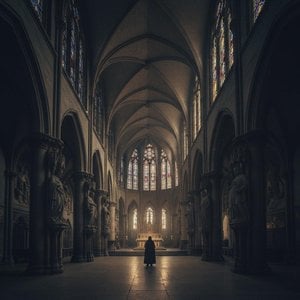
Embark on a journey through the dramatic era of Gothic art. Discover the profound beauty of illuminated manuscripts, sacred gold leaf masterpieces, and the transition to naturalism in this expert-led exploration of medieval artistry and historical grandeur.

 Enviar
 Compartir
 Detalles

 Descargar
 Similares
 Presentación de diapositivas


 Ver más




































 La opción de vidrio solo está disponible en tamaños inferiores a 110 cm.


