Vista previa Vista previa en RA Encargar reproducción pintada a mano Ver versión en imagen digital Compartir
Ver detalles Guía Añadir a favoritos Descargar Ver artículos similares Radiografía Presentación de diapositivas Estadísticas

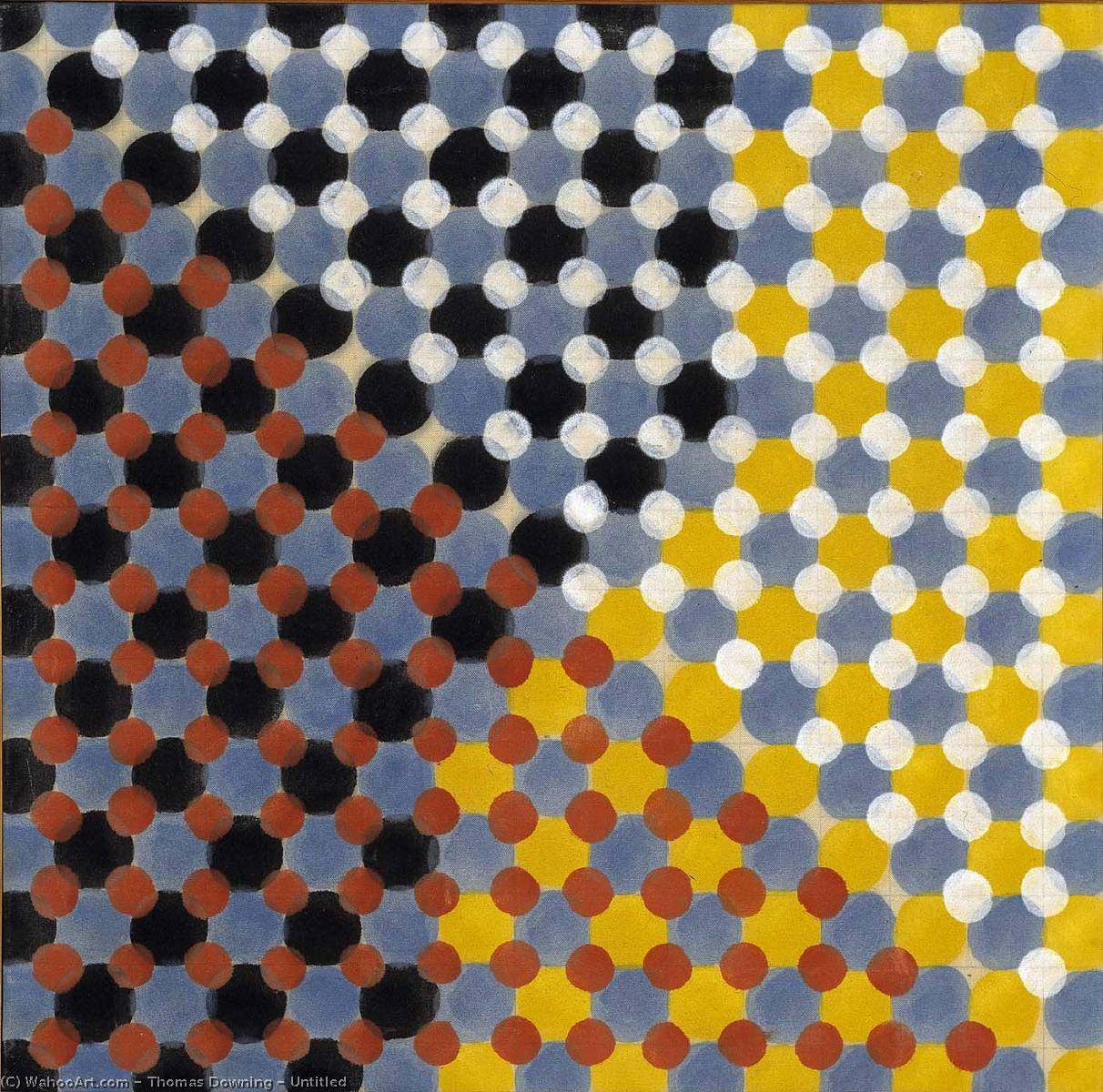
Untitled

  • Fecha de creación1962
  • Dimensiones65.0 x 66.0 cm

Discover Thomas Downing: A Washington Color Field painter known for his precise circle spot paintings & influence on artists like Sam Gilliam. Explore his legacy!

La obra de arte que se muestra en esta página está protegida por las leyes de propiedad intelectual, lo que significa que no podemos crear ni vender legalmente una reproducción idéntica. Esta protección se hace cumplir en virtud de acuerdos internacionales como el Convenio de Berna y por las leyes nacionales, incluidas aquellas establecidas por el Ley de derechos de autor de los EE. UU. - Título 17.

Este método cumple plenamente con las normativas de derechos de autor, ya que no implica la copia ni la duplicación de la obra protegida. En su lugar, se trata de una reinterpretación creativa: una nueva pintura influenciada por la original, pero que no es idéntica a ella.

Giclée / Impresión de arte

Impresiones giclée o en lienzo de calidad de museo con producción rápida y opciones de acabado flexibles. ( Encargar reproducción pintada a mano Ver versión en imagen digital)

Estándar
personalizado
CM
INCH

Elija entre nuestros tamaños predefinidos que respetan las proporciones originales de la obra.

ancho
altura

Puede introducir sus propias dimensiones para adaptarse a un marco o espacio específico. Si el tamaño seleccionado no coincide con las proporciones de la imagen original, recortaremos la obra de arte o extenderemos la imagen con un borde con efecto espejo o de color sólido. Se enviará una maqueta digital para su aprobación antes de que comience la producción.
Tenga en cuenta que la vista previa en pantalla no refleja el recorte o la extensión real. Solo la maqueta mostrará con precisión la composición final.
Aunque existen tamaños personalizados, recomendamos seleccionar una dimensión de la lista predefinida para preservar las proporciones originales.

Envío a todo el mundo () en 2 semanas en lugar de las 4/5 semanas estándar. (8 octubre)

Envío exprés gratuito a todo el mundo
Lienzo de lino de alta calidad
Seguro de envío completo
Garantía de reembolso de impuestos aduaneros
Garantía de fidelidad cromática exacta
Política de devolución de 100 días (solo por defectos)
Garantía de devolución del 100% del dinero
Oferta por volumen

Precio total

€ 58

Untitled

Giclée / Impresión de arte

Tamaño de la reproducción

-

Precio total

€ 58

The Untitled painting by Thomas Downing, created in 1962, is a fascinating example of geometric abstraction. This acrylic on canvas piece measures 65 x 66 cm and features a complex arrangement of circles, squares, and dots in various colors such as red, yellow, blue, black, white, and orange. The overall composition creates an intricate and eye-catching visual effect.

Geometric Patterns and Influences

The use of geometric patterns in Thomas Downing's work is reminiscent of other notable artists, such as Wassily Wassilyevich Kandinsky, who pioneered abstract art. Kandinsky's Cercle and Square painting, available on WahooArt.com, showcases a similar exploration of geometric forms. The Nine Elements of Chromatique Circle by Wassily Wassilyevich Kandinsky is another notable example, demonstrating the artist's fascination with color theory and geometric patterns.
  • The Arbroath Signal Tower Museum, mentioned in WahooArt.com's documentation, highlights the significance of geometric patterns in art and their connection to various cultural and historical contexts.
  • The concept of tartan, as explained on Wikipedia, also explores the use of geometric patterns in textiles, demonstrating the versatility and timelessness of these designs.
Geometric abstraction continues to inspire artists and art enthusiasts alike, with its unique blend of simplicity and complexity. The Untitled painting by Thomas Downing is a testament to the enduring appeal of geometric patterns in art.
The intersection of art, history, and culture is a fascinating topic, and Thomas Downing's work serves as a prime example of this convergence. By exploring the geometric patterns and influences in his Untitled painting, we can gain a deeper understanding of the artistic movements and cultural contexts that shaped his work.
For those interested in learning more about Thomas Downing and his artistic style, WahooArt.com's collection offers a range of resources and information. The website also features an extensive selection of handmade oil painting reproductions, including works by notable artists like Sonia Delaunay (Sarah Ilinitchna Stern) and Wassily Wassilyevich Kandinsky.

Preguntas y respuestas

¿Qué tan intensos son los colores en "Untitled" de Thomas Downing?

La intensidad cromática de "Untitled" es Vivid. La intensidad describe la fuerza con la que se perciben los colores.

¿Qué proporciones tiene "Untitled" de Thomas Downing y cuáles son sus dimensiones?

"Untitled" de Thomas Downing tiene las proporciones de una obra en Square de 65 x 66 cm.

¿Qué tan intensos son los colores de "Untitled"?

"Untitled" de Thomas Downing está registrado con una saturación de Balanced Soft y una intensidad de Vivid.

¿A qué artista se le atribuye "Untitled"?

"Untitled" fue creada por Thomas Downing. La información en esta página describe la obra original de Thomas Downing.

¿Cuál es la identidad cromática de "Untitled" de Thomas Downing?

"Untitled" se define por una paleta de Earthy liderada por Walnut (#844631).

¿Cuál es la fecha de creación de "Untitled" de Thomas Downing?

La creación de "Untitled" de Thomas Downing data de 1962.

¿Dónde puedo comprar una reproducción pintada a mano de "Untitled" de Thomas Downing?

"Untitled" está disponible como una reproducción al óleo pintada a mano sobre lienzo de lino. El pedido puede realizarse en esta página, con una variedad de tamaños a elegir.


Biografía del artista

The Geometric Rhythm of Thomas Downing

In the vibrant tapestry of mid-century American abstraction, few threads are as precise and mesmerizing as those woven by Thomas Downing. A pivotal figure within the Washington Color Field movement, Downing possessed a singular ability to transform the canvas into a rhythmic playground of geometry and light. Born in Suffolk, Virginia, his journey toward becoming a master of the "spot painting" was marked by a rigorous pursuit of formal excellence. After earning his degree from Randolph-Macon College in 1948, he sought the creative pulse of New York, studying at the prestigious Pratt Institute. This period of intense academic honing prepared him for a transformative voyage through Europe, funded by a grant from the Virginia Museum of Fine Arts. His time at the Académie Julian in Paris allowed him to absorb the nuances of European tradition, providing a classical foundation upon which he would later build his radical, modern abstractions.

Upon returning to the United States following his service in the U.S. Army, Downing settled in Washington, D.C., a city that would become the epicenter of his artistic evolution. It was here that his path intersected with the giants of the era. Seeking to refine his vision within the burgeoning abstract landscape, he studied under Kenneth Noland at Catholic University. This mentorship was more than mere instruction; it was a profound intellectual exchange that helped shape Downing’s place within the Washington Color School. Alongside contemporaries like Howard Mehring and Sam Gilliam, Downing contributed to a movement that moved away from the gestural turbulence of Abstract Expressionism toward a cleaner, more cerebral exploration of color and form. His work became a study in balance, where the weight of a single circle could shift the entire equilibrium of a composition.

The Architecture of Color and Form

Downing’s most enduring legacy lies in his mastery of the Spot Paintings—works characterized by an exquisite arrangement of circles, arcs, and dots. Unlike the chaotic energy of his predecessors, Downing’s compositions felt orchestrated, almost mathematical, yet they pulsed with a life of their and organic vitality. He utilized color not merely as a decorative element but as a structural force. Through the use of symmetry and carefully calculated spacing, he created a sense of depth and movement that drew the viewer into a meditative state. His canvases often featured a complex interplay of primary hues—reds, yellows, and blues—set against stark whites or deep blacks, creating a visual tension that felt both modern and timeless.

The technical brilliance of his work can be seen in pieces such as Red Span and his various Untitled works from the early 1960s. In these paintings, the artist explored:

  • Geometric Precision: The use of perfect circles and arcs to create a sense of cosmic order.
  • Chromatic Harmony: A sophisticated understanding of how adjacent colors interact to produce optical vibrations.
  • Spatial Dynamics: The manipulation of negative space to allow each geometric element to "breathe" on the canvas.

A Legacy Etched in Abstraction

The historical significance of Thomas Downing extends far beyond his personal catalog of works. In 1964, his inclusion in Clement Greenberg’s seminal exhibition, Post-painterly Abstraction, cemented his status as a leading voice in contemporary art. As an educator at the Corcoran College of Art and Design, he also acted as a vital conduit for new ideas, influencing a subsequent generation of artists who sought to find beauty in clarity and structure. His teaching helped foster an environment where the exploration of pure form could flourish.

Though his life ended prematurely and somewhat mysteriously in Provincetown, Massachusetts, in 1985, the impact of his vision remains undiminished. Downing’s work stands as a testament to the power of restraint. He proved that within the confines of a circle or the edge of an arc, there exists an infinite universe of emotion and complexity. Today, his paintings continue to resonate as essential landmarks of American modernism, reminding us that true innovation often lies in the perfect calibration of simplicity.

Datos clave

  • Artistic Movement Or Style: Washington Color Field
  • Artists Or Movements Influenced By This Artist: Howard Mehring
  • Artists Who Influenced This Artist: Kenneth Noland
  • Date Of Death: October 1985
  • Full Name: Thomas Downing
  • Nationality: American
  • Notable Artworks: ['Spot Paintings']
  • Place Of Birth: Suffolk, Virginia