x
Ver en contextoVer en contexto Vista previa en RAVista previa en RA Comprar impresión Comprar impresiónComprar pintura hecha a mano Comprar pintura hecha a mano EnviarEnviar
DetallesDetalles Añadir a favoritos Añadir a favoritos DescargarDescargar SimilaresSimilares RadiografíaRadiografía Presentación de diapositivasPresentación de diapositivas

USA

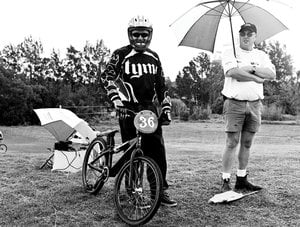
Black & white photo of cyclist Davis Phinney celebrating a race victory in Richmond, VA. Captures energy & excitement – a classic journalistic snapshot of athletic triumph.

The Richmond Times-Dispatch: A historic Virginia newspaper capturing key moments through photojournalism & documenting local events. Also associated with artists Leonard Richmond & Sir William Blake Richmond.

Adquiera una imagen digital de alta resolución y optimizada, muy superior a la vista previa en línea.

Cada archivo es preparado meticulosamente por nuestros especialistas internos mediante el uso de herramientas avanzadas y un experto retoque manual. Nos aseguramos de que cada imagen posea una claridad excepcional, una precisión cromática impecable y un detalle minucioso.

El archivo final se entrega por correo electrónico en un plazo de 72 horas, optimizado para su uso inmediato en entornos profesionales, editoriales y de impresión. Esta es la misma calidad en la que confían los estudios de diseño, las editoriales y las galerías de primer nivel.

Imagen Digital

Descarga un archivo de alta resolución para exhibición personal, impresión y proyectos creativos. (Comprar impresión Comprar impresiónComprar pintura hecha a mano Comprar pintura hecha a mano)

Precio total

$ 24,90

Incluido en cada pedido de imágenes digitales

Entrega digital experta, garantizada.

Al elegir WahooArt.com, no solo está adquiriendo una imagen; está recibiendo una obra de arte digital mejorada profesionalmente, elaborada con precisión y respaldada por una garantía de satisfacción. Esto es todo lo que incluye su pedido, automáticamente:

shipping_icon
Entrega rápida por email

Recibirá su archivo de imagen digital en alta resolución por correo electrónico en un plazo de 72 horas tras realizar su pedido, listo para su uso inmediato.

canvas_icon
Archivo digital optimizado por IA

Su obra de arte se optimiza profesionalmente mediante herramientas avanzadas de IA y edición manual, garantizando el máximo detalle, claridad y precisión cromática.

insurance_icon
Reenvío gratuito de por vida

¿Has borrado o perdido tu archivo por error? No te preocupes: te lo volveremos a enviar en cualquier momento, sin coste adicional.

tax_icon
Sin gastos de importación, siempre

Disfrute de su obra de arte al instante sin aduanas, aranceles ni gastos de envío; las descargas digitales siempre están libres de impuestos.

color_icon
Garantía de fidelidad de color

Garantizamos que su imagen digital refleje los colores originales con la mayor fidelidad posible, mediante el uso de herramientas profesionales y gestión del color.

return_icon
Garantía de satisfacción de 60 días

Si no está satisfecho con su imagen digital, la revisaremos o le reembolsaremos el 100% en un plazo de 60 días, sin preguntas.

guarantee_icon
100% Garantía de devolución de dinero

¿No está satisfecho? Obtenga un reembolso completo dentro de los 60 días posteriores a la recepción de su archivo digital, sin necesidad de explicaciones.

discount_icon
Descuentos por pedidos grandes

Compra 3 imágenes, ahorra 10% - Compra 5, ahorra 15% - Compra 10+, ahorra 20%. Ideal para proyectos creativos, galerías y agencias.

Black and white photograph of Davis Phinney, a cyclist on the 7-11 road race team; Phinney, an American, stands with his arms outstretched during the Tour de Trump in downtown Richmond; he wears his

Biografía del artista

A Chronicle of Virginia: The Richmond Times-Dispatch

The story of the Richmond Times-Dispatch is far more than a chronicle of journalistic endeavor; it’s a vibrant tapestry woven into the very fabric of Virginia's history. Emerging from the complex social and political landscape of the 19th century, the paper has evolved from a staunchly partisan voice to become the state’s primary newspaper of record. Its journey reflects not only the changing face of journalism but also the tumultuous shifts in American society itself.

The roots trace back to 1850 with the establishment of the Richmond Dispatch, founded by James A. Cowardin and William H. Davis as a rival publication to the Richmond Compiler, which had previously merged with The Times but ultimately failed in 1853. Quickly gaining prominence, the Dispatch boasted a circulation that tripled its competitors by 1852, fueled by aggressive advertising and a clear editorial stance. Cowardin’s brief foray into Virginia politics as a Whig delegate underscored the paper's growing influence, though it was overshadowed by the looming shadow of the Civil War.

From Confederate Advocate to Post-War Reconstruction

As the nation fractured, the Dispatch became an unwavering voice for the Confederacy. Its pages throbbed with pro-slavery rhetoric, denouncing Union soldiers in fiery terms and documenting the war’s progress—or lack thereof—with a passionate intensity. The paper's survival through the conflict was a testament to its dedication, even as it faced immense challenges, including running the Union blockade to secure new presses from England in 1864. The April 1, 1865 issue marked a poignant end to wartime reporting, followed by the devastating fire that consumed Richmond and the paper’s offices alongside much of the city.

The resilience of the Dispatch was remarkable; it rose from the ashes in December 1865, establishing a new headquarters on 12th and Main Streets. This rebirth coincided with the tumultuous era of Reconstruction. Initially opposing the Ku Klux Klan, the paper later accepted its advertising—a reflection of its complex relationship with the changing political climate and its resistance to Congressional policies. The eventual acceptance of the revised state constitution, even after anti-Confederate provisions were removed, signaled a gradual shift in perspective.

The Consolidation and Rise as Virginia’s News Leader

The late 19th and early 20th centuries witnessed a period of consolidation. The merger with The Times, forming the Richmond Times-Dispatch, solidified its position as the dominant newspaper in Richmond. Under the leadership of figures like Henry K. Ellyson, who briefly served as mayor during a period of intense political strife known as the “Municipal War,” the paper navigated complex local issues and continued to expand its reach throughout Virginia.

By the mid-20th century, the Richmond Times-Dispatch had firmly established itself as "Virginia’s News Leader," serving not only the capital city but also rural regions lacking robust local news coverage. Its circulation steadily grew, becoming second only to Norfolk's The Virginian-Pilot. The paper’s commitment to comprehensive reporting and its role as a newspaper of record cemented its historical significance.

A Legacy in Print and Beyond

Today, the Richmond Times-Dispatch continues to adapt to the evolving media landscape. While embracing digital platforms with a growing subscriber base, it remains dedicated to its core mission: providing Virginians with accurate, insightful news coverage. The paper’s archives—a rich repository of historical photographs and articles—offer a unique window into the state's past, preserving moments of triumph, tragedy, and transformation.

  • Early Photography: The newspaper’s early photographic documentation, such as the black-and-white image of cyclist Davis Phinney celebrating his victory in Richmond, captures the energy and excitement of athletic achievement—a classic example of journalistic storytelling.
  • Community Focus: Images like the “Recycling Cycle” demonstrate a commitment to local issues and environmental awareness.
  • Historical Documentation: Photographs documenting events such as the inspection of a 1942 Mack pumper truck provide valuable insights into Virginia’s social and military history.

The Richmond Times-Dispatch is not merely a newspaper; it's a living chronicle, a testament to the enduring power of journalism in shaping public discourse and preserving the collective memory of a state—and a nation.