Ver en contextoVer en contexto Vista previa en RAVista previa en RA Cambiar a Impresión Cambiar a ImpresiónComprar pintura hecha a mano Comprar pintura hecha a mano EnviarEnviar
DetallesDetalles Añadir a favoritos Añadir a favoritos DescargarDescargar SimilaresSimilares RadiografíaRadiografía Presentación de diapositivasPresentación de diapositivas EstadísticasEstadísticas

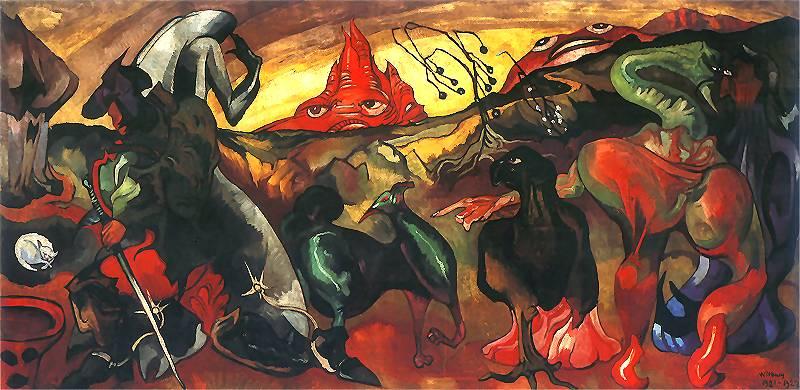
Fantazja – Bajka

"Fantazja – Bajka" de Witkacy: Surrealismo expresionista que explora sueños y emociones con colores vibrantes y figuras distorsionadas. Una obra maestra de la vanguardia polaca."

"meta_description": "Descubre 'Fight' de Witkacy: un cuadro surrealista y expresionista que refleja la angustia del siglo XX. Explora el arte vanguardista polaco y la figura enigmática de este artista visionario."

Adquiera una imagen digital de alta resolución y optimizada, muy superior a la vista previa en línea.

Cada archivo es preparado meticulosamente por nuestros especialistas internos mediante el uso de herramientas avanzadas y un experto retoque manual. Nos aseguramos de que cada imagen posea una claridad excepcional, una precisión cromática impecable y un detalle minucioso.

El archivo final se entrega por correo electrónico en un plazo de 72 horas, optimizado para su uso inmediato en entornos profesionales, editoriales y de impresión. Esta es la misma calidad en la que confían los estudios de diseño, las editoriales y las galerías de primer nivel.

Imagen Digital

Descarga un archivo de alta resolución para exhibición personal, impresión y proyectos creativos. (Cambiar a Impresión Cambiar a ImpresiónComprar pintura hecha a mano Comprar pintura hecha a mano)

Precio total

$ 24,90

Incluido en cada pedido de imágenes digitales

Entrega digital experta, garantizada.

Al elegir WahooArt.com, no solo está adquiriendo una imagen; está recibiendo una obra de arte digital mejorada profesionalmente, elaborada con precisión y respaldada por una garantía de satisfacción. Esto es todo lo que incluye su pedido, automáticamente:

shipping_icon
Entrega rápida por email

Recibirá su archivo de imagen digital en alta resolución por correo electrónico en un plazo de 72 horas tras realizar su pedido, listo para su uso inmediato.

canvas_icon
Archivo digital optimizado por IA

Su obra de arte se optimiza profesionalmente mediante herramientas avanzadas de IA y edición manual, garantizando el máximo detalle, claridad y precisión cromática.

insurance_icon
Reenvío gratuito de por vida

¿Has borrado o perdido tu archivo por error? No te preocupes: te lo volveremos a enviar en cualquier momento, sin coste adicional.

tax_icon
Sin gastos de importación, siempre

Disfrute de su obra de arte al instante sin aduanas, aranceles ni gastos de envío; las descargas digitales siempre están libres de impuestos.

color_icon
Garantía de fidelidad de color

Garantizamos que su imagen digital refleje los colores originales con la mayor fidelidad posible, mediante el uso de herramientas profesionales y gestión del color.

return_icon
Garantía de satisfacción de 100 días

Si no está satisfecho con su imagen digital, la revisaremos o le reembolsaremos el 100% en un plazo de 100 días, sin preguntas.

guarantee_icon
100% Garantía de devolución de dinero

¿No está satisfecho? Obtenga un reembolso completo dentro de los 100 días posteriores a la recepción de su archivo digital, sin preguntas.

discount_icon
Descuentos por pedidos grandes

Compra 3 imágenes, ahorra 10% - Compra 5, ahorra 15% - Compra 10+, ahorra 20%. Ideal para proyectos creativos, galerías y agencias.

Datos clave

  • Subject or theme: Abstract and symbolic landscape
  • Location: National Museum in Warsaw
  • Notable elements or techniques: Expressionistic style; Visible brushstrokes; Layering of paint.
  • Year: 1922
  • Artistic style: Surrealism
  • Influences: Theatre of the Absurd
  • Artist: Stanisław Ignacy Witkiewicz

Test de arte

Cada pregunta tiene una única respuesta correcta.

Pregunta 1:
What artistic movement is Witkiewicz’s ‘Fantasy’ primarily associated with?
Pregunta 2:
The painting utilizes a dominant color palette characterized by:
Pregunta 3:
'Fantasy' exemplifies Surrealist techniques through its depiction of:
Pregunta 4:
What is the primary stylistic element that contributes to the artwork's unsettling atmosphere?
Pregunta 5:
The skull present in the painting serves as a symbolic reference to:

Fantazja – Bajka (1922) - Stanisław Ignacy Witkiewicz

Fantazja – Bajka, stworzona przez Stanisława Ignację Witkacza w roku 1922, stanowi jedno z najbardziej fascynujących dzieł Symbolizmu i Ekspresjonizmu polskiej sztuki okresu międzywojennego. Obraz ten nie tylko prezentuje niezwykle bogatą kolorystykę oraz dynamiczną kompozycję figurową, lecz także kryje w sobie głębokie przesłanie filozoficzne i psychologiczne, które wprawiają odbiorcę w stan zadumy i refleksji. Witkacy, zainspirowany ideami Nietzschego i wpływami Surrealizmu, stworzył dzieło wykraczające poza konwencjonalne kategorie estetyczne, skupiając się na eksploracji wewnętrznego świata człowieka oraz jego relacji z rzeczywistością zewnętrzną.
  • Kompozycja: Obraz wyróżnia się dynamicznym i niepokojącym układem elementów kompozycyjnych. Dominującą rolę odgrywają ogromne figury ustawione w sposób pozornie chaotyczny, co podkreśla uczucie dezorientacji i izolacji. Szczególną uwagę przyciąga monumentalna postać po lewej stronie obrazu, której obecność wywołuje poczucie zagrożenia oraz niepokoju. Grupa postaci znajdująca się po prawej stronie kontrastuje z tą dominującą figurą, tworząc napięcie wizualne i emocjonalne.
  • Kolorystyka: Paleta kolorystyczna Fantazji jest zdecydowanie ciepła i intensywna, wykorzystująca głębokie czerwienie, pomarańcze oraz żółte odcienie. Kontrastują z nimi ciemne zielenie i czernie, które dodatkowo wzmacniają atmosferę dramatyczną i tajemniczą. Szczególnie istotną rolę odgrywa gradient kolorystyczny na tle obrazu, który imituje efekt zachodu słońca i wprawia odbiorcę w stan nostalgii oraz refleksji nad przemijającym czasem.
  • Technika: Witkacy zastosował technikę olejową na płótnie, charakteryzującą się wyraźnymi psiklami farb i głębokim kontrastem światła i cienia. Szczególną uwagę zwrócono na fakturę powierzchni obrazu, która została osiągnięta dzięki wielokrotnemu nakładaniu warstw pigmentów oraz delikatnemu szlifowaniu powierzchni. Obraz emanuje energią ruchu i emocjami, co świadczy o umiejętności artysty przekazywania wewnętrznych stanów ducha poprzez język wizualny.
  • Symbolizm: Fantazja jest dziełem pełnym symbolicznych znaczeń i odniesień filozoficznych. Główną postacią obrazu jest groteskowy Żołnierzyk, który reprezentuje człowieka zdominowanego przez siły zewnętrzne oraz wewnętrzne konflikty. Jego ekspresyjna mimika i postawa wyrażają uczucie desperacji oraz tęsknotę za wolnością. Obecność czaszki stanowi nawiązanie do śmierci i przemijania, przypominając odbiorcy o kruchości ludzkiego życia.
  • Styl: Obraz wpisuje się w estetykę Ekspresjonizmu, który cechuje się deformacją formy oraz przesadną ekspresją emocjonalną. Witkacy wykorzystał elementy Surrealizmu, takie jak absurdalne zestawienia obrazkowe i nierealne sceny przedstawione z niezwykłą szczegółowością. Jego twórczość stanowi próbę przekształcenia rzeczywistości w świat fantazji i emocji, co czyni Fantazję dziełem wyjątkowym zarówno dla historii sztuki, jak i dla kultury polskiej.
Fantazja – Bajka jest doskonałym przykładem twórczości Stanisława Ignacia Witkacza, który z niezwykłą wrażliwością obserwował świat otaczający go oraz przekazywał swoje spostrzeżenia poprzez język obrazu. Obraz ten pozostaje inspiracją dla współczesnych artystów i odbiorców, którzy szukają nowych sposobów wyrażania emocji oraz refleksji nad kondycją człowieka w obliczu przemijającego czasu. Jego dzieła stanowią ważną część dziedzictwa kultury polskiej i świadczą o niezwykłej kreatywności oraz umiejętności Witkacza przekazywania głębokich przesłanek filozoficznych oraz psychologicznych.

Biografía del artista

A Visionary of Polish Modernism: The Life and Art of Stanisław Ignacy Witkiewicz

Stanisław Ignacy Witkiewicz, universally known as Witkacy, remains a profoundly enigmatic yet pivotal figure within the trajectory of 20th-century art. Born in Warsaw in 1885 into an artistic lineage—his father, Stanisław Witkiewicz, was a celebrated painter, architect, and theorist—the younger Witkiewicz inherited not only a creative heritage but also a fertile intellectual environment that profoundly shaped his multifaceted career. He wasn’t simply a painter; he was a philosopher, playwright, novelist, photographer, and art theorist – a true polymath whose work reflected the turbulent currents of interwar Poland and anticipated many of the artistic concerns that would dominate the latter half of the century. His life, tragically curtailed in 1939 with the outbreak of World War II, was dedicated to exploring the boundaries of form, perception, and the very nature of reality itself.

Early Influences and Artistic Formation

Witkiewicz’s formative artistic training commenced within the familial sphere, absorbing his father's aesthetic principles and a deep engagement with Polish Romantic traditions. However, he swiftly diverged from conventional paths. A particularly significant experience was an anthropological expedition to Australia in 1914 alongside Bronisław Malinowski. Though abruptly interrupted by the commencement of World War I, this journey exposed him to radically different cultures and visual languages, sparking a fervent fascination with primitive art and non-Western aesthetics. The subsequent upheaval of war—his experiences as a reserve officer in the Russian Army during the Revolution—left an indelible mark, fostering a sense of disillusionment and premonition regarding the fragility of civilization. This feeling permeated much of his later work, manifesting as a profound catastrophism that viewed modern society hurtling towards inevitable collapse. Returning to Poland after the war, he settled in Zakopane, a mountain resort town already imbued with artistic vitality thanks to his father’s pioneering “Zakopane Style” architecture – a unique synthesis of local traditions and Art Nouveau influences.

A Synthesis of Styles: Painting, Theory, and the Theatre

Witkiewicz's artistic output is remarkably diverse, defying easy categorization. Initially influenced by Symbolism and Expressionism, his paintings evolved into a distinctive blend of abstraction and figuration. His portraits, in particular, are striking for their distorted forms, vibrant colors, and psychological intensity. He sought to capture not merely the likeness of his subjects but also their inner states, often portraying them as fragmented or alienated figures – a reflection of his own existential anxieties. He developed what he termed “Pure Form” in painting, a theoretical approach that emphasized the autonomy of artistic elements—line, color, composition—over representational accuracy. This pursuit of pure form extended to his theatrical theories, meticulously outlined in *Introduction to the Theory of Pure Form in the Theatre* (1921). He envisioned a theatre that rejected psychological realism and embraced artificiality, grotesque exaggeration, and deliberate disruption of conventional dramatic structures – ideas that presaged the later development of the Theatre of the Absurd. His plays, frequently characterized by their bizarre plots, illogical dialogues, and unsettling atmosphere, were intended to shock audiences out of complacency and confront them with the absurdity of existence.

Major Works and Lasting Legacy

Among Witkiewicz’s most celebrated works are paintings like *Fight* (1922), a dynamic depiction of a man battling animals that embodies his sense of existential struggle, and *Creating the World* (c. 1930), a vibrant and chaotic composition reflecting his philosophical explorations. His numerous portraits, including *Portrait of Helena Białynicka-Birula*, showcase his mastery of pastel and oil techniques while revealing his unique psychological insight. He also created the “Portrait Company,” a series of photographs where he would photograph people in various poses and expressions, creating composite portraits that captured multiple facets of their personality. Witkiewicz’s influence on Polish art and theatre is undeniable. His theoretical writings continue to be studied by artists and scholars, and his plays are still performed internationally. He anticipated many of the key concerns of modernism—the alienation of the individual, the breakdown of traditional values, the search for new forms of expression—making him a remarkably prescient figure whose work resonates powerfully with contemporary audiences. His tragic death in 1939, upon learning of the Soviet invasion of Poland, cemented his status as a symbol of artistic integrity and resistance against oppressive forces.

Exploring Witkacy Further

  • Museum Collections: His works can be found in prominent Polish museums, notably the Muzeum Narodowe w Warszawie (National Museum in Warsaw), which holds an extensive collection of European paintings.
  • Online Resources: WahooArt.com and WahooArt.com offer reproductions and detailed information about his artworks.
  • Further Reading: Explore resources like Britannica and Culture.pl for in-depth biographical details and critical analyses of his work.
Witkacy’s legacy is not merely that of an artist, but of a visionary who dared to confront the anxieties and uncertainties of his time with unflinching honesty and unparalleled creativity.

Witkacy

Witkacy

1885 - 1939 , Polonia

Breves datos

  • Artistic Movement Or Style: Simbolismo, Surrealismo
  • Artists Or Movements Influenced By This Artist: ['Teatro del Absurdo']
  • Artists Who Influenced This Artist: ['Padre Stanisław Witkiewicz']
  • Date Of Birth: 1885
  • Date Of Death: 1939
  • Full Name: Stanisław Ignacy Witkiewicz
  • Nationality: Polaco
  • Notable Artworks:
    • Lucha
    • Creando el mundo
  • Place Of Birth: Varsovia, Polonia