Primeros años y carrera
Sidney Robert Nolan, OM (Melbourne, Australia; 22 de abril de 1917-Londres, Inglaterra; 28 de noviembre de 1992) fue un pintor australiano, artista de gran versatilidad, que desarrolló una innovadora línea iconográfica inspirada a menudo en la historia y las viejas tradiciones de su Australia natal. Pasó una gran parte de su vida en Gran Bretaña. Realizó sus estudios artísticos en su ciudad natal a mediados de la década de 1930.
A través de reproducciones de sus obras, entró en contacto con algunos artistas de vanguardia, principalmente dadaístas y surrealistas. También conoció a John Reed, líder de un innovador grupo de artistas de Melbourne, con el que fundó en 1938 la Contemporary Art Society. Tras su primera exposición individual del año 1940 en Melbourne, la reputación artística de Nolan se vio muy incrementada. Realizó su primera exposición en Londres en 1951, ciudad en la que se estableció desde aquel momento.
Estilo y Obras Destacadas
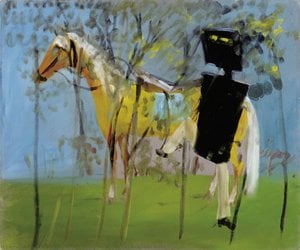
Tras una primera etapa de formas plenamente abstractas, Nolan desarrolló un estilo figurativo brillante, colorista y deliberadamente ingenuo. Su interés se centró principalmente en representar el desértico y yermo paisaje australiano, como en
Carron Plains (1948, Museo de Arte de Nueva Gales del Sur, Sídney), así como también en los cuentos y las historias de carácter romántico. Algunas obras destacadas incluyen:
- Carriers of Horses (1941): Una serie de pinturas que muestran el estilo único de Nolan.
- The AFL Series (1936-1937): Colección de obras que resaltan su interés temprano en los deportes.
- Landscape with Industrial Motif (1940s): Demostrando su habilidad para combinar paisajes industriales y naturales.
- Ned Kelly Series: Su serie más famosa, representando al forajido Ned Kelly con un estilo distintivo.
Influencias y Desarrollo Artístico
Nolan se educó principalmente a través de libros sobre Pablo Picasso, Paul Klee, Henri Matisse y los surrealistas. Fue influenciado por el grupo artístico conocido como los Angry Penguins, que buscaban modernizar el arte australiano adoptando procesos espontáneos e inspirados en el surrealismo.
La casa de Sunday y John Reed, ‘Heide’, fue un lugar clave para su desarrollo artístico. Su trabajo evolucionó desde formas abstractas hasta un estilo figurativo caracterizado por colores vibrantes y una técnica deliberadamente simple. Su interés en la historia australiana y sus mitos se convirtió en un tema central de su obra.
Significado Cultural e Impacto
Nolan's work is deeply rooted in Australian culture, reflecting the country’s complex history.
Sus pinturas del forajido Ned Kelly contribuyeron al desarrollo de la imagen de Ned Kelly como símbolo para la historia y la identidad australiana. Su arte no solo representa esta realidad sino que también contribuye a la identidad artística de la nación. Su capacidad para combinar elementos históricos, mitológicos y paisajes australianos le valió un lugar destacado en el arte del siglo XX.
Legado y Disponibilidad de su Obra
Hoy en día, la obra de Nolan se puede encontrar en varios museos y colecciones a lo largo de Australia. Para explorar más de su trabajo artístico, visite la colección de
WahooArt.com, que presenta una amplia gama de sus pinturas. Para obtener más información sobre la cultura australiana y su desarrollo, consulte el artículo
cultura de Australia en Wikipedia.
- Explore la obra de Nolan en WahooArt.com
- Aprenda sobre la cultura australiana en Wikipedia



 Switch to Print
 Enviar
 Compartir
 Detalles

 Descargar
 Similares
 Presentación de diapositivas
 Stats
Stats


 Ver más






































 La opción de vidrio solo está disponible en tamaños inferiores a 110 cm.