Vista previa Vista previa en RA Cambiar a formato impreso Ver versión en imagen digital Compartir
Ver detalles Guía Añadir a favoritos Descargar Ver artículos similares Radiografía Presentación de diapositivas Estadísticas

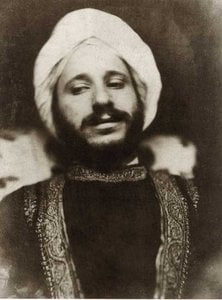
Self-Portrait

Detailed research reveals Solomon's significant influence within the Pre-Raphaelite movement, marked by explorations of Jewish identity and same-sex desire. His work is showcased at institutions like the V&A and Leighton House, cementing his legacy as a pivotal figure in Victorian art history.

Descubre el arte prerrafaelista de Simeon Solomon (1840-1905): pintor inglés conocido por escenas bíblicas, deseo homosexual y temas clásicos. Encuéntralo en museos como el Museo Guggenheim.

Reproducción al óleo hecha a mano

Óleo sobre lienzo pintado a mano en el tamaño y marco de su elección, realizado por encargo por nuestros artistas. ( Cambiar a formato impreso Ver versión en imagen digital)

Corner sample of the P118B picture frame: poliestireno moldeado, 5 cm wide and 3 cm thick
P118B €10
Corner sample of the P118H picture frame: poliestireno moldeado, 5 cm wide and 3 cm thick
P118H €10
Corner sample of the P118W picture frame: poliestireno moldeado, 5 cm wide and 3 cm thick
P118W €10
Corner sample of the P438Z picture frame: poliestireno moldeado, 5.5 cm wide and 3.5 cm thick
P438Z €10
Corner sample of the P508JH picture frame: poliestireno moldeado, 7 cm wide and 3.5 cm thick
P508JH €12
Corner sample of the P508YH picture frame: poliestireno moldeado, 7 cm wide and 3.5 cm thick
P508YH €12
Corner sample of the P805H picture frame: poliestireno moldeado, 5 cm wide and 3.5 cm thick
P805H €10
Corner sample of the P805Z picture frame: poliestireno moldeado, 5 cm wide and 3.5 cm thick
P805Z €10
Corner sample of the P919BZ picture frame: poliestireno moldeado, 7 cm wide and 3.5 cm thick
P919BZ €10
Corner sample of the P919G picture frame: poliestireno moldeado, 7 cm wide and 3.5 cm thick
P919G €10
Corner sample of the P919XJ picture frame: poliestireno moldeado, 7 cm wide and 3.5 cm thick
P919XJ €10
Corner sample of the P959ZH picture frame: poliestireno moldeado, 5 cm wide and 3 cm thick
P959ZH €10
Corner sample of the P968JZ picture frame: poliestireno moldeado, 6 cm wide and 4 cm thick
P968JZ €12
Corner sample of the W106C picture frame: madera maciza, 5 cm wide and 3 cm thick
W106C €8
Corner sample of the W218G picture frame: madera maciza, 5 cm wide and 3 cm thick
W218G €10
Corner sample of the W218JH picture frame: madera maciza, 5 cm wide and 3 cm thick
W218JH €8
Corner sample of the W218Y picture frame: madera maciza, 5 cm wide and 3 cm thick
W218Y €10
Corner sample of the W307PJ picture frame: madera maciza, 6 cm wide and 3 cm thick
W307PJ €10
Corner sample of the W316G picture frame: madera maciza, 6 cm wide and 3 cm thick
W316G €10
Corner sample of the W316PJ picture frame: madera maciza, 6 cm wide and 3 cm thick
W316PJ €8
Corner sample of the W316Y picture frame: madera maciza, 6 cm wide and 3 cm thick
W316Y €10
Corner sample of the W398PJ picture frame: madera maciza, 5 cm wide and 3 cm thick
W398PJ €8
Corner sample of the W4111J picture frame: madera maciza, 6.5 cm wide and 3.5 cm thick
W4111J €10
Corner sample of the W500HY picture frame: madera maciza, 7 cm wide and 5 cm thick
W500HY €15
Corner sample of the W500JH picture frame: madera maciza, 7 cm wide and 5 cm thick
W500JH €15
Corner sample of the W692G picture frame: madera maciza, 8 cm wide and 4 cm thick
W692G €12
Corner sample of the W849H picture frame: madera maciza, 5 cm wide and 3 cm thick
W849H €8
Corner sample of the W940BG picture frame: madera maciza, 7.5 cm wide and 4.5 cm thick
W940BG €15
Corner sample of the W953PJ picture frame: madera maciza, 6 cm wide and 3.5 cm thick
W953PJ €8

Estándar
personalizado
CM
INCH

Elija entre nuestros tamaños predefinidos que respetan las proporciones originales de la obra.

ancho
altura

Escriba el ancho y el alto que necesite para adaptarse a su marco o a su pared. Al ser una obra pintada a mano, para un tamaño con una forma distinta, el artista puede pintar un poco más alrededor de la imagen o recortar un poco; usted elige. Le enviaremos una maqueta digital para su aprobación antes de comenzar la pintura. La imagen que se muestra en esta página no refleja el resultado real; solo la maqueta lo hace.

Ejemplos de lo que se puede personalizar: Reemplace el rostro con una foto del cliente; Agregue una mascota (por ejemplo, cambie un gato por un perro); Incluya un mensaje oculto en el fondo; Cambie el paisaje o los elementos del fondo.
Tras realizar el pedido, el equipo de WahooArt.com enviará un correo electrónico al cliente para solicitar instrucciones y proporcionarle una vista previa del boceto.

Envío a todo el mundo () en 3-4 semanas en lugar de las 5 semanas estándar. (23 octubre). Sin comprometer la calidad.

Envío exprés gratuito a todo el mundo
Lienzo de lino de alta calidad
Seguro de envío completo
Garantía de reembolso de impuestos aduaneros
Garantía de fidelidad cromática exacta
Política de devolución de 100 días (solo por defectos)
Garantía de devolución del 100% del dinero
Oferta por volumen

Precio total

€ 239

Self-Portrait

Técnica de reproducción

Tamaño de la reproducción

-

Precio total

€ 239

Datos clave

  • Year: 1859
  • Notable elements or techniques: Black and white drawing, pensive expression
  • Movement: Pre-Raphaelite
  • Artistic style: Victorian, Symbolism

Cuestionario de arte

Cada pregunta tiene una única respuesta correcta.

Pregunta 1:
What artistic movement is Simeon Solomon associated with?
Pregunta 2:
In what year was this self-portrait created?
Pregunta 3:
What medium did Simeon Solomon use to create this artwork?
Pregunta 4:
Where is this self-portrait currently housed?
Pregunta 5:
What does the image description highlight about Solomon's artistic style?

A Glimpse into the Soul: The Introspective World of Simeon Solomon

In the quiet, monochromatic depths of Simeon Solomon’s 1859 Self-Portrait, we encounter more than just a mere likeness; we witness a profound moment of psychological vulnerability. This delicate drawing, rendered with the sensitive touch characteristic of the early Pre-Raphaent era, captures a figure lost in deep contemplation. The subject, possessing long, elegantly styled hair and a pensive gaze that drifts toward an unseen horizon, serves as a window into the artist's internal landscape. Through the masterful use of light and shadow in this black and white medium, Solomon invites the viewer to share in a private moment of introspection, where the boundaries between the creator and the creation begin to blur.

The composition is enriched by a subtle sense of place, featuring a window that frames the subject against a backdrop containing a hanging painting. This layering of imagery—a portrait within a portrait—adds a sophisticated depth to the work, suggesting the layers of identity that Solomon himself navigated throughout his complex life. The interplay between the physical setting and the emotional weight of the expression creates a tension that is both haunting and beautiful, making this piece an exquisite example of how Victorian artists utilized domestic intimacy to explore much larger, universal themes of longing and self-discovery.

Symbolism and the Pre-Raphaelite Spirit

To understand this work, one must look through the lens of the Pre-Raphaelite movement, a period defined by an intense devotion to detail and a fascination with symbolic truth. While Solomon’s later works became famous for their explorations of Jewish identity and classical mythology, this early self-portrait reveals the foundational seeds of his artistic preoccupation: the exploration of the "inner self." The soft textures of the hair and the flowing drapery of the dress are not merely decorative; they represent a tactile connection to the physical world that contrasts sharply with the ethereal, distant gaze of the subject.

For the discerning collector or interior designer, this piece offers a unique opportunity to introduce a sense of historical gravity and poetic melancholy into a space. The artwork functions as a focal point of quietude, perfect for a study, a library, or a gallery wall where conversation and reflection are encouraged. Its monochromatic palette ensures a timeless elegance, allowing it to integrate seamlessly into both classical and contemporary decor, providing a sophisticated touch of Victorian romanticism that transcends the passing trends of modern design.

A Timeless Legacy for the Modern Collector

Owning a reproduction of such a significant piece is an act of preserving a fragment of art history. Solomon’s life, marked by both immense brilliance and profound tragedy, imbues his work with an emotional resonance that remains palpable over a century later. This Self-Portrait stands as a testament to the power of the line and the depth of the human spirit. It is a piece that does not merely decorate a room but breathes life into it, offering a continuous dialogue between the nineteenth-century artist and the modern observer.

Whether you are drawn to the technical precision of the drawing or the evocative atmosphere of the Victorian era, this work serves as an enduring inspiration. It invites anyone who views it to pause, to look inward, and to find beauty in the quietest moments of existence.

Preguntas y respuestas

¿Cuál es el tono predominante de "Self-Portrait" de Simeón Solomon?

El tono dominante de "Self-Portrait" de Simeón Solomon es Golden Yellow Range. El tono es la base cromática de la paleta.

¿Puedo ver "Self-Portrait" de Simeón Solomon bajo diferentes luces?

La vista de rayos X de "Self-Portrait" de Simeón Solomon se encuentra en la página Rayos X de la obra: un examen interactivo de la imagen a través de once capas ópticas.

¿De qué manera "Self-Portrait" de Simeón Solomon vincula el Pre-Raphaelite Revival con el país de origen del artista?

"Self-Portrait" conecta el movimiento Pre-Raphaelite Revival con Reino Unido a través del lugar de nacimiento de su creador.


Biografía del artista

A Life Shrouded in Beauty and Scandal: The World of Simeon Solomon

Simeon Solomon, a name whispered with both reverence and regret within the annals of Victorian art, occupies a unique and often tragic position amongst the Pre-Raphaelites. Born in London in 1840 into a prominent Jewish family – the eighth and final child of merchant Michael (Meyer) Solomon and artist Catherine (née Levy), an amateur miniature painter – his life was one of remarkable artistic promise tragically curtailed by societal prejudice and personal demons. He wasn’t merely a painter; he was a cultural mirror reflecting the complexities of Victorian England, grappling with faith, desire, and identity in a rapidly changing world.

Early Influences and Artistic Development

Solomon’s artistic education began within his own family circle. His mother possessed an amateur talent for miniature painting, while his elder siblings, Abraham and Rebecca Solomon, were both established artists exhibiting at the Royal Academy. It was from them, particularly his brother Abraham, that Simeon received his initial training, learning the fundamentals of draftsmanship and composition. He formally studied at Carey’s Art Academy in 1852 before entering the prestigious Royal Academy Schools in 1856. This period proved pivotal, as it introduced him to the burgeoning Pre-Raphaelite Brotherhood through Dante Gabriel Rossetti. The encounter with Rossetti, along with friendships forged with Edward Burne-Jones and Algernon Charles Swinburne, profoundly shaped Solomon’s artistic sensibilities. He embraced their commitment to detailed realism, vibrant color palettes, and a fascination with literature, mythology, and religious narratives. Early works like *Isaac Offered* (1858) demonstrate this initial influence, showcasing a meticulous attention to detail and a dramatic narrative style characteristic of the Pre-Raphaelites. However, Solomon quickly began to forge his own path, infusing his paintings with a distinctly personal vision.

Themes of Faith, Desire, and Identity

Solomon’s artistic output was remarkably diverse, encompassing biblical scenes, classical mythology, and genre paintings depicting Jewish life and rituals. He found particular inspiration in the Hebrew Bible, creating works such as *Moses* (1860) and *Shadrach, Meshach, and Abednego* (1863), which resonated with his own cultural heritage. Yet, it was his exploration of classical themes that truly set him apart. Paintings like *In the Temple of Venus* (1863) and *Bacchus* (1867) reveal a fascination with sensuality and beauty, often imbued with an undercurrent of melancholy and longing. These works also hint at Solomon’s growing interest in same-sex desire, a theme he would explore more explicitly – and dangerously – throughout his career. His association with Algernon Charles Swinburne, whose poetry celebrated unconventional love and challenged Victorian morality, undoubtedly fueled this exploration. Solomon's art became a subtle yet powerful commentary on the constraints of Victorian society, hinting at hidden passions and unspoken desires. He was one of the first artists to openly depict homoerotic themes, albeit often veiled in classical allegory or biblical narrative.

Scandal, Decline, and Lasting Legacy

The year 1873 marked a devastating turning point in Solomon’s life. His arrest in a public lavatory for attempting to commit sodomy brought swift and brutal consequences. Though he received a relatively light fine, the scandal shattered his reputation and effectively ended his career as a publicly exhibited artist. A subsequent arrest in Paris in 1874 led to a three-month prison sentence. Shunned by much of the art establishment, Solomon descended into alcoholism and poverty. However, despite his ostracization, he continued to create art, albeit often under difficult circumstances. He found support from a small circle of admirers – including Oscar Wilde, John Addington Symonds, and Walter Pater – who recognized his talent and collected his works in private. He spent time in the St Giles Workhouse, Holborn, in London, where he died of a heart attack on 14 August 1905. Two memorial exhibitions were held in 1906 and in 2005-6 Birmingham Museum & Art Gallery curated the exhibition 'Love Revealed: Simeon Solomon and the Pre-Raphaelites', the first full-scale survey of his work, which toured to Ben Uri Gallery in London and to Museum Villa Stuck, Munich.
Simeón Solomon

Simeón Solomon

1840 - 1905 , Reino Unido

Datos clave

  • Artistic Movement Or Style: Pre-rafaelitismo
  • Artists Who Influenced This Artist:
    • Gabriel Rossetti
    • Edward Burne-Jones
  • Date Of Birth: 1840
  • Date Of Death: 1905
  • Full Name: Simeon Solomon
  • Nationality: Británico
  • Notable Artworks:
    • Babilonia ha sido...
    • Shadrach, Meshach...
    • El templo de Venus
  • Place Of Birth: Londres, Reino Unido