Primeros años y formación
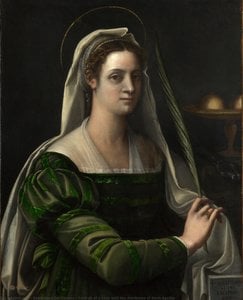
Sebastiano Luciani (Venecia, 1485-Roma, 21 de junio de 1547), más conocido como Sebastiano del Piombo, por haber ocupado a partir de 1531 el cargo de responsable de los sellos de plomo —piombo en italiano— de la Santa Sede, fue un pintor italiano, protegido por Miguel Ángel y uno de los más admirados e influyentes del Renacimiento. Su obra representa una síntesis entre el colorido de la escuela veneciana y las figuras monumentales características de la pintura romana. Se distinguen tres momentos en su evolución: una etapa veneciana, donde el colorido de sus obras recuerda al de sus primeros maestros, los pintores Giovanni Bellini y Giorgione; un primer periodo romano, ciudad a la que llega en 1511 gracias al mecenazgo del banquero Agostino Chigi, en el que asimila el estilo de Rafael y de Miguel Ángel; y un segundo periodo romano, tras el Saco de Roma en 1527, en el que su pintura se vuelve más severa y esencial, en consonancia con el espíritu de la Reforma católica que se plasmará posteriormente en las directrices del Concilio de Trento.
Inicios y Primeras Obras
Tal como relata su biógrafo Giorgio Vasari, Sebastiano nació en Venecia en 1485, hijo de Luciano Luciani. Según el propio Vasari, la primera vocación de Sebastiano fue la música (cantaba y tocaba el laúd), pero pronto sintió curiosidad por la pintura y entró en contacto con Giovanni Bellini, y después con Giorgione, quienes fueron sus maestros, especialmente este último. Entre 1508 y 1509 realizó los cuatro paneles del órgano de la iglesia de San Bartolomeo de Rialto (Venecia), encargados por Alvise Ricci, vicario del templo entre 1507 y 1509. En 1510 pintó la tabla Salomé (también conocida como La hija de Herodías).
Ascenso a la Prominencia en Roma
Sebastiano's career gained momentum after he moved to rome in 1511, where he worked alongside raphael and eventually became one of the few painters to get on well with michelangelo, who encouraged him to compete for commissions against raphael. This exposure led sebastiano to become rome's leading painter after raphael's death in 1520.
Obras Destacadas y Colaboraciones
- La Piedad (Museo del Prado, Madrid): Una obra maestra que muestra la influencia de Miguel Ángel en la escultura y la maestría de Sebastiano en el óleo.
- La Muerte de Adonis (Galería de los Uffizi, Florencia): Una pintura mitológica que combina el colorido veneciano con la influencia de Rafael.
- Salomé con la cabeza del Bautista (National Gallery, Londres): Una obra temprana que revela su estilo distintivo y sus influencias.
Estilo e Influencia
El estilo de Sebastiano del Piombo se caracteriza por una síntesis única entre el colorido vibrante de la escuela veneciana y las figuras monumentales y escultóricas propias de la pintura romana, especialmente bajo la influencia de Miguel Ángel. Su obra influyó en otros artistas manieristas y en la pintura española de su tiempo. Aunque no tuvo muchos alumnos destacados, su legado perdura en la combinación innovadora de técnicas y estilos que definió su carrera.
Su habilidad para fusionar el color veneciano con las formas poderosas de Roma lo convierte en una figura clave del Renacimiento.
Legado e Importancia Histórica
A pesar de ser un artista importante en su época, la influencia directa de Sebastiano del Piombo sobre otros artistas fue limitada debido a la falta de alumnos prominentes y a la relativamente escasa difusión de sus obras en copias impresas. Sin embargo, su singular combinación de color veneciano y formas monumentales romanas continúa inspirando a artistas y amantes del arte hasta el día de hoy. Su obra representa un puente entre las tradiciones artísticas de Venecia y Roma, contribuyendo al desarrollo del estilo manierista y dejando una huella duradera en la historia del arte italiano.



 Vista previa
 Encargar reproducción pintada a mano
 Compartir
 Compartir
 Ver detalles
 Guía
Guía

 Descargar
 Ver artículos similares
 Radiografía
 Presentación de diapositivas
 Estadísticas


 Leer más






































 La opción de vidrio solo está disponible en tamaños inferiores a 110 cm.