Asesoría de arte gratuita

x
Comprar impresión Comprar impresiónComprar imagen en alta resolución Comprar imagen en alta resolución EnviarEnviar
DetallesDetalles Añadir a favoritos Añadir a favoritos DescargarDescargar SimilaresSimilares Rayos XRayos X Presentación de diapositivasPresentación de diapositivas

st. augustine

St Augustine by Sandro Botticelli - This serene portrait captures St. Augustine at his table, contemplating scripture amidst companions—a masterpiece of Early Renaissance grace and contemplative beauty.

Explore la cautivadora obra de arte de Sandro Botticelli (1445-1510), un maestro de la pintura del Renacimiento Temprano. Conocido por su elegante linealidad, obras icónicas como 'El Nacimiento de Venus' & 'La Primavera', y por conectar los estilos gótico y renacentista. ¡Descubre su legado!

Reproducción al óleo hecha a mano

Óleo sobre lienzo pintado a mano en el tamaño y marco de su elección, realizado por encargo por nuestros artistas.

P118B $10
P118H $10
P118W $10
P438Z $10
P508JH $12
P508YH $12
P805H $10
P805Z $10
P919BZ $10
P919G $10
P919XJ $10
P959ZH $10
P968JZ $12
W106C $8
W218G $10
W218JH $8
W218Y $10
W307PJ $10
W316G $10
W316PJ $8
W316Y $10
W398PJ $8
W4111J $10
W500HY $15
W500JH $15
W692G $12
W849H $8
W940BG $15
W953PJ $8

Standard
custom
CM
INCH

Elija entre nuestros tamaños predefinidos que respetan las proporciones originales de la obra.

ancho
altura

Puede ingresar sus propias dimensiones para adaptarse a un marco o espacio específico. Si el tamaño seleccionado no coincide con las proporciones de la imagen original, recortaremos la obra o extenderemos la pintura con elementos adicionales pintados a mano. Se le enviará una maqueta digital para su aprobación antes de comenzar la producción.
Tenga en cuenta que la vista previa en pantalla no refleja el recorte o la extensión reales. Solo la maqueta mostrará con precisión la composición final.
Si bien existen tamaños personalizados, recomendamos seleccionar una dimensión de la lista predefinida para preservar las proporciones originales.

Ejemplos de lo que se puede personalizar: Reemplace el rostro con una foto del cliente; Agregue una mascota (por ejemplo, cambie un gato por un perro); Incluya un mensaje oculto en el fondo; Cambie el paisaje o los elementos del fondo.
Tras realizar el pedido, el equipo de WahooArt.com enviará un correo electrónico al cliente para solicitar instrucciones y proporcionarle una vista previa del boceto.

Entrega mundial () en 3-4 semanas en lugar de las 5 semanas estándar. (3 julio). Sin compromisos con la calidad.

why_choose_icon
Envío exprés gratuito a todo el mundo
why_choose_icon
Lienzo de lino de alta calidad
why_choose_icon
Seguro de envío total
why_choose_icon
Garantía de reembolso de impuestos aduaneros
why_choose_icon
Garantía de fidelidad de color
why_choose_icon
Política de devolución de 60 días (solo por defectos)
why_choose_icon
Garantía de devolución del 100% del dinero
why_choose_icon
Descuento por pedido múltiple

Precio total

-

reproduction

st. augustine

Técnica de reproducción

Tamaño de la reproducción

-

Precio total final

-

Datos clave

  • Medium: Oil on canvas
  • Dimensions: 73 x 54 cm
  • Artist: Botticelli
  • Movement: Renaissance
  • Year: 1503
  • Subject or theme: Religious iconography
  • Artistic style: Idealized realism

Test de arte

Solo hay una respuesta correcta para cada pregunta.

Pregunta 1:
What is the primary subject depicted in Sandro Botticelli's painting, St Augustine?
Pregunta 2:
Botticelli employed what artistic technique to achieve the painting's characteristic grace and elegance?
Pregunta 3:
In what historical period was Sandro Botticelli active as a painter?
Pregunta 4:
What prominent family supported Botticelli's artistic endeavors during his lifetime?
Pregunta 5:
Botticelli’s St Augustine is notable for its depiction of contemplative stillness. What element contributes to conveying this mood?

Descripción de la obra

A Portrait Steeped in Faith and Florentine Grace

Botticelli’s depiction of St Augustine stands as an emblem of humanist ideals intertwined with profound spiritual contemplation—a hallmark of the Early Renaissance that continues to resonate today. Painted circa 1503, this portrait transcends mere likeness; it embodies a carefully crafted synthesis of observation, artistic convention, and symbolic resonance. Botticelli's meticulous attention to detail reveals his mastery of sfumato, a technique pioneered by Leonardo da Vinci, whereby subtle gradations of tone create an ethereal luminescence around Augustine’s face—a masterful illusion that softens the contours and imbues the figure with an aura of serenity. The artist skillfully employs chiaroscuro, contrasting light and shadow to sculpt Augustine's form, emphasizing musculature while simultaneously conveying a sense of inner stillness.
  • Style: Botticelli’s style is characterized by its lyrical elegance and refined aesthetic sensibilities—a departure from the rigid formalism of preceding artistic traditions.
  • Technique: Employing tempera on panel, Botticelli achieved remarkable luminosity and vibrancy through layering thin glazes of pigment over a preparatory underpainting. This technique demanded considerable patience and precision, reflecting the artist’s unwavering commitment to excellence.
The historical context surrounding Augustine's commission is crucial to understanding its significance. Augustine was Bishop of Hippo Regius during a period marked by religious upheaval—the Protestant Reformation was gaining momentum across Europe—and Botticelli’s portrayal reflects the humanist fascination with classical ideals and moral virtue. Augustine himself represents the culmination of Aristotelian philosophy, emphasizing reason and contemplation as pathways to spiritual enlightenment. The pose of Augustine—seated at a table with his hands resting on his chest—is deliberately reminiscent of depictions of Christ in Byzantine iconography, subtly asserting Christian piety within the broader humanist framework.
  • Symbolism: The posture mirrors Christ’s crucifixion gesture, symbolizing humility and acceptance of divine will.
  • Emotional Impact: Botticelli's masterful rendering captures Augustine's contemplative gaze—a window into his inner life—inspiring viewers with a sense of peace and spiritual aspiration.
Botticelli’s St Augustine is more than just a portrait; it’s an artistic manifesto—a testament to the enduring power of humanist thought and Florentine artistry. Its luminous palette, refined technique, and evocative symbolism continue to captivate audiences centuries after its creation, securing its place as one of the most celebrated images of the Renaissance.

Obras similares


Biografía del artista

vida temprana y formación

Sandro Botticelli, nacido Alessandro di Mariano di Vanni Filipepi alrededor de 1445, fue una figura clave en el Renacimiento temprano de la pintura italiana. Inicialmente eclipsado post mortem, la obra de Botticelli fue revitalizada a finales del siglo XIX por los pre-rafaelitas, lo que llevó a una reevaluación de sus contribuciones artísticas. Botticelli nació en Florencia, Italia, y vivió toda su vida en el mismo barrio. Su familia, incluyendo a su padre Mariano di Vanni d'Amadeo Filipepi, estuvo involucrada en diversas profesiones, lo que les permitió entrar en contacto con artistas. Giorgio Vasari informó que Botticelli fue inicialmente entrenado como joyero.

Estilo artístico y obras notables

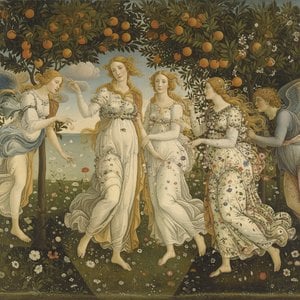
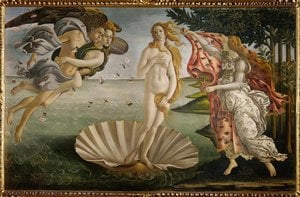
La obra de Botticelli se caracteriza por una elegante linealidad, que conecta el gótico tardío italiano con el Renacimiento temprano. Sus obras más famosas, El nacimiento de Venus y Primavera, se exhiben en la Galería Uffizi en Florencia, que alberga una importante colección de su arte. * El nacimiento de Venus (ver en WahooArt) * Primavera (explorar el arte de Sandro Botticelli en WahooArt) * La natividad mística (Galería Nacional, Londres), fechada en 1501, es la única obra de Botticelli con una fecha clara.

Legado e influencia

El estilo de Botticelli evolucionó hacia un enfoque más personal en la década de 1490, divergente de sus contemporáneos como Leonardo da Vinci y el estilo del Alto Renacimiento emergente. Su obra ha sido reconocida como una contribución significativa al movimiento artístico del Renacimiento italiano. * El movimiento artístico del Renacimiento italiano * Sandro Botticelli en Wikipedia
  • Artistas notables del Renacimiento italiano incluyen a Sandro Botticelli, Leonardo da Vinci, Miguel Ángel y Tiziano.
  • La Galería Uffizi de Florencia alberga una importante colección de arte de Botticelli.
  • La obra de Botticelli ha sido reconocida como una figura clave en el Renacimiento temprano de la pintura italiana.
Fechas clave: * 1445: Sandro Botticelli nació en Florencia, Italia. * 1474: Pasó tiempo en Pisa. * 1481-1482: Trabajó en la Capilla Sixtina en Roma. * 1501: La natividad mística (Galería Nacional, Londres) fue fechada.
Sandro Botticelli

Sandro Botticelli

1445 - 1510 , Italia

Datos clave

  • Artistas Que Influyeron:
    • Fra Angelico
    • Paolo Uccello
  • Estilo Artístico: Renacimiento Temprano
  • Fecha De Muerte: 1510
  • Fecha De Nacimiento: c. 1445
  • Influenciado A Artistas: ['Pre-Rafaelitas']
  • Lugar De Nacimiento: Florencia, Italia
  • Nacionalidad: Italiana
  • Nombre Completo: Sandro Botticelli
  • Obras Notables:
    • El Nacimiento de Venus
    • Primavera
    • Natividad Mística
Explore obras de arte organizadas por temas, estilos y características.