Vista previa Vista previa en RA Encargar reproducción pintada a mano Ver versión en imagen digital Compartir
Ver detalles Guía Añadir a favoritos Descargar Ver artículos similares Radiografía Presentación de diapositivas Estadísticas

Calumny (detail)3

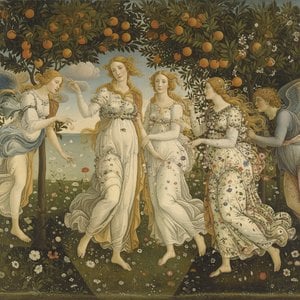
Botticelli’s ‘Calumny,’ a dramatic depiction of accusation and punishment during the Florentine Renaissance, captures a tense moment with meticulous detail—a man crowned in shame surrounded by judgmental figures. Explore this iconic masterpiece and bring its timeless beauty into your home.

Explore la cautivadora obra de arte de Sandro Botticelli (1445-1510), un maestro de la pintura del Renacimiento Temprano. Conocido por su elegante linealidad, obras icónicas como 'El Nacimiento de Venus' & 'La Primavera', y por conectar los estilos gótico y renacentista. ¡Descubre su legado!

Giclée / Impresión de arte

Impresiones giclée o en lienzo de calidad de museo con producción rápida y opciones de acabado flexibles. ( Encargar reproducción pintada a mano Ver versión en imagen digital)

P118B $10
P118H $10
P118W $10
P438Z $10
P508JH $12
P508YH $12
P805H $10
P805Z $10
P919BZ $10
P919G $10
P919XJ $10
P959ZH $10
P968JZ $12
W106C $8
W218G $10
W218JH $8
W218Y $10
W307PJ $10
W316G $10
W316PJ $8
W316Y $10
W398PJ $8
W4111J $10
W500HY $15
W500JH $15
W692G $12
W849H $8
W940BG $15
W953PJ $8

Estándar
personalizado
CM
INCH

Elija entre nuestros tamaños predefinidos que respetan las proporciones originales de la obra.

ancho
altura

Puede introducir sus propias dimensiones para adaptarse a un marco o espacio específico. Si el tamaño seleccionado no coincide con las proporciones de la imagen original, recortaremos la obra de arte o extenderemos la imagen con un borde con efecto espejo o de color sólido. Se enviará una maqueta digital para su aprobación antes de que comience la producción.
Tenga en cuenta que la vista previa en pantalla no refleja el recorte o la extensión real. Solo la maqueta mostrará con precisión la composición final.
Aunque existen tamaños personalizados, recomendamos seleccionar una dimensión de la lista predefinida para preservar las proporciones originales.

Envío a todo el mundo () en 2 semanas en lugar de las 4/5 semanas estándar. (22 septiembre)

why_choose_icon
Envío exprés gratuito a todo el mundo
why_choose_icon
Lienzo de lino de alta calidad
why_choose_icon
Seguro de envío completo
why_choose_icon
Garantía de reembolso de impuestos aduaneros
why_choose_icon
Garantía de fidelidad cromática exacta
why_choose_icon
Política de devolución de 100 días (solo por defectos)
why_choose_icon
Garantía de devolución del 100% del dinero
why_choose_icon
Oferta por volumen

Precio total

$ 68

reproduction

Calumny (detail)3

Giclée / Impresión de arte

Tamaño de la reproducción

-

Precio total

$ 68

Datos clave

  • Influences: Humanism
  • Notable elements: Crown, Accusation
  • Year: c. 1495
  • Artistic style: Elegant
  • Artist: Sandro Botticelli
  • Medium: Oil paint
  • Subject: Allegory

A Symphony of Scandal and Grace

In the quiet intensity of Sandro Botticelli’s Calumny, we are invited into a world where the air itself feels heavy with accusation and whispered secrets. This evocative detail captures a moment frozen in time, a dramatic confrontation that serves as a window into the turbulent soul of Renaissance Florence. At its heart lies a man, perhaps bearing the weight of a crown, subjected to the piercing gaze and relentless judgment of a surrounding throng. The scene is not merely a depiction of conflict; it is a psychological landscape where the boundaries between private torment and public humiliation blur, creating an atmosphere of profound tension that continues to captivate viewers centuries after its creation.

The composition breathes with a sense of orchestrated chaos, yet it is held together by Botticelli’s unparalleled mastery of line and form. As one observes the figures gathered around the central protagonist, there is a palpable sense of movement—the leaning bodies, the accusing gestures, and the watchful eyes of those standing in the periphery. The presence of seemingly mundane objects, such as a solitary chair or a bowl tucked into the corner, grounds this high drama in a tangible, domestic reality, making the unfolding scandal feel disturbingly intimate. For the discerning collector, this piece offers more than just visual beauty; it provides a narrative depth that transforms any space into a gallery of historical reflection.

The Ethereal Touch of the Florentine Master

To look closely at Calumny is to witness the pinnacle of Botticelli’s signature technique. Eschewing the heavy, muscular shadows of his contemporaries, Botticelli employs a luminous, pastel palette that lends the work an almost otherworldly glow. Through the meticulous application of glazes—thin, translucent layers of pigment—he achieves a depth of color that seems to radiate from within the panel itself. His use of delicate, flowing lines defines the intricate folds of drapery and the expressive, often melancholic, features of his subjects with a grace that is uniquely his own.

The palette, dominated by soft creams, pale yellows, and ethereal blues, works in subtle harmony with the subject matter. Rather than using harsh contrasts to denote conflict, Botticelli uses these muted hues to heighten the sense of melancholy and psychological complexity. This delicate approach ensures that even the most intense moments of accusation are rendered with a poetic elegance. For interior designers seeking to introduce a sense of sophisticated calm paired with intellectual intrigue, the soft luminosity of this work provides an exquisite focal point that complements both classical and contemporary settings.

Echoes of Political Intrigue and Human Emotion

Beyond its aesthetic brilliance, Calumny is a profound historical document, reflecting the political instability of late 15th-century Florence. Painted during a period of shifting allegiances and intense scrutiny under the influence of the Medici family, the work likely mirrors the real-world scandals and accusations of corruption that haunted the era's most powerful figures. The figures in the painting are not mere archetypes; they embody the very essence of social anxiety, representing the fear of losing one's honor to the venomous spread of false rumors.

This layer of historical symbolism imbues the artwork with a timeless emotional resonance. The struggle against injustice and the vulnerability of the individual in the face of public opinion are themes that remain strikingly relevant today. Owning a high-quality reproduction of this masterpiece allows one to possess a piece of history that speaks to the enduring human condition. It is an investment in art that does not merely decorate a wall but invites conversation, contemplation, and a deep connection to the dramatic legacy of the Italian Renaissance.


Biografía del artista

vida temprana y formación

Sandro Botticelli, nacido Alessandro di Mariano di Vanni Filipepi alrededor de 1445, fue una figura clave en el Renacimiento temprano de la pintura italiana. Inicialmente eclipsado post mortem, la obra de Botticelli fue revitalizada a finales del siglo XIX por los pre-rafaelitas, lo que llevó a una reevaluación de sus contribuciones artísticas. Botticelli nació en Florencia, Italia, y vivió toda su vida en el mismo barrio. Su familia, incluyendo a su padre Mariano di Vanni d'Amadeo Filipepi, estuvo involucrada en diversas profesiones, lo que les permitió entrar en contacto con artistas. Giorgio Vasari informó que Botticelli fue inicialmente entrenado como joyero.

Estilo artístico y obras notables

La obra de Botticelli se caracteriza por una elegante linealidad, que conecta el gótico tardío italiano con el Renacimiento temprano. Sus obras más famosas, El nacimiento de Venus y Primavera, se exhiben en la Galería Uffizi en Florencia, que alberga una importante colección de su arte. * El nacimiento de Venus (ver en WahooArt) * Primavera (explorar el arte de Sandro Botticelli en WahooArt) * La natividad mística (Galería Nacional, Londres), fechada en 1501, es la única obra de Botticelli con una fecha clara.

Legado e influencia

El estilo de Botticelli evolucionó hacia un enfoque más personal en la década de 1490, divergente de sus contemporáneos como Leonardo da Vinci y el estilo del Alto Renacimiento emergente. Su obra ha sido reconocida como una contribución significativa al movimiento artístico del Renacimiento italiano. * El movimiento artístico del Renacimiento italiano * Sandro Botticelli en Wikipedia
  • Artistas notables del Renacimiento italiano incluyen a Sandro Botticelli, Leonardo da Vinci, Miguel Ángel y Tiziano.
  • La Galería Uffizi de Florencia alberga una importante colección de arte de Botticelli.
  • La obra de Botticelli ha sido reconocida como una figura clave en el Renacimiento temprano de la pintura italiana.
Fechas clave: * 1445: Sandro Botticelli nació en Florencia, Italia. * 1474: Pasó tiempo en Pisa. * 1481-1482: Trabajó en la Capilla Sixtina en Roma. * 1501: La natividad mística (Galería Nacional, Londres) fue fechada.
Sandro Botticelli

Sandro Botticelli

1445 - 1510 , Italia

Datos clave

  • Artistas Que Influyeron:
    • Fra Angelico
    • Paolo Uccello
  • Estilo Artístico: Renacimiento Temprano
  • Fecha De Muerte: 1510
  • Fecha De Nacimiento: c. 1445
  • Influenciado A Artistas: ['Pre-Rafaelitas']
  • Lugar De Nacimiento: Florencia, Italia
  • Nacionalidad: Italiana
  • Nombre Completo: Sandro Botticelli
  • Obras Notables:
    • El Nacimiento de Venus
    • Primavera
    • Natividad Mística
Explore obras de arte organizadas por temas, estilos y características.