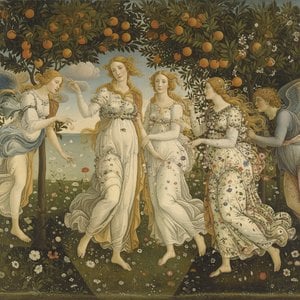
Adoration of the Magi: Botticelli’s Renaissance Vision
Sandro Botticelli's “Adoration of the Magi” (4) stands as an emblem of Early Renaissance artistry, transporting viewers back to Florence in 1475 and immersing them in a moment of profound religious significance—a spectacle orchestrated with meticulous detail and imbued with humanist ideals. This painting transcends mere depiction; it’s a gateway into understanding the evolving artistic sensibilities that defined the era.
Subject & Narrative
The artwork portrays the pivotal biblical episode recounted by Matthew: the arrival of the Magi – wise men, kings, or astrologers – bearing gifts of gold, frankincense, and myrrh to venerate the newborn Jesus. Botticelli doesn’t simply record a narrative; he captures its essence—the communal reverence experienced by pilgrims drawn to witness this miraculous event. The composition overflows with figures: kneeling worshippers, presenting lavish offerings, engaging in solemn interactions – a microcosm of Florentine society reflecting the burgeoning humanist spirit. Botticelli skillfully emphasizes the universality of Christ's message through the inclusion of diverse characters representing various social strata.
Style & Technique
Botticelli’s distinctive style distinguishes itself from its Gothic predecessors with graceful linearity and flowing drapery, prioritizing elegance over rigid formalism. Executed in oil on poplar panel, the technique allows for subtle blending of colors and remarkable precision—a hallmark of Renaissance craftsmanship. The artist's brushwork creates a textured surface, particularly noticeable in fabrics and skin tones, adding depth and realism to the scene. This meticulous attention to detail reflects Botticelli’s fascination with classical ideals and his desire to elevate art beyond mere representation.
Historical Context & Influences
Born around 1445 in Florence, Botticelli flourished during a period of unparalleled artistic dynamism—the Early Renaissance—fueled by patronage from the Medici family. His work mirrored both religious devotion and humanist thought, reflecting the intellectual currents shaping Europe at the time. The “Adoration of the Magi” was a popular subject for Renaissance artists, offering opportunities to showcase technical prowess and explore complex narratives. Botticelli’s approach drew inspiration from Fra Filippo Lippi and earlier masters, yet he forged a uniquely personal style that would resonate across generations.
Symbolism & Meaning
The painting is rich in symbolic resonance. The gifts presented by the Magi—gold symbolizing kingship, frankincense divinity, and myrrh foreshadowing Jesus’ sacrifice—represent spiritual values beyond material wealth. The architectural setting—reminiscent of Roman temples—suggests Christ's dominion over both earthly and divine realms. Furthermore, Botticelli’s depiction of Mary and Joseph embodies idealized beauty and serenity, reflecting humanist ideals that celebrated human dignity and intellect.
Emotional Impact & Aesthetic Appeal
“Adoration of the Magi” evokes a palpable sense of awe and reverence—a testament to Botticelli's ability to capture emotion through visual form. The soft, diffused lighting creates an atmosphere conducive to contemplation, highlighting the central figures while casting shadows that contribute to the painting’s three-dimensionality. The warm color palette—dominated by reds, blues, golds, and browns—creates an opulent aesthetic that aligns with Renaissance grandeur. Consider framing a reproduction with ornate gold detailing to complement the painting's rich hues and historical context. This artwork is more than just visually stunning; it invites viewers to contemplate themes of faith, hope, and the transformative power of belief – a timeless masterpiece destined to inspire admiration for centuries to come.
## Collecting & Reproduction
- Botticelli’s works are highly sought after by collectors worldwide, reflecting their enduring artistic merit and cultural significance.
- High-quality reproductions allow art enthusiasts to appreciate Botticelli's genius in their own homes or offices, bringing the beauty of Renaissance Florence into modern spaces.
- A framed reproduction with gilded borders would beautifully encapsulate the painting’s elegance and historical grandeur—a thoughtful addition to any interior design scheme.



 Vista previa
 Encargar reproducción pintada a mano
 Compartir
 Compartir
 Ver detalles
 Guía
Guía

 Descargar
 Ver artículos similares
 Radiografía
 Presentación de diapositivas
 Estadísticas

 Leer más






































 La opción de vidrio solo está disponible en tamaños inferiores a 110 cm.