x
Ver en contextoVer en contexto Vista previa en RAVista previa en RA Comprar impresión Comprar impresiónComprar imagen Comprar imagen EnviarEnviar
DetallesDetalles Añadir a favoritos Añadir a favoritos DescargarDescargar SimilaresSimilares RadiografíaRadiografía Presentación de diapositivasPresentación de diapositivas

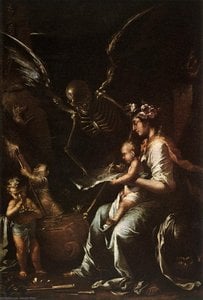
St. Francis in Ecstasy

Salvator Rosa's 'St. Francis in Ecstasy' captures the saint’s divine moment of revelation. A Baroque masterpiece featuring dramatic light, nature, and spiritual intensity.

Descubre a Salvator Rosa (1615-1673), pintor barroco italiano rebelde y visionario. Paisajes dramáticos, temas filosóficos e influencia en artistas como Luca Giordano. ¡Explora sus obras maestras!

Reproducción al óleo hecha a mano

Óleo sobre lienzo pintado a mano en el tamaño y marco de su elección, realizado por encargo por nuestros artistas. (Comprar impresión Comprar impresiónComprar imagen Comprar imagen)

P118B $10
P118H $10
P118W $10
P438Z $10
P508JH $12
P508YH $12
P805H $10
P805Z $10
P919BZ $10
P919G $10
P919XJ $10
P959ZH $10
P968JZ $12
W106C $8
W218G $10
W218JH $8
W218Y $10
W307PJ $10
W316G $10
W316PJ $8
W316Y $10
W398PJ $8
W4111J $10
W500HY $15
W500JH $15
W692G $12
W849H $8
W940BG $15
W953PJ $8

Estándar
a medida
CM
INCH

Elija entre nuestros tamaños predefinidos que respetan las proporciones originales de la obra.

ancho
altura

Puede ingresar sus propias dimensiones para adaptarse a un marco o espacio específico. Si el tamaño seleccionado no coincide con las proporciones de la imagen original, recortaremos la obra o extenderemos la pintura con elementos adicionales pintados a mano. Se le enviará una maqueta digital para su aprobación antes de comenzar la producción.
Tenga en cuenta que la vista previa en pantalla no refleja el recorte o la extensión reales. Solo la maqueta mostrará con precisión la composición final.
Si bien existen tamaños personalizados, recomendamos seleccionar una dimensión de la lista predefinida para preservar las proporciones originales.

Ejemplos de lo que se puede personalizar: Reemplace el rostro con una foto del cliente; Agregue una mascota (por ejemplo, cambie un gato por un perro); Incluya un mensaje oculto en el fondo; Cambie el paisaje o los elementos del fondo.
Tras realizar el pedido, el equipo de WahooArt.com enviará un correo electrónico al cliente para solicitar instrucciones y proporcionarle una vista previa del boceto.

Envío a todo el mundo () en 3-4 semanas en lugar de las 5 semanas estándar. (3 septiembre). Sin comprometer la calidad.

why_choose_icon
Envío exprés gratuito a todo el mundo
why_choose_icon
Lienzo de lino de alta calidad
why_choose_icon
Seguro de envío total
why_choose_icon
Garantía de reembolso de impuestos aduaneros
why_choose_icon
Garantía de fidelidad cromática exacta
why_choose_icon
Política de devolución de 60 días (solo por defectos)
why_choose_icon
Garantía de devolución del 100% del dinero
why_choose_icon
Descuento por cantidad

Precio total

$ 272

reproduction

St. Francis in Ecstasy

Técnica de reproducción

Dimensiones de la reproducción

-

Precio total final

$ 272

Datos clave

  • Artistic style: Dramatic landscape
  • Movement: Baroque
  • Subject or theme: Religious ecstasy
  • Notable elements: Mystical light, tree
  • Medium: Oil on canvas
  • Influences:
    • Ribera
    • Poussin

Test de arte

Cada pregunta tiene una única respuesta correcta.

Pregunta 1:
What artistic movement is Salvator Rosa primarily associated with?
Pregunta 2:
In 'St. Francis in Ecstasy,' what is the primary source of light?
Pregunta 3:
Which of the following best describes the landscape in 'St. Francis in Ecstasy'?
Pregunta 4:
Salvator Rosa was known for his unconventional approach to painting. What is a key characteristic of this approach?
Pregunta 5:
What is the significance of the rocky cave in 'St. Francis in Ecstasy'?

Salvator Rosa’s “St. Francis in Ecstasy”: A Baroque Vision of Divine Connection

Salvator Rosa's "St. Francis in Ecstasy," painted circa 1647, isn’t merely a depiction of a saint; it’s a profound meditation on the intersection of earthly experience and divine revelation. This arresting work, currently residing within the Phillips Collection in Washington D.C., embodies the artist’s signature blend of dramatic landscape, intense emotion, and philosophical depth – hallmarks that cemented his place as a pivotal figure in the transition from Mannerism to Baroque painting. Rosa masterfully captures a moment of profound spiritual intensity, transforming a simple religious scene into a visually arresting exploration of faith and nature.

The composition immediately draws the eye to St. Francis himself, kneeling within a shadowed cave entrance. He’s not presented as an idealized figure of serene piety but rather as a man consumed by ecstatic fervor. His arms are outstretched, palms open towards a radiant light that streams down from above, piercing through the turbulent sky and illuminating the surrounding landscape. This dramatic use of chiaroscuro – the interplay of light and dark – is characteristic of Baroque painting and serves to heighten the emotional impact of the scene. The stark contrast between the darkness of the cave and the brilliance of the divine light underscores the transformative nature of Francis’s experience.

A Landscape as Theology: Rosa's Revolutionary Approach

What distinguishes “St. Francis in Ecstasy” is not simply its religious subject matter, but rather Rosa’s innovative approach to landscape painting. He moves beyond traditional depictions of pastoral beauty, instead presenting a rugged, almost hostile environment – a rocky hillside, tangled vegetation, and a distant mountain range – as the backdrop for this profound spiritual encounter. This wasn't merely an aesthetic choice; it reflected Rosa’s belief that nature itself was imbued with divine presence. He saw in the wildness of the landscape a reflection of God’s power and majesty, mirroring the intensity of Francis’s ecstatic experience.

Rosa’s technique is equally remarkable. He employs loose, expressive brushstrokes – a deliberate departure from the polished surfaces favored by many of his contemporaries – to convey a sense of movement and dynamism. The colors are rich and saturated, particularly in the depiction of the light, which seems to emanate from within the canvas itself. The layering of paint creates a palpable texture, inviting the viewer to engage with the work on a tactile level. Notice how he uses subtle variations in tone to suggest depth and atmosphere, creating a convincing illusion of space.

Symbolism and Spiritual Resonance

Beyond its visual impact, “St. Francis in Ecstasy” is laden with symbolic meaning. The cave itself represents the earthly realm, a place of solitude and introspection where Francis sought communion with God. The thorny crown, depicted amongst his possessions within the cave, symbolizes the stigmata – the wounds received by St. Francis as a sign of his identification with Christ’s suffering. The light streaming down from above signifies divine grace and redemption.

Rosa's choice to depict Francis *in* the act of ecstasy—not simply after it—is crucial. He captures the very moment of transformation, when the saint is enveloped in a state of heightened awareness and connection with the divine. The painting isn’t about depicting faith; it’s about illustrating its transformative power – a power that can be experienced through direct engagement with nature and a willingness to surrender oneself to the unknown.

A Legacy of Romantic Vision

“St. Francis in Ecstasy” stands as a pivotal work in the development of landscape painting, foreshadowing the rise of Romanticism. Rosa’s emphasis on emotional intensity, dramatic lighting, and the sublime beauty of nature paved the way for later artists who sought to capture the power of individual experience within the vastness of the natural world. Reproductions of this powerful image continue to resonate with viewers today, offering a glimpse into a profound spiritual vision—a testament to Rosa’s artistic genius and his enduring legacy.


Biografía del artista

Vida temprana y formación

Salvator Rosa, pintor barroco italiano, poeta e grabador, nació en Arenella, Nápoles, el 20 de junio o el 21 de julio de 1615. Su madre, Giulia Greca Rosa, pertenecía a una de las familias griegas de Sicilia. A pesar de los deseos de su padre de que se convirtiera en abogado o sacerdote, Salvator demostró una preferencia por las artes desde temprana edad.

Trayectoria artística

La carrera artística de Salvator Rosa se caracterizó por su estilo poco ortodoxo y extravagante, lo que lo diferenciaba de sus contemporáneos. Estuvo activo en Nápoles, Roma y Florencia, y su obra estuvo influenciada por el naturalismo de Ribera y el clasicismo de Poussin. Sin embargo, se negó a ser atado por ningún estilo o movimiento particular.
  • Pitágoras emergiendo del inframundo (Museo de Arte Kimball, Fort Worth, Estados Unidos), una de sus obras más famosas, muestra su mezcla única de temas filosóficos y artísticos.

  • Su obra El bautismo del eunuco (Museo de Arte Chrysler, Norfolk, Estados Unidos) demuestra su capacidad para infundir un alto dramatismo incluso en historias bíblicas menores.

Influencias y legado

La obra de Salvator Rosa tuvo un impacto significativo en el desarrollo del arte barroco. Su influencia puede verse en las obras de artistas posteriores, como Luca Giordano, que continuó superando los límites de la expresión artística.Enlaces importantes: Perfil de Salvator Rosa en WahooArt Wikipedia: Salvator Rosa Pitágoras emergiendo del inframundo en WahooArt

Desarrollo y logros importantes

Rosa se distinguió por su enfoque único de los paisajes, a menudo representando escenas salvajes e indómitas que contrastaban con las vistas clásicas idealizadas de artistas como Claude Lorrain. Sus obras no solo mostraban la naturaleza en su estado más crudo, sino que también exploraban temas filosóficos y morales. Aunque sus habilidades técnicas a veces fueron criticadas, su originalidad e innovación artística eran innegables. Su capacidad para combinar elementos de la historia, la mitología y la filosofía en sus pinturas lo convirtió en una figura singular dentro del arte barroco.

Significado histórico

La vida y obra de Salvator Rosa continúan fascinando a los amantes del arte e historiadores por igual. Su estilo poco ortodoxo y su rebelión perpetua contra las normas de su tiempo han cimentado su lugar en la historia del arte barroco. Se le considera un precursor del movimiento romántico, influyendo en artistas posteriores con su visión apasionada y dramática de la naturaleza y la condición humana. El Museo de Arte Kimball y el Museo de Arte Chrysler son instituciones que albergan importantes obras de Rosa.
Salvador Rosa

Salvador Rosa

1615 - 1673 , Italia

Datos clave

  • Artistas Que Influyeron:
    • Ribera
    • Poussin
  • Estilo Artístico: Barroco
  • Fecha De Muerte: 15 de marzo de 1673
  • Fecha De Nacimiento: 20 o 21 de junio de 1615
  • Influencia En Artistas: ['Luca Giordano']
  • Lugar De Nacimiento: Arenella, Italia
  • Nacionalidad: Italiana
  • Nombre Completo: Salvator Rosa
  • Obras Notables:
    • Pitágoras emergiendo del inframundo
    • El bautismo del eunuco
Explore obras de arte organizadas por temas, estilos y características.