


Adquiera una imagen digital de alta resolución y optimizada, muy superior a la vista previa en línea.
Cada archivo es preparado meticulosamente por nuestros especialistas internos mediante el uso de herramientas avanzadas y un experto retoque manual. Nos aseguramos de que cada imagen posea una claridad excepcional, una precisión cromática impecable y un detalle minucioso.
El archivo final se entrega por correo electrónico en un plazo de 72 horas, optimizado para su uso inmediato en entornos profesionales, editoriales y de impresión. Esta es la misma calidad en la que confían los estudios de diseño, las editoriales y las galerías de primer nivel.
Descarga un archivo de alta resolución para exhibición personal, impresión y proyectos creativos. ( Comprar impresión Comprar pintura hecha a mano)
Al elegir WahooArt.com, no solo está adquiriendo una imagen; está recibiendo una obra de arte digital mejorada profesionalmente, elaborada con precisión y respaldada por una garantía de satisfacción. Esto es todo lo que incluye su pedido, automáticamente:

Recibirá su archivo de imagen digital en alta resolución por correo electrónico en un plazo de 72 horas tras realizar su pedido, listo para su uso inmediato.

Su obra de arte se optimiza profesionalmente mediante herramientas avanzadas de IA y edición manual, garantizando el máximo detalle, claridad y precisión cromática.

¿Has borrado o perdido tu archivo por error? No te preocupes: te lo volveremos a enviar en cualquier momento, sin coste adicional.

Disfrute de su obra de arte al instante sin aduanas, aranceles ni gastos de envío; las descargas digitales siempre están libres de impuestos.

Garantizamos que su imagen digital refleje los colores originales con la mayor fidelidad posible, mediante el uso de herramientas profesionales y gestión del color.

Si no está satisfecho con su imagen digital, la revisaremos o le reembolsaremos el 100% en un plazo de 100 días, sin preguntas.

¿No está satisfecho? Obtenga un reembolso completo dentro de los 100 días posteriores a la recepción de su archivo digital, sin necesidad de explicaciones.

Compra 3 imágenes, ahorra 10% - Compra 5, ahorra 15% - Compra 10+, ahorra 20%. Ideal para proyectos creativos, galerías y agencias.
Rubens Peale's "Two Ruffed Grouse in Underbrush," painted in 1864, isn’t merely a depiction of two birds; it’s a carefully constructed tableau of American naturalism and the burgeoning spirit of scientific observation that defined the mid-19th century. The painting immediately draws the eye with its intimate portrayal of these elusive creatures nestled within a dense undergrowth—a scene brimming with quiet drama and subtle detail. Peale, a key figure in Philadelphia’s vibrant artistic and scientific community, masterfully blends elements of realism with an almost painterly softness, creating an image that feels both meticulously observed and deeply imbued with feeling.

Peale's approach to this work is particularly fascinating when considered within the context of his career. He wasn’t primarily a painter of grand landscapes or heroic figures; instead, he dedicated himself to documenting the natural world through meticulous observation and scientific illustration – a practice deeply rooted in his family history, tracing back to his father, Charles Willson Peale, a renowned naturalist and museum curator. “Two Ruffed Grouse” exemplifies this dedication. The painting’s realism is remarkable, achieved not through idealized representation but by painstakingly rendering the textures of feathers, foliage, and earth. Notice the subtle variations in color—the mottled browns and greys of the birds' plumage blending seamlessly with the muted tones of the underbrush. Peale employed a technique that prioritized capturing the essence of the subject rather than imposing an artistic interpretation, a hallmark of the Hudson River School movement but executed with a distinctly American sensibility.
Beyond its straightforward depiction of two ruffed grouse, the painting is rich in symbolic layers. The inclusion of the geranium—a vibrant splash of red against the predominantly earthy palette—introduces an element of unexpected beauty and perhaps even a touch of melancholy. Some art historians suggest that this deliberate juxtaposition highlights the delicate balance between nature’s raw beauty and the human desire to capture and preserve it. Furthermore, the birds themselves hold symbolic weight; in American folklore, grouse were often associated with good fortune and prosperity. The placement of the birds within the dense undergrowth also speaks to themes of concealment, resilience, and the quiet dignity of the natural world—a sentiment increasingly valued during a period of rapid industrialization and westward expansion.
Rubens Peale's "Two Ruffed Grouse in Underbrush" stands as a testament to the power of observation and the evolving role of art in documenting the natural world. It reflects a shift away from purely decorative painting towards a more scientific and nuanced understanding of nature—a trend that would profoundly influence American art throughout the 19th century. The painting’s quiet intimacy, coupled with its meticulous detail and subtle symbolism, continues to resonate with viewers today, offering a glimpse into a bygone era and reminding us of the enduring beauty and complexity of the American wilderness. Its inclusion in the Detroit Institute of Arts collection underscores its significance as a pivotal work in American art history.

Rubens Peale fue una figura multifacética en la historia temprana estadounidense – un artista, director de museo y emprendedor profundamente arraigado dentro de la renombrada familia Peale. Nacido en una línea familiar celebrada por sus contribuciones al arte y a la ciencia natural, la vida de Rubens refleja tanto las oportunidades como los desafíos de perseguir diversas pasiones en una nación rápidamente cambiante.
Rubens era el cuarto hijo de Charles Willson Peale, un destacado pintor de retratos y naturalista que fundó el Museo Peale de Filadelfia. Sus hermanos, Raphaelle y Rembrandt, también fueron artistas consumados, mientras que su hermano menor, Titian, se distinguió como explorador. A diferencia de muchos de sus hermanos que abrazaron la pintura, Rubens luchó con una vista débil, lo que inicialmente obstaculizó sus aspiraciones artísticas. Recibió una educación formal, asistiendo a clases en la Universidad de Pensilvania en 1803.
A pesar de sus desafíos visuales, Rubens jugó un papel importante en la gestión y promoción de museos a lo largo de su carrera. Sucedió a su padre como director del Museo de Filadelfia de 1810 a 1821, demostrando una aptitud para la organización y el compromiso público.
Aunque inicialmente se le desanimó a perseguir la pintura debido a su vista, Rubens regresó al arte más tarde en la vida. Después de retirarse a Woodland Farm cerca de Schuylkill Haven, Pensilvania, se dedicó a la pintura de bodegones, inspirándose en el interés de su familia por la historia natural.
El legado de Rubens Peale se extiende más allá de su producción artística. Fue un pionero en la gestión de museos, contribuyendo al desarrollo de instituciones públicas dedicadas a la educación científica y artística. Sus esfuerzos para iluminar los museos con iluminación a gas fueron innovadores para su época. El alto precio pagado por el retrato de Rembrandt de Rubens con un geranio (4,07 millones de dólares en 1985) subraya la creciente apreciación por el arte estadounidense temprano.
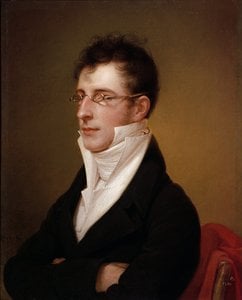
1784 - 1865 , Estados Unidos de América

 Ver en contexto
 Enviar
 Compartir
 Detalles

 Descargar
 Similares
 Radiografía
 Presentación de diapositivas


 Ver más


