Vista previa Vista previa en RA Encargar reproducción pintada a mano Ver versión en imagen digital Compartir
Ver detalles Guía Añadir a favoritos Descargar Ver artículos similares Radiografía Presentación de diapositivas Estadísticas

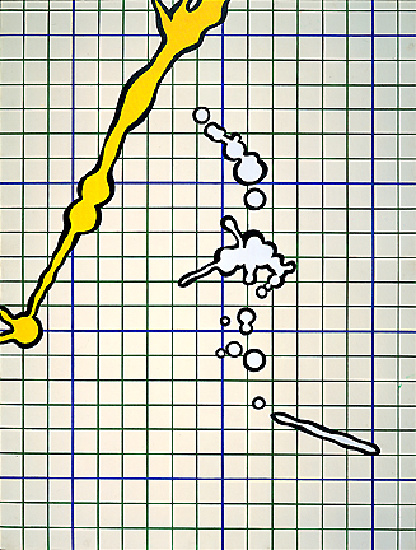
Yellow and withe drip

Bold Pop Art by Roy Lichtenstein captures a striking yellow drip against a white canvas—a vibrant testament to American art history. Explore this iconic 1966 masterpiece and bring its playful aesthetic into your home.

Roy Lichtenstein (1923-1997) fue una figura destacada del arte Pop estadounidense, conocido por sus pinturas icónicas con estilo de cómic que exploran el consumismo y el arte fino. Descubre 'Whaam!', 'Drowning Girl' y más.

La obra de arte que se muestra en esta página está protegida por las leyes de propiedad intelectual, lo que significa que no podemos crear ni vender legalmente una reproducción idéntica. Esta protección se hace cumplir en virtud de acuerdos internacionales como el Convenio de Berna y por las leyes nacionales, incluidas aquellas establecidas por el Ley de derechos de autor de los EE. UU. - Título 17.

Este método cumple plenamente con las normativas de derechos de autor, ya que no implica la copia ni la duplicación de la obra protegida. En su lugar, se trata de una reinterpretación creativa: una nueva pintura influenciada por la original, pero que no es idéntica a ella.

Giclée / Impresión de arte

Impresiones giclée o en lienzo de calidad de museo con producción rápida y opciones de acabado flexibles. ( Encargar reproducción pintada a mano Ver versión en imagen digital)

Corner sample of the P118B picture frame: moulded polystyrene, 5 cm wide and 3 cm thick
P118B €10
Corner sample of the P118H picture frame: moulded polystyrene, 5 cm wide and 3 cm thick
P118H €10
Corner sample of the P118W picture frame: moulded polystyrene, 5 cm wide and 3 cm thick
P118W €10
Corner sample of the P438Z picture frame: moulded polystyrene, 5.5 cm wide and 3.5 cm thick
P438Z €10
Corner sample of the P508JH picture frame: moulded polystyrene, 7 cm wide and 3.5 cm thick
P508JH €12
Corner sample of the P508YH picture frame: moulded polystyrene, 7 cm wide and 3.5 cm thick
P508YH €12
Corner sample of the P805H picture frame: moulded polystyrene, 5 cm wide and 3.5 cm thick
P805H €10
Corner sample of the P805Z picture frame: moulded polystyrene, 5 cm wide and 3.5 cm thick
P805Z €10
Corner sample of the P919BZ picture frame: moulded polystyrene, 7 cm wide and 3.5 cm thick
P919BZ €10
Corner sample of the P919G picture frame: moulded polystyrene, 7 cm wide and 3.5 cm thick
P919G €10
Corner sample of the P919XJ picture frame: moulded polystyrene, 7 cm wide and 3.5 cm thick
P919XJ €10
Corner sample of the P959ZH picture frame: moulded polystyrene, 5 cm wide and 3 cm thick
P959ZH €10
Corner sample of the P968JZ picture frame: moulded polystyrene, 6 cm wide and 4 cm thick
P968JZ €12
Corner sample of the W106C picture frame: solid wood, 5 cm wide and 3 cm thick
W106C €8
Corner sample of the W218G picture frame: solid wood, 5 cm wide and 3 cm thick
W218G €10
Corner sample of the W218JH picture frame: solid wood, 5 cm wide and 3 cm thick
W218JH €8
Corner sample of the W218Y picture frame: solid wood, 5 cm wide and 3 cm thick
W218Y €10
Corner sample of the W307PJ picture frame: solid wood, 6 cm wide and 3 cm thick
W307PJ €10
Corner sample of the W316G picture frame: solid wood, 6 cm wide and 3 cm thick
W316G €10
Corner sample of the W316PJ picture frame: solid wood, 6 cm wide and 3 cm thick
W316PJ €8
Corner sample of the W316Y picture frame: solid wood, 6 cm wide and 3 cm thick
W316Y €10
Corner sample of the W398PJ picture frame: solid wood, 5 cm wide and 3 cm thick
W398PJ €8
Corner sample of the W4111J picture frame: solid wood, 6.5 cm wide and 3.5 cm thick
W4111J €10
Corner sample of the W500HY picture frame: solid wood, 7 cm wide and 5 cm thick
W500HY €15
Corner sample of the W500JH picture frame: solid wood, 7 cm wide and 5 cm thick
W500JH €15
Corner sample of the W692G picture frame: solid wood, 8 cm wide and 4 cm thick
W692G €12
Corner sample of the W849H picture frame: solid wood, 5 cm wide and 3 cm thick
W849H €8
Corner sample of the W940BG picture frame: solid wood, 7.5 cm wide and 4.5 cm thick
W940BG €15
Corner sample of the W953PJ picture frame: solid wood, 6 cm wide and 3.5 cm thick
W953PJ €8

Estándar
personalizado
CM
INCH

Elija entre nuestros tamaños predefinidos que respetan las proporciones originales de la obra.

ancho
altura

Puede introducir sus propias dimensiones para adaptarse a un marco o espacio específico. Si el tamaño seleccionado no coincide con las proporciones de la imagen original, recortaremos la obra de arte o extenderemos la imagen con un borde con efecto espejo o de color sólido. Se enviará una maqueta digital para su aprobación antes de que comience la producción.
Tenga en cuenta que la vista previa en pantalla no refleja el recorte o la extensión real. Solo la maqueta mostrará con precisión la composición final.
Aunque existen tamaños personalizados, recomendamos seleccionar una dimensión de la lista predefinida para preservar las proporciones originales.

Envío a todo el mundo () en 2 semanas en lugar de las 4/5 semanas estándar. (10 octubre)

Envío exprés gratuito a todo el mundo
Lienzo de lino de alta calidad
Seguro de envío completo
Garantía de reembolso de impuestos aduaneros
Garantía de fidelidad cromática exacta
Política de devolución de 100 días (solo por defectos)
Garantía de devolución del 100% del dinero
Oferta por volumen

Precio total

€ 59

Yellow and withe drip

Giclée / Impresión de arte

Tamaño de la reproducción

-

Precio total

€ 59

Datos clave

  • Year: 1966
  • Movement: Pop Art
  • Artistic style: Pop Art / Commercial Illustration
  • Subject or theme: Rejection of academic conventions
  • Title: Yellow and White Drip

A Bold Statement Against Tradition: The Vibrancy of Lichtenstein’s Vision

In the mid-1960s, the art world stood at a precipice, caught between the heavy, emotional shadows of Abstract Expressionism and the bright, neon-soaked reality of a burgeoning consumer culture. It was within this electric tension that Roy Lichtenstein unveiled "Yellow and White Drip," a work that would become a cornerstone of the Pop Art movement. Created in 1966, this painting is far more than a mere visual experiment; it is a deliberate, masterful rejection of academic conventions. Where previous generations sought depth through meticulous brushwork and soulful realism, Lichtenstein looked toward the mechanical, the commercial, and the everyday. He invited the viewer to find beauty not in the sublime, but in the graphic precision of the printing press and the ubiquitous language of mass media.

The composition itself serves as a striking dialogue between order and spontaneity. At first glance, the eye is drawn to the vibrant, energetic splash of yellow that cuts across the pristine white expanse. This "drip" suggests a moment of sudden movement, yet it is rendered with a calculated, almost clinical stillness. Interspersed within this landscape are geometric elements—green squares that ground the composition, providing a rhythmic structure that prevents the eye from wandering too far from the central motif. For the collector or interior designer, this piece offers a sophisticated balance; it possesses the raw energy of an action painting while maintaining the clean, structured aesthetic essential for modern, high-end decor.

The Alchemy of the Halftone: Technique and Visual Language

To truly appreciate "Yellow and White Drip," one must look closer at the skin of the painting. Lichtenstein’s genius lay in his ability to mimic the industrial processes of advertising and comic strips, elevating "low" culture to the status of fine art. He utilized the halftone print technique—a method of using tiny, varying densities of dots to simulate shading and texture. This choice was a revolutionary act of deconstruction. By replacing the artist's unique hand with a simulated mechanical dot, he challenged the very notion of the "original" masterpiece. The resulting effect is remarkably flat and stylized, creating a surface that feels both incredibly modern and timelessly iconic.

This technical precision creates a fascinating emotional paradox. While the subject matter—a simple drip and geometric shapes—appears minimalist, the execution is dense with cultural meaning. The stark contrast between the saturated yellow and the clinical white background amplifies the visual impact, making the work an ideal focal point for any curated space. It demands attention through its clarity and brightness, yet it does not overwhelm; rather, it provides a crisp, intellectual energy that can transform a room from a mere living space into a gallery of contemporary thought.

A Legacy of Pop: Symbolism and Contemporary Appeal

Beyond the pigments and dots, "Yellow and White Drip" embodies the anxieties and aspirations of the mid-century landscape. It reflects a world becoming increasingly interconnected through mass production and shared visual symbols. Lichtenstein’s work acts as a mirror to our own era of digital saturation, where the boundaries between reality and mediated imagery continue to blur. The painting symbolizes a liberation from elitist hierarchies, suggesting that art can be found in the most commonplace fragments of our visual landscape.

For those seeking to bring a piece of art history into their homes or professional design projects, a high-quality reproduction of this masterpiece offers an unparalleled opportunity. It is a work that speaks to the bold, the brave, and the aesthetically discerning. Whether placed in a minimalist loft or a vibrant contemporary office, "Yellow and White Drip" serves as a constant reminder of the moment when art stopped looking inward at the soul and started looking outward at the electric, pulsating reality of modern life.

Preguntas y respuestas

¿Los colores de "Yellow and withe drip" de Roy Lichtenstein son intensos o tenues?

Los colores de "Yellow and withe drip" de Roy Lichtenstein muestran una saturación Muted con una intensidad Balanced.

¿Puedo usar la realidad aumentada para ver "Yellow and withe drip" de Roy Lichtenstein en mi habitación?

Puedes visualizar "Yellow and withe drip" de Roy Lichtenstein en tu propia pared con la página de Vista previa AR de la obra, utilizando realidad aumentada en un dispositivo compatible.

¿Cómo se puede utilizar "Yellow and withe drip" de Roy Lichtenstein en la decoración del hogar?

Se recomienda "Yellow and withe drip" de Roy Lichtenstein para Accent, idealmente en un/a Living Room. El uso y el espacio juntos orientan dónde encaja una reproducción.

¿En qué año se creó "Yellow and withe drip" de Roy Lichtenstein?

La creación de "Yellow and withe drip" de Roy Lichtenstein data de 1966.

¿Quién es el artista detrás de "Yellow and withe drip"?

"Yellow and withe drip" fue creada por Roy Lichtenstein. La información en esta página describe la obra original de Roy Lichtenstein.

¿Qué edad tenía Roy Lichtenstein cuando se creó "Yellow and withe drip"?

Cuando se creó "Yellow and withe drip" en 1966, Roy Lichtenstein —nacido/a en 1923— tenía 43 años.

¿Qué espacio se sugiere para "Yellow and withe drip" de Roy Lichtenstein?

Se recomienda "Yellow and withe drip" de Roy Lichtenstein para un Living Room. Esta sugerencia se basa en el tema, los colores y la atmósfera de la obra.


Biografía del artista

vida temprana y educación

Roy Fox Lichtenstein, un destacado artista pop estadounidense, nació el 27 de octubre de 1923 en la ciudad de Nueva York. Creció en una familia judía de clase media alta, con su padre como corredor de bienes raíces y su madre como ama de casa. El interés de Lichtenstein por el arte y el diseño comenzó como un pasatiempo durante sus años escolares.

Carrera artística

Después de completar su educación secundaria en la Dwight School en 1940, Lichtenstein asistió a la Art Students League of New York bajo la tutela de Reginald Marsh. Luego continuó con una licenciatura en artes visuales de la Universidad de Ohio, que fue interrumpida por un servicio militar de tres años durante la Segunda Guerra Mundial.
  • Look Mickey (1961, Galería Nacional de Arte, Washington D.C.), una de las primeras obras pop art de Lichtenstein, marcó el comienzo de su influyente carrera.
  • Su trabajo estuvo fuertemente influenciado por los estilos de publicidad y cómics populares, con obras notables como Wham!, Drowning Girl y Oh, Jeff... I love you too... but...
  • La obra más cara de Lichtenstein, Masterpiece, se vendió por 165 millones de dólares en enero de 2017.

Enseñanza e influencias

Lichtenstein enseñó en varias instituciones, incluyendo la Universidad Estatal de Nueva York en Oswego y la Universidad Rutgers. Su trabajo fue influenciado por Allan Kaprow, un colega profesor en Rutgers, lo que reavivó su interés en las imágenes proto-pop. Exposiciones notables:
  • The Museum Chambre de Commerce (Tolosa, Francia), que presentaba varias obras de arte, incluyendo aquellas del movimiento pop art.
  • El trabajo de Lichtenstein fue exhibido en la Leo Castelli Gallery en la ciudad de Nueva York, con su primera exposición individual en 1962 siendo comprada por completo por coleccionistas influyentes antes de que abriera.

Legado e impacto

Roy Lichtenstein falleció el 29 de septiembre de 1997, dejando atrás un legado como figura destacada del movimiento pop art. Su obra continúa siendo celebrada por su innovadora mezcla de arte alto y bajo, haciendo que sea accesible a una audiencia más amplia. Referencias:
Roy Lichtenstein

Roy Lichtenstein

1923 - 1997 , Estados Unidos de América

Datos clave

  • Artistas Que Influyeron:
    • Reginald Marsh
    • Allan Kaprow
  • Fecha De Muerte: 29 de septiembre de 1997
  • Fecha De Nacimiento: 27 de octubre de 1923
  • Lugar De Nacimiento: Manhattan, EE. UU.
  • Movimiento Artístico: Pop Art
  • Nacionalidad: Estadounidense
  • Nombre Completo: Roy Lichtenstein
  • Obras Notables:
    • Look Mickey
    • Whaam!
    • Drowning Girl
    • Masterpiece
Explore obras de arte organizadas por temas, estilos y características.