x
Ver en contextoVer en contexto Vista previa en RAVista previa en RA Comprar impresión Comprar impresiónComprar imagen Comprar imagen EnviarEnviar
DetallesDetalles Añadir a favoritos Añadir a favoritos DescargarDescargar SimilaresSimilares RadiografíaRadiografía Presentación de diapositivasPresentación de diapositivas

Mad scientist

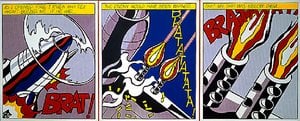
Experience Roy Lichtenstein’s iconic ‘Mad Scientist’ comic book panel, a vibrant explosion of color and surreal experimentation from 1963. This Pop Art masterpiece captures the artist's unique style and invites you to own a piece of art history.

Roy Lichtenstein (1923-1997) fue una figura destacada del arte Pop estadounidense, conocido por sus pinturas icónicas con estilo de cómic que exploran el consumismo y el arte fino. Descubre 'Whaam!', 'Drowning Girl' y más.

Reproducción al óleo hecha a mano

Óleo sobre lienzo pintado a mano en el tamaño y marco de su elección, realizado por encargo por nuestros artistas. (Comprar impresión Comprar impresiónComprar imagen Comprar imagen)

P118B $10
P118H $10
P118W $10
P438Z $10
P508JH $12
P508YH $12
P805H $10
P805Z $10
P919BZ $10
P919G $10
P919XJ $10
P959ZH $10
P968JZ $12
W106C $8
W218G $10
W218JH $8
W218Y $10
W307PJ $10
W316G $10
W316PJ $8
W316Y $10
W398PJ $8
W4111J $10
W500HY $15
W500JH $15
W692G $12
W849H $8
W940BG $15
W953PJ $8

Estándar
a medida
CM
INCH

Elija entre nuestros tamaños predefinidos que respetan las proporciones originales de la obra.

ancho
altura

Puede ingresar sus propias dimensiones para adaptarse a un marco o espacio específico. Si el tamaño seleccionado no coincide con las proporciones de la imagen original, recortaremos la obra o extenderemos la pintura con elementos adicionales pintados a mano. Se le enviará una maqueta digital para su aprobación antes de comenzar la producción.
Tenga en cuenta que la vista previa en pantalla no refleja el recorte o la extensión reales. Solo la maqueta mostrará con precisión la composición final.
Si bien existen tamaños personalizados, recomendamos seleccionar una dimensión de la lista predefinida para preservar las proporciones originales.

Ejemplos de lo que se puede personalizar: Reemplace el rostro con una foto del cliente; Agregue una mascota (por ejemplo, cambie un gato por un perro); Incluya un mensaje oculto en el fondo; Cambie el paisaje o los elementos del fondo.
Tras realizar el pedido, el equipo de WahooArt.com enviará un correo electrónico al cliente para solicitar instrucciones y proporcionarle una vista previa del boceto.

Envío a todo el mundo () en 3-4 semanas en lugar de las 5 semanas estándar. (2 septiembre). Sin comprometer la calidad.

why_choose_icon
Envío exprés gratuito a todo el mundo
why_choose_icon
Lienzo de lino de alta calidad
why_choose_icon
Seguro de envío total
why_choose_icon
Garantía de reembolso de impuestos aduaneros
why_choose_icon
Garantía de fidelidad cromática exacta
why_choose_icon
Política de devolución de 60 días (solo por defectos)
why_choose_icon
Garantía de devolución del 100% del dinero
why_choose_icon
Descuento por cantidad

Precio total

$ 272

reproduction

Mad scientist

Técnica de reproducción

Dimensiones de la reproducción

-

Precio total final

$ 272

Datos clave

  • Dimensions: 127 x 152 cm
  • Artist: Roy Lichtenstein
  • Subject or Theme: Science, Madness
  • Title: Mad Scientist
  • Influences:
    • Jasper Johns
    • Andy Warhol
  • Notable Elements: Clocks, Experiment
  • Movement: Pop Art

A Descent into Controlled Chaos: Roy Lichtenstein's "Mad Scientist"

Roy Lichtenstein’s “Mad Scientist,” executed in 1963, is more than just a comic book panel; it’s a meticulously crafted distillation of Pop Art’s core tenets – a vibrant interrogation of American culture through the lens of popular imagery. This particular piece, measuring 127 x 152 cm, captures a moment of frenetic experimentation, frozen in time with an unsettlingly captivating intensity. The image depicts a figure, instantly recognizable as a Lichtenstein creation, engaged in a self-administered experiment, his yellow hat and open mouth conveying both scientific obsession and a touch of manic energy. It’s a scene that simultaneously evokes the anxieties surrounding technological advancement and the inherent dangers of unchecked ambition – themes deeply embedded within the cultural landscape of the early 1960s.

Ben-Day Dots and the Pop Art Revolution

  • Technique: Lichtenstein’s signature technique, born from his adaptation of commercial printing methods, is immediately apparent. The image is constructed entirely from meticulously applied Ben-Day dots – small colored circles that create a stippled effect mimicking the look of serigraphy (screenprinting). This process, borrowed from the world of advertising and comic books, lends the artwork a distinctive flatness and graphic quality, deliberately rejecting traditional notions of painterly depth.
  • Color Palette: The bold use of primary colors – yellow, red, and black – is characteristic of Pop Art’s rejection of academic color theory. These saturated hues are not intended to represent reality but rather to grab the viewer's attention and evoke a visceral response.
  • Composition: The panel’s composition, with its dynamic diagonal lines and overlapping elements, contributes to the sense of movement and unease. The multiple clocks – symbols of time and control – further amplify this feeling, suggesting a desperate attempt to manipulate forces beyond the scientist's grasp.

Symbolism and Context: Science, Anxiety, and American Identity

“Mad Scientist” is not simply a depiction of a character; it’s a complex layering of symbolic meanings. The scientist himself represents the burgeoning anxieties surrounding scientific progress during the Cold War era – the fear of nuclear annihilation and the potential for technology to be used destructively. The experiment, performed on himself, speaks to themes of self-destruction and the blurring lines between genius and madness. The second figure in the background, a shadowy observer, adds another layer of intrigue, perhaps representing societal judgment or the consequences of unchecked ambition. This artwork reflects Lichtenstein's broader engagement with American culture, particularly its fascination with science fiction and the heroic narratives often found in comic books.

A Collector’s Perspective: Investment and Aesthetic Value

This hand-painted reproduction of Roy Lichtenstein’s “Mad Scientist” offers a unique opportunity to own a piece of art history. Executed with meticulous attention to detail, it faithfully captures the essence of Lichtenstein's groundbreaking style. Beyond its aesthetic appeal, this artwork represents an investment in a significant artist within the Pop Art movement – a movement that continues to influence contemporary art and design. Its vibrant colors, dynamic composition, and thought-provoking subject matter make it a compelling addition to any collection or interior space, injecting a dose of playful intellectualism into your surroundings.


Biografía del artista

vida temprana y educación

Roy Fox Lichtenstein, un destacado artista pop estadounidense, nació el 27 de octubre de 1923 en la ciudad de Nueva York. Creció en una familia judía de clase media alta, con su padre como corredor de bienes raíces y su madre como ama de casa. El interés de Lichtenstein por el arte y el diseño comenzó como un pasatiempo durante sus años escolares.

Carrera artística

Después de completar su educación secundaria en la Dwight School en 1940, Lichtenstein asistió a la Art Students League of New York bajo la tutela de Reginald Marsh. Luego continuó con una licenciatura en artes visuales de la Universidad de Ohio, que fue interrumpida por un servicio militar de tres años durante la Segunda Guerra Mundial.
  • Look Mickey (1961, Galería Nacional de Arte, Washington D.C.), una de las primeras obras pop art de Lichtenstein, marcó el comienzo de su influyente carrera.
  • Su trabajo estuvo fuertemente influenciado por los estilos de publicidad y cómics populares, con obras notables como Wham!, Drowning Girl y Oh, Jeff... I love you too... but...
  • La obra más cara de Lichtenstein, Masterpiece, se vendió por 165 millones de dólares en enero de 2017.

Enseñanza e influencias

Lichtenstein enseñó en varias instituciones, incluyendo la Universidad Estatal de Nueva York en Oswego y la Universidad Rutgers. Su trabajo fue influenciado por Allan Kaprow, un colega profesor en Rutgers, lo que reavivó su interés en las imágenes proto-pop. Exposiciones notables:
  • The Museum Chambre de Commerce (Tolosa, Francia), que presentaba varias obras de arte, incluyendo aquellas del movimiento pop art.
  • El trabajo de Lichtenstein fue exhibido en la Leo Castelli Gallery en la ciudad de Nueva York, con su primera exposición individual en 1962 siendo comprada por completo por coleccionistas influyentes antes de que abriera.

Legado e impacto

Roy Lichtenstein falleció el 29 de septiembre de 1997, dejando atrás un legado como figura destacada del movimiento pop art. Su obra continúa siendo celebrada por su innovadora mezcla de arte alto y bajo, haciendo que sea accesible a una audiencia más amplia. Referencias:
Roy Lichtenstein

Roy Lichtenstein

1923 - 1997 , Estados Unidos de América

Datos clave

  • Artistas Que Influyeron:
    • Reginald Marsh
    • Allan Kaprow
  • Fecha De Muerte: 29 de septiembre de 1997
  • Fecha De Nacimiento: 27 de octubre de 1923
  • Lugar De Nacimiento: Manhattan, EE. UU.
  • Movimiento Artístico: Pop Art
  • Nacionalidad: Estadounidense
  • Nombre Completo: Roy Lichtenstein
  • Obras Notables:
    • Look Mickey
    • Whaam!
    • Drowning Girl
    • Masterpiece
Explore obras de arte organizadas por temas, estilos y características.