Ver en contexto Vista previa en RA Comprar pintura hecha a mano Cambiar a imagen digital Enviar
Detalles Guía Añadir a favoritos Descargar Similares Radiografía Presentación de diapositivas Estadísticas

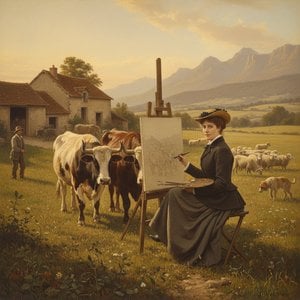
Éxodo Escocés

¿Conoce la obra maestra de Rosa Bonheur? Éxodo Escocés captura el espíritu animalista de la artista francesa y su compromiso con el movimiento realista, reflejado en esta impresionante representación pastoral.

Descubre a Rosa Bonheur (1822-1899), la célebre pintora francesa de arte animal! Explora sus realistas representaciones, obras icónicas como 'El mercado de caballos' y su legado.

Giclée / Impresión de arte

Impresiones giclée o en lienzo de calidad de museo con producción rápida y opciones de acabado flexibles. ( Comprar pintura hecha a mano Cambiar a imagen digital)

Corner sample of the P118B picture frame: poliestireno moldeado, 5 cm wide and 3 cm thick
P118B €10
Corner sample of the P118H picture frame: poliestireno moldeado, 5 cm wide and 3 cm thick
P118H €10
Corner sample of the P118W picture frame: poliestireno moldeado, 5 cm wide and 3 cm thick
P118W €10
Corner sample of the P438Z picture frame: poliestireno moldeado, 5.5 cm wide and 3.5 cm thick
P438Z €10
Corner sample of the P508JH picture frame: poliestireno moldeado, 7 cm wide and 3.5 cm thick
P508JH €12
Corner sample of the P508YH picture frame: poliestireno moldeado, 7 cm wide and 3.5 cm thick
P508YH €12
Corner sample of the P805H picture frame: poliestireno moldeado, 5 cm wide and 3.5 cm thick
P805H €10
Corner sample of the P805Z picture frame: poliestireno moldeado, 5 cm wide and 3.5 cm thick
P805Z €10
Corner sample of the P919BZ picture frame: poliestireno moldeado, 7 cm wide and 3.5 cm thick
P919BZ €10
Corner sample of the P919G picture frame: poliestireno moldeado, 7 cm wide and 3.5 cm thick
P919G €10
Corner sample of the P919XJ picture frame: poliestireno moldeado, 7 cm wide and 3.5 cm thick
P919XJ €10
Corner sample of the P959ZH picture frame: poliestireno moldeado, 5 cm wide and 3 cm thick
P959ZH €10
Corner sample of the P968JZ picture frame: poliestireno moldeado, 6 cm wide and 4 cm thick
P968JZ €12
Corner sample of the W106C picture frame: madera maciza, 5 cm wide and 3 cm thick
W106C €8
Corner sample of the W218G picture frame: madera maciza, 5 cm wide and 3 cm thick
W218G €10
Corner sample of the W218JH picture frame: madera maciza, 5 cm wide and 3 cm thick
W218JH €8
Corner sample of the W218Y picture frame: madera maciza, 5 cm wide and 3 cm thick
W218Y €10
Corner sample of the W307PJ picture frame: madera maciza, 6 cm wide and 3 cm thick
W307PJ €10
Corner sample of the W316G picture frame: madera maciza, 6 cm wide and 3 cm thick
W316G €10
Corner sample of the W316PJ picture frame: madera maciza, 6 cm wide and 3 cm thick
W316PJ €8
Corner sample of the W316Y picture frame: madera maciza, 6 cm wide and 3 cm thick
W316Y €10
Corner sample of the W398PJ picture frame: madera maciza, 5 cm wide and 3 cm thick
W398PJ €8
Corner sample of the W4111J picture frame: madera maciza, 6.5 cm wide and 3.5 cm thick
W4111J €10
Corner sample of the W500HY picture frame: madera maciza, 7 cm wide and 5 cm thick
W500HY €15
Corner sample of the W500JH picture frame: madera maciza, 7 cm wide and 5 cm thick
W500JH €15
Corner sample of the W692G picture frame: madera maciza, 8 cm wide and 4 cm thick
W692G €12
Corner sample of the W849H picture frame: madera maciza, 5 cm wide and 3 cm thick
W849H €8
Corner sample of the W940BG picture frame: madera maciza, 7.5 cm wide and 4.5 cm thick
W940BG €15
Corner sample of the W953PJ picture frame: madera maciza, 6 cm wide and 3.5 cm thick
W953PJ €8

Tamaño estándar
a medida
CM
INCH

Elija entre nuestros tamaños predefinidos que respetan las proporciones originales de la obra.

ancho
altura

Introduzca el ancho y el alto que necesite para adaptarse a su marco o pared. Una impresión solo puede recortarse, nunca hacerse más grande que la imagen original, por lo que un tamaño con una forma distinta perderá parte de la obra. Le enviaremos una maqueta digital para su aprobación antes de realizar cualquier impresión. La imagen que se muestra en esta página no refleja el recorte real; solo la maqueta lo hace.

Envío a todo el mundo () en 2 semanas en lugar de las 4/5 semanas estándar. (26 octubre)

Envío exprés gratuito a todo el mundo
Lienzo de lino de alta calidad
Seguro de envío total
Garantía de reembolso de aranceles aduaneros
Garantía de fidelidad cromática exacta
Política de devolución de 100 días (solo por defectos)
Garantía de devolución del 100% del dinero
Descuento por cantidad

Precio total

€ 60

Éxodo Escocés

Giclée / Impresión de arte

Dimensiones de la reproducción

-

Precio total final

€ 60

Datos clave

  • Title: Highland Raid
  • Location: Private Collection
  • Artistic style: Realistic depiction of animals
  • Movement: Realism
  • Influences: French Romanticism

Test de conocimientos artísticos

Cada pregunta tiene una única respuesta correcta.

Pregunta 1:
¿Cuál fue una característica distintiva de la vida profesional de Rosa Bonheur?
Pregunta 2:
¿Por qué Rosa Bonheur recibió permiso especial de la policía?
Pregunta 3:
¿Qué simboliza el paisaje montañoso representado en 'Highland Raid'?
Pregunta 4:
¿Qué movimiento artístico influyó significativamente en el estilo de Rosa Bonheur?
Pregunta 5:
¿Cuál fue el papel de Rosa Bonheur en la promoción de la igualdad educativa para mujeres?

Una sinfonía de movimiento y majestuosidad escocesa

En la vasta y extensa extensión de las Tierras Altas de Escocia, donde la niebla se aferra a los picos escarpados y el aire transporta el aroma de la tierra húmeda, Rosa Bonheur captura un momento de profunda energía cinética. Éxodo Escocés no es simplemente una pintura de ganado; es una experiencia visceral de movimiento, una clase magistral en el arte del realismo animalier. El lienzo se despliega con una dramática manada de bueyes, cuyas formas pesadas navegan por el terreno ondulado de las montañas. En el corazón de este drama pastoral, un jinete solitario guía la procesión, actuando como la fuerza estabilizadora en medio de la energía arremolinada del rebaño. La composición está expertamente equilibrada, dirigiendo la mirada desde las figuras del primer plano a través de la colocación rítmica de las vacas que se extienden hacia la profundidad atmosférica, creando una inmensa sensación de escala y grandeza topográfica.

La destreza técnica de Bonheur queda plenamente demostrada a través de su sofisticado uso de la luz y la textura. Presenciar esta obra es sentir la tensión palpable de un clima inminente; el cielo parece cargado con la promesa de lluvia, proyectando una luz suave y difusa que ilumina la anatomía muscular del ganado con una precisión asombrosa. La artista empleó técnicas de impasto —aplicando la pintura en capas gruesas y deliberadas— para dotar a la escena de sustancia física. Este enfoque táctil permite al espectador percibir la aspereza del paisaje y la textura rugosa del pelaje de los animales, cerrando la brecha entre la superficie bidimensional y la realidad tridimensional del mundo natural.

El espíritu del realismo y la audacia artística

Para comprender la profundidad emocional de Éxodo Escocés, es necesario observar el espíritu revolucionario de la propia Rosa Bonheur. Surgiendo de una era del siglo XIX en la que las artistas mujeres eran a menudo relegadas al delicado retrato o a los bodegones, Bonheur rompió las barreras sociales con una dedicación inquebrantable a la precisión científica y la verdad anatómica. Su crianza, influenciada por los ideales igualitarios del saint-simonismo, fomentó una independencia feroz que se refleja en su elección de temas. Ella no buscaba idealizar la vida rural; por el contrario, buscaba documentar su esencia cruda y sin adornos. Este compromiso con el Realismo —un movimiento que rechazaba el escapismo pulido del Romanticismo— permite que la pintura resuene con un sentido de verdad que es, a la vez, realista y profundamente conmovedor.

Para el coleccionista exigente o el diseñador de interiores, esta pieza ofrece más que simple belleza estética; proporciona una ventana a una era pasada de pastoralismo indómito. La pintura sirve como un poderoso punto focal en cualquier espacio sofisticado, aportando un elemento de la naturaleza salvaje y virgen al ambiente refinado de un hogar o una galería. Su capacidad para evocar tanto la tranquilidad de la naturaleza como la tensión subyacente de la supervivencia la convierte en una adición atemporal a cualquier colección curada. Ya sea colocada en un estudio iluminado por el sol o en un gran salón, Éxodo Escocés exige atención, invitando a los espectadores a perderse en la danza rítmica de la manada y en el legado perdurable de una de las pioneras artísticas más valientes de la historia.

Preguntas y respuestas

¿Qué tan intensos son los colores en "Éxodo Escocés" de Rosa Bonheur?

"Éxodo Escocés" de Rosa Bonheur presenta una intensidad de color Monocromático.

¿Qué paleta y qué color predominante definen a "Éxodo Escocés"?

La identidad cromática de "Éxodo Escocés" de Rosa Bonheur: una paleta Tonos tierra, dominada por el Gris medio (#7d746a).

¿A qué época pertenece "Éxodo Escocés"?

"Éxodo Escocés" de Rosa Bonheur data del periodo Siglo XIX. Este periodo aporta el contexto histórico de la obra.


Biografía del artista

A Life Immersed in the Animal World

Rosa Bonheur, born Marie-Rosalie Bonheur in 1822 Bordeaux, France, wasn’t simply a painter of animals; she was an interpreter of their very essence. Her name resonates through art history as a beacon of realism and a testament to female artistic ambition in a period dominated by male figures. Born into a family steeped in artistic tradition – her father, Oscar-Raymond Bonheur, was a landscape and portrait painter – young Rosalie’s path wasn’t predetermined but nurtured. The family’s embrace of Saint-Simonianism, a progressive socialist philosophy advocating for equal education for both sexes, proved particularly formative, instilling in Rosa a sense of independence and intellectual curiosity that would define her life and work. Tragedy struck early with the loss of her mother at age eleven, yet the Bonheur household remained a haven for creativity and unconventional thinking. This unique upbringing laid the foundation for an artist who would challenge societal norms as boldly as she captured the beauty of the natural world.

From Humble Beginnings to Salon Success

The family’s relocation to Paris in 1828 marked a turning point, providing Rosa with access to formal artistic training. Initially, her studies followed conventional lines – copying from drawings and sketching plaster models. However, it was the animals surrounding Paris that truly captivated her imagination. Horses, cattle, sheep, goats—she observed them relentlessly, not merely as subjects for art but as living beings deserving of meticulous study. This dedication to direct observation became the cornerstone of her artistic style. Her father actively encouraged this passion, even bringing live animals into their studio for Rosa to dissect and analyze. This hands-on approach, combined with visits to Parisian abattoirs to understand animal anatomy, set her apart from many contemporaries who relied on second-hand depictions. Her breakthrough arrived in 1849 with Ploughing in the Nivernais, a work that garnered immediate attention at the Paris Salon and signaled the arrival of a significant new talent. But it was The Horse Fair, completed between 1853 and 1855, that cemented her international fame. This monumental canvas, now housed in New York’s Metropolitan Museum of Art, pulsates with energy and anatomical precision, depicting the chaotic yet captivating spectacle of a bustling horse market. Even Queen Victoria herself was captivated by its power and realism.

A Style Rooted in Realism and Observation

Rosa Bonheur's artistic style wasn’t about romanticizing animals; it was about portraying them with unwavering honesty and detail. She eschewed sentimentality, opting instead for a scientific approach to her subjects. Her paintings are characterized by their anatomical accuracy, dynamic compositions, and an ability to capture the unique personality of each creature. This commitment to realism extended beyond mere physical representation. Bonheur sought to understand the animals’ movements, behaviors, and even their emotional states. She often worked *en plein air*, directly observing her subjects in their natural environments, a practice that further enhanced the authenticity of her work. This dedication to truthfulness resonated with the growing Realist movement of the mid-19th century, which rejected idealized depictions in favor of portraying life as it truly was. Her technique involved careful layering of paint and a masterful use of light and shadow to create depth and texture, bringing each animal vividly to life on canvas.

A Pioneer for Women in Art

Rosa Bonheur’s legacy extends far beyond her artistic achievements; she became an icon for women striving for recognition in the male-dominated art world. She defied convention not only through her professional success but also through her personal choices. Famously, she often wore men's clothing while working with animals, citing practicality and freedom of movement – a bold statement that challenged societal expectations. She secured commissions from governments and private collectors alike, proving that female artists could achieve the same level of acclaim as their male counterparts. Her success paved the way for future generations of women artists, inspiring them to pursue their passions without compromise. Bonheur’s life story became symbols of artistic talent, perseverance, and a pioneering spirit. Her paintings continue to be celebrated in major museums worldwide, serving as a reminder of her enduring contribution to art history and her unwavering commitment to portraying the beauty and dignity of the animal kingdom. ## Enduring Influence and Lasting Legacy The impact of Rosa Bonheur’s work continues to resonate today. Her dedication to realism influenced countless artists, and her paintings remain admired for their technical skill and emotional depth. She demonstrated that art could be both scientifically accurate and profoundly moving, bridging the gap between observation and interpretation. Beyond her artistic contributions, Bonheur's life story serves as a powerful example of female empowerment and artistic independence. She challenged societal norms, defied expectations, and ultimately achieved lasting recognition on her own terms. Her legacy is not merely one of beautiful paintings but also of courage, determination, and a unwavering commitment to her craft. Her work continues to inspire artists and art lovers alike, reminding us of the power of observation, the beauty of the natural world, and the importance of pursuing one’s passions with conviction.

Rosa Bonheur

Rosa Bonheur

1822 - 1899 , Francia

Datos clave

  • Fecha De Fallecimiento: 25 de mayo de 1899
  • Fecha De Nacimiento: 16 de marzo de 1822
  • Lugar De Nacimiento: Bordeaux, Francia
  • Movimiento Artístico: Realismo, Animalière
  • Nacionalidad: Francesa
  • Nombre Completo: Rosa Bonheur
  • Obras Notables:
    • Labranza en Nivernais
    • La feria del caballo
Explore obras de arte organizadas por temas, estilos y características.