vida temprana y comienzos artísticos
René François Ghislain Magritte, un reconocido artista surrealista belga, nació el 21 de noviembre de 1898 en Lessines, provincia de Hainaut, Bélgica. Su vida temprana permanece algo misteriosa, con poco conocimiento sobre su infancia. Sin embargo, está documentado que comenzó clases de dibujo en 1910.
evolución artística e influencias
El estilo artístico de Magritte evolucionó significativamente a lo largo de los años, influenciado por diversos movimientos como el impresionismo, el futurismo y el cubismo. Sus primeras pinturas, datadas alrededor de 1915, eran de estilo impresionista. De 1916 a 1918, estudió en la Academia Real de Bellas Artes de Bruselas, bajo Constant Montald.
período surrealista y obras notables
En 1926, Magritte produjo su primer cuadro surrealista,
El jinete perdido (Le jockey perdu), marcando el comienzo de su asociación con el movimiento surrealista. Su obra se caracteriza por imágenes provocadoras, a menudo representando objetos ordinarios en contextos inusuales, desafiando las percepciones de la realidad de los observadores.
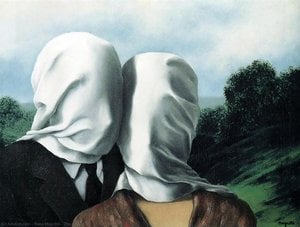
- Les amants (1927-1928), una serie de pinturas que presentan a personas con tela cubriendo sus rostros, se cree que fue inspirada por la historia de la muerte de su madre.
- Los amantes, otra pieza icónica, presenta a una pareja besándose con sus rostros cubiertos por telas blancas, invitando al espectador a reflexionar sobre el amor y la identidad. (disponible para su compra como una reproducción de pintura al óleo hecha a mano o impresión en lienzo en WahooArt.com)
vida tardía y legado
La obra de Magritte fue exhibida en los Estados Unidos en 1936 y nuevamente en dos exposiciones retrospectivas, una en el Museo de Arte Moderno en 1965 y la otra en el Metropolitan Museum of Art en 1992. Se mantuvo comprometido con la izquierda política pero abogó por la autonomía artística.
Museos notables que exhiben la obra de Magritte:
Conclusión
El legado de René Magritte como maestro surrealista perdura, con sus imágenes provocadoras que continúan inspirando e intrigando. Su obra, caracterizada por su mezcla única del ordinario y lo inesperado, sigue siendo un pilar fundamental del arte surrealista.
Más información sobre René Magritte



 Vista previa
 Encargar reproducción pintada a mano
 Compartir
 Compartir
 Ver detalles

 Descargar
 Ver artículos similares
 Radiografía
 Presentación de diapositivas
 Estadísticas


 Leer más






































 La opción de vidrio solo está disponible en tamaños inferiores a 110 cm.