Vista previa Vista previa en RA Cambiar a formato impreso Ver versión en imagen digital Compartir
Ver detalles Guía Añadir a favoritos Descargar Ver artículos similares Radiografía Presentación de diapositivas Estadísticas

The Virtues

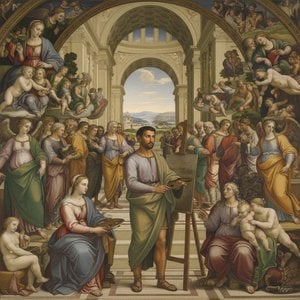
Raphael’s breathtaking fresco ‘The Virtues,’ part of the Stanza della Segnatura in Vatican City, embodies High Renaissance grace with idealized figures representing faith, hope, charity, prudence and fortitude. Explore this masterpiece and bring Raphael's timeless vision home.

Descubra a Rafael (1483-1520), el maestro del Alto Renacimiento italiano, reconocido por su gracia, claridad y composiciones armoniosas. Explore obras icónicas como 'La Escuela de Atenas', Madonas y frescos que definen la belleza clásica. #ArteRenacentista #Italia

Reproducción al óleo hecha a mano

Óleo sobre lienzo pintado a mano en el tamaño y marco de su elección, realizado por encargo por nuestros artistas. ( Cambiar a formato impreso Ver versión en imagen digital)

Corner sample of the P118B picture frame: poliestireno moldeado, 5 cm wide and 3 cm thick
P118B 10
Corner sample of the P118H picture frame: poliestireno moldeado, 5 cm wide and 3 cm thick
P118H 10
Corner sample of the P118W picture frame: poliestireno moldeado, 5 cm wide and 3 cm thick
P118W 10
Corner sample of the P438Z picture frame: poliestireno moldeado, 5.5 cm wide and 3.5 cm thick
P438Z 10
Corner sample of the P508JH picture frame: poliestireno moldeado, 7 cm wide and 3.5 cm thick
P508JH 12
Corner sample of the P508YH picture frame: poliestireno moldeado, 7 cm wide and 3.5 cm thick
P508YH 12
Corner sample of the P805H picture frame: poliestireno moldeado, 5 cm wide and 3.5 cm thick
P805H 10
Corner sample of the P805Z picture frame: poliestireno moldeado, 5 cm wide and 3.5 cm thick
P805Z 10
Corner sample of the P919BZ picture frame: poliestireno moldeado, 7 cm wide and 3.5 cm thick
P919BZ 10
Corner sample of the P919G picture frame: poliestireno moldeado, 7 cm wide and 3.5 cm thick
P919G 10
Corner sample of the P919XJ picture frame: poliestireno moldeado, 7 cm wide and 3.5 cm thick
P919XJ 10
Corner sample of the P959ZH picture frame: poliestireno moldeado, 5 cm wide and 3 cm thick
P959ZH 10
Corner sample of the P968JZ picture frame: poliestireno moldeado, 6 cm wide and 4 cm thick
P968JZ 12
Corner sample of the W106C picture frame: madera maciza, 5 cm wide and 3 cm thick
W106C 8
Corner sample of the W218G picture frame: madera maciza, 5 cm wide and 3 cm thick
W218G 10
Corner sample of the W218JH picture frame: madera maciza, 5 cm wide and 3 cm thick
W218JH 8
Corner sample of the W218Y picture frame: madera maciza, 5 cm wide and 3 cm thick
W218Y 10
Corner sample of the W307PJ picture frame: madera maciza, 6 cm wide and 3 cm thick
W307PJ 10
Corner sample of the W316G picture frame: madera maciza, 6 cm wide and 3 cm thick
W316G 10
Corner sample of the W316PJ picture frame: madera maciza, 6 cm wide and 3 cm thick
W316PJ 8
Corner sample of the W316Y picture frame: madera maciza, 6 cm wide and 3 cm thick
W316Y 10
Corner sample of the W398PJ picture frame: madera maciza, 5 cm wide and 3 cm thick
W398PJ 8
Corner sample of the W4111J picture frame: madera maciza, 6.5 cm wide and 3.5 cm thick
W4111J 10
Corner sample of the W500HY picture frame: madera maciza, 7 cm wide and 5 cm thick
W500HY 15
Corner sample of the W500JH picture frame: madera maciza, 7 cm wide and 5 cm thick
W500JH 15
Corner sample of the W692G picture frame: madera maciza, 8 cm wide and 4 cm thick
W692G 12
Corner sample of the W849H picture frame: madera maciza, 5 cm wide and 3 cm thick
W849H 8
Corner sample of the W940BG picture frame: madera maciza, 7.5 cm wide and 4.5 cm thick
W940BG 15
Corner sample of the W953PJ picture frame: madera maciza, 6 cm wide and 3.5 cm thick
W953PJ 8

Estándar
personalizado
CM
INCH

Elija entre nuestros tamaños predefinidos que respetan las proporciones originales de la obra.

ancho
altura

Escriba el ancho y el alto que necesite para adaptarse a su marco o a su pared. Al ser una obra pintada a mano, para un tamaño con una forma distinta, el artista puede pintar un poco más alrededor de la imagen o recortar un poco; usted elige. Le enviaremos una maqueta digital para su aprobación antes de comenzar la pintura. La imagen que se muestra en esta página no refleja el resultado real; solo la maqueta lo hace.

Ejemplos de lo que se puede personalizar: Reemplace el rostro con una foto del cliente; Agregue una mascota (por ejemplo, cambie un gato por un perro); Incluya un mensaje oculto en el fondo; Cambie el paisaje o los elementos del fondo.
Tras realizar el pedido, el equipo de WahooArt.com enviará un correo electrónico al cliente para solicitar instrucciones y proporcionarle una vista previa del boceto.

Envío a todo el mundo () en 3-4 semanas en lugar de las 5 semanas estándar. (20 octubre). Sin comprometer la calidad.

Envío exprés gratuito a todo el mundo
Lienzo de lino de alta calidad
Seguro de envío completo
Garantía de reembolso de impuestos aduaneros
Garantía de fidelidad cromática exacta
Política de devolución de 100 días (solo por defectos)
Garantía de devolución del 100% del dinero
Oferta por volumen

Precio total

€ 237

The Virtues

Técnica de reproducción

Tamaño de la reproducción

-

Precio total

€ 237

A Symphony of Virtue: Exploring Raphael’s “The Virtues” Fresco

The fresco "The Virtues," painted by Raphael Sanzio da Urbino between 1509 and 1511 as part of the Stanza della Segnatura in Vatican City, stands as an unparalleled achievement of High Renaissance art. More than just a decorative embellishment of papal chambers, it’s a profound meditation on moral philosophy—a visual embodiment of Christian virtues designed to inspire contemplation and guide spiritual understanding. Commissioned by Pope Julius II during a period of ambitious artistic patronage, Raphael undertook this monumental task with unwavering dedication, transforming an unremarkable hallway into a breathtaking panorama of humanist ideals.

The Compositional Harmony: Michelangelo’s Influence

Raphael's masterful handling of perspective and spatial arrangement owes considerable debt to the pioneering work of Michelangelo Buonarroti on the Sistine Chapel ceiling. Like Michelangelo’s depiction of biblical figures soaring across the vault, Raphael employs dramatic diagonals and expansive curves to draw the viewer’s eye into the scene. The careful positioning of the figures—particularly Fortitude's lion—echoes Michelangelo’s monumental sculptures, demonstrating a shared artistic lineage and reflecting the broader Renaissance fascination with grandeur and anatomical accuracy. This deliberate stylistic kinship elevates “The Virtues” beyond mere aesthetic beauty; it speaks to a deeper engagement with the intellectual currents shaping European culture at the time.

Symbolism Rooted in Classical Tradition

The fresco’s symbolism is intricately interwoven with classical humanist thought, reflecting Raphael's exposure to the philosophical ideas circulating amongst intellectuals of his era. Each virtue—Fortitude, Charity, Prudence, Hope and Temperance—is represented by a female figure, embodying abstract concepts rather than literal representations. The mirror held aloft by Prudence symbolizes wisdom and discernment, prompting viewers to examine their own moral compass. Fortitude’s lion represents courage and resilience, while Temperance's reins symbolize moderation and self-control. Crucially, the depiction of Faith points upwards towards heaven, emphasizing the importance of spiritual devotion and belief—a cornerstone of Christian theology. The central tondo depicting Justice reinforces this thematic core, symbolizing righteousness and moral accountability.

Technique: Fresco Painting – A Legacy of Brilliance

Raphael’s technique exemplifies the mastery of fresco painting achieved during the High Renaissance. This method involves applying pigment onto wet plaster—a process demanding meticulous planning and execution. The durability of fresco ensures that “The Virtues” continues to captivate audiences centuries later, preserving Raphael's vibrant colors and nuanced detailing with remarkable fidelity. Unlike oil paint, which allows for reworking and blending, fresco necessitates a decisive approach, resulting in an image that is both timeless and powerfully expressive. The subtle gradations of color achieved through layering pigments contribute to the fresco’s luminous quality—a testament to Raphael’s artistic skill and his unwavering commitment to capturing the essence of humanist ideals.

Emotional Resonance: Inspiration for Generations

“The Virtues” transcends its formal artistry, resonating with viewers on an emotional level. Its serene beauty and harmonious composition convey a sense of moral upliftment—inviting contemplation and fostering reflection upon ethical conduct. Raphael’s masterpiece serves as a poignant reminder of the enduring power of art to communicate profound philosophical concepts and inspire spiritual aspiration. It remains a cornerstone of High Renaissance art, continuing to inspire artists and collectors alike who seek to emulate its elegance and imbue their own creations with similar moral depth.

Preguntas y respuestas

¿Muestra "The Virtues" contrastes marcados entre luces y sombras?

El nivel de contraste de "The Virtues" de Rafael es Statement.

¿Es "The Virtues" de Rafael una obra de tonos claros u oscuros?

"The Virtues" tiene un brillo general de equilibrado y su luminancia es Luminancia suave.

¿Qué color predomina en la composición de "The Virtues" de Rafael?

El Celadón (#bebca0) es el color predominante de "The Virtues" de Rafael.


Biografía del artista

**vida temprana y formación**

Rafael (rafaello sanzio da urbino), un renombrado pintor y arquitecto italiano, nació entre el 28 de marzo y el 6 de abril de 1483, en la pequeña pero culturalmente significativa ciudad de Urbino. Su padre, Giovanni Santi, era pintor de corte para el duque, proporcionando a Rafael una exposición temprana al mundo artístico. Después de fallecer su padre a los once años, Rafael probablemente administró el taller familiar, consolidando aún más su base artística.

**carrera artística e influencias**

El viaje artístico de Rafael puede categorizarse en tres fases distintas, cada una marcada por un estilo único:
  • primeros años en Umbría: caracterizado por la influencia de su padre y el ambiente cultural de Urbino.
  • período florentino (1504-1508): absorbiendo las tradiciones artísticas de Florencia, que influyeron significativamente en su estilo.
  • período romano (1508-1520): trabajando para dos papas y sus asociados, produciendo algunas de sus obras más celebradas, incluyendo la escuela de Atenas en la stanza della segnatura del Vaticano.

**obras notables y legado**

Algunas de las obras notables de Rafael incluyen:

**influencia y legado**

La influencia de Rafael en el arte es profunda, con su obra siendo un pilar del Renacimiento italiano. Su estilo sereno y armonioso ha sido un modelo para la pintura neoclásica, como señaló el historiador de arte Johann Joachim Winckelmann. A pesar de la influencia posterior del estilo de Miguel Ángel, Rafael sigue siendo uno de los artistas más reverenciados en la historia. ver el perfil de Rafael en WahooArt
Rafael

Rafael

1483 - 1520 , Italia

Datos clave

  • Artistas Influyentes:
    • Giovanni Santi
    • Pietro Perugino
  • Estilo Artístico: Alto Renacimiento
  • Fecha De Muerte: 06/04/1520
  • Fecha De Nacimiento: 28/03/1483
  • Influencia En Artistas: Neoclasicismo
  • Lugar De Nacimiento: Urbino, Italia
  • Nacionalidad: Italiano
  • Nombre Completo: Rafael (Raffaello Sanzio)
  • Obras Notables:
    • El Juicio de Salomón
    • Madonna del Cardellino
    • La Escuela de Atenas
    • San Sebastián
    • La Dama Velada
Explore obras de arte organizadas por temas, estilos y características.