Vende aquí
x
Ver en contextoVer en contexto Vista previa en RAVista previa en RA Comprar impresión Comprar impresiónComprar imagen Comprar imagen EnviarEnviar
DetallesDetalles Añadir a favoritos Añadir a favoritos DescargarDescargar SimilaresSimilares RadiografíaRadiografía Presentación de diapositivasPresentación de diapositivas

Flowering Trees

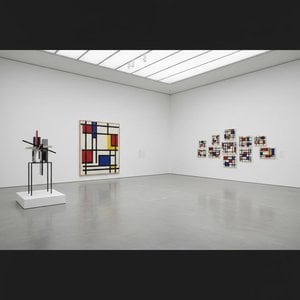
Explore Piet Mondrian’s ‘Flowering Trees’! A groundbreaking abstract masterpiece of geometric forms & muted tones. Discover De Stijl's iconic style & a unique visual experience.

Explore la obra de Piet Mondrian (1872-1944), un pionero del arte abstracto y el movimiento De Stijl. Descubre sus icónicos cuadros geométricos, su estilo Neoplasticismo y su influencia duradera en el diseño moderno, la arquitectura y el arte del siglo XX.

Reproducción al óleo hecha a mano

Óleo sobre lienzo pintado a mano en el tamaño y marco de su elección, realizado por encargo por nuestros artistas. (Comprar impresión Comprar impresiónComprar imagen Comprar imagen)

P118B S$10
P118H S$10
P118W S$10
P438Z S$10
P508JH S$12
P508YH S$12
P805H S$10
P805Z S$10
P919BZ S$10
P919G S$10
P919XJ S$10
P959ZH S$10
P968JZ S$12
W106C S$8
W218G S$10
W218JH S$8
W218Y S$10
W307PJ S$10
W316G S$10
W316PJ S$8
W316Y S$10
W398PJ S$8
W4111J S$10
W500HY S$15
W500JH S$15
W692G S$12
W849H S$8
W940BG S$15
W953PJ S$8

Standard
custom
CM
INCH

Elija entre nuestros tamaños predefinidos que respetan las proporciones originales de la obra.

ancho
altura

Puede ingresar sus propias dimensiones para adaptarse a un marco o espacio específico. Si el tamaño seleccionado no coincide con las proporciones de la imagen original, recortaremos la obra o extenderemos la pintura con elementos adicionales pintados a mano. Se le enviará una maqueta digital para su aprobación antes de comenzar la producción.
Tenga en cuenta que la vista previa en pantalla no refleja el recorte o la extensión reales. Solo la maqueta mostrará con precisión la composición final.
Si bien existen tamaños personalizados, recomendamos seleccionar una dimensión de la lista predefinida para preservar las proporciones originales.

Ejemplos de lo que se puede personalizar: Reemplace el rostro con una foto del cliente; Agregue una mascota (por ejemplo, cambie un gato por un perro); Incluya un mensaje oculto en el fondo; Cambie el paisaje o los elementos del fondo.
Tras realizar el pedido, el equipo de WahooArt.com enviará un correo electrónico al cliente para solicitar instrucciones y proporcionarle una vista previa del boceto.

Envío a todo el mundo () en 3-4 semanas en lugar de las 5 semanas estándar. (24 agosto). Sin comprometer la calidad.

why_choose_icon
Envío exprés gratuito a todo el mundo
why_choose_icon
Lienzo de lino de alta calidad
why_choose_icon
Seguro de envío total
why_choose_icon
Garantía de reembolso de impuestos aduaneros
why_choose_icon
Garantía de fidelidad cromática exacta
why_choose_icon
Política de devolución de 60 días (solo por defectos)
why_choose_icon
Garantía de devolución del 100% del dinero
why_choose_icon
Descuento por cantidad

Precio total

S$ 448

reproduction

Flowering Trees

Técnica de reproducción

Dimensiones de la reproducción

-

Precio total final

S$ 448

Datos clave

  • Notable elements: Geometric shapes
  • Influences:
    • Braque
    • Gris
  • Medium: Oil on canvas
  • Title: Flowering Trees
  • Artist: Piet Mondrian
  • Movement: Neoplasticism

Test de arte

Cada pregunta tiene una única respuesta correcta.

Pregunta 1:
What artistic movement is most closely associated with Piet Mondrian’s ‘Flowering Trees’?
Pregunta 2:
The image description highlights which key characteristic of the artwork's style?
Pregunta 3:
According to the provided text, what was a primary motivation for Mondrian's painting of flowering trees?
Pregunta 4:
The text mentions that Mondrian’s work was influenced by which art form?
Pregunta 5:
What technique is described in the image description as being used to create texture and define shapes in the artwork?

Descripción de la obra

The Essence of Abstraction: Unveiling “Flowering Trees”

Piet Mondrian’s “Flowering Trees,” a pivotal work from 1912, isn't merely a depiction of nature; it’s an architectural meditation on form and color. Emerging from the fertile ground of early 20th-century abstraction, this painting represents a decisive shift in Mondrian’s artistic trajectory – a move away from representational landscapes towards his revolutionary Neoplastic style. It's a piece that immediately commands attention not for its literal accuracy, but for its rigorous geometric structure and profoundly restrained palette. The composition feels deliberately constructed, almost like a carefully designed stage set, inviting the viewer to contemplate the underlying principles of visual harmony.

The painting’s roots lie in Mondrian's early explorations with Impressionism and Pointillism, yet it swiftly transcends these influences. He strips away extraneous detail, reducing the natural world to its essential elements: lines, rectangles, and primary colors. The fragmented figures within the scene – suggestive of people gathered outdoors – are not rendered realistically but rather as angular planes, echoing the formal vocabulary of Cubism. This deliberate flattening of perspective creates a sense of detachment, inviting us to focus on the interplay of shapes and colors rather than a specific narrative.

De Stijl and the Pursuit of Universal Harmony

“Flowering Trees” is inextricably linked to De Stijl (The Style), the art movement co-founded by Mondrian and Theo van Doesburg. De Stijl sought to create a universal visual language based on pure abstraction, believing that through geometric forms and primary colors, artists could express fundamental truths about the universe. Mondrian’s work embodies this philosophy perfectly; he aimed to achieve a state of ‘universal harmony’ through reductive means – eliminating all subjective elements and focusing solely on the essential relationships between lines, shapes, and colors.

The muted color palette—primarily shades of grey, beige, and brown punctuated by subtle yellows—contributes significantly to the painting's contemplative mood. It’s a deliberate choice, reflecting Mondrian’s belief that these colors represented the fundamental building blocks of visual experience. The absence of secondary or tertiary colors reinforces this sense of purity and simplicity. Notice how the lines intersect and overlap, creating a dynamic tension within the composition – a visual representation of the underlying order of the universe.

Technique and Materiality: A Dry Brushstroke Revelation

Mondrian’s technique in “Flowering Trees” is characterized by a meticulous attention to detail and a masterful control of brushwork. He employs a dry brushstroke, creating a textured surface that adds depth and complexity to the seemingly simple composition. This technique—often achieved through layering paint and using a slightly stiff brush—is crucial to the painting’s overall effect, lending it a tactile quality and emphasizing the geometric forms.

The canvas itself is likely an oil on canvas, a traditional medium that allowed Mondrian to achieve the desired level of control and precision. The layering of paint creates subtle variations in tone and texture, suggesting a deliberate process of construction. It’s a testament to Mondrian's dedication to his craft – a commitment to reducing art to its most essential elements.

Symbolism and Emotional Resonance

Beyond its formal qualities, “Flowering Trees” carries a potent symbolic weight. The flowering trees themselves represent rebirth, renewal, and the cyclical nature of life—themes deeply rooted in Mondrian’s personal philosophy. The fragmented figures within the scene evoke a sense of alienation or detachment, reflecting the artist's own search for spiritual meaning in a rapidly changing world.

Despite its apparent austerity, “Flowering Trees” is not devoid of emotional resonance. The painting invites contemplation and introspection, prompting viewers to consider their relationship with nature, art, and the universe itself. It’s a powerful reminder that even in abstraction, there can be profound beauty and meaning.


Biografía del artista

**vida temprana y carrera en los Países Bajos (1872-1911)**

pieter cornelis mondriaan, conocido a partir de 1911 como piet mondrian, fue un pintor y teórico del arte holandés nacido el 7 de marzo de 1872, en Amersfoort, Países Bajos. Comenzó su carrera como maestro en educación primaria mientras practicaba la pintura, inicialmente en el estilo impresionista holandés de la Escuela de Ámsterdam.
  • Su obra temprana, caracterizada por paisajes naturalistas, se puede ver en pinturas como the red mill y trees in moonrise, que se exhibieron en el kunstmuseum den haag.
  • La búsqueda de Mondrian por parte de un estilo personal lo llevó a explorar diversos movimientos artísticos, incluyendo el puntillismo y el fauvismo.
  • Su primera exposición en 1893 marcó el comienzo de su prolífica carrera.

**la evolución del estilo de Mondrian**

de figurativo a abstracto La dirección artística de Mondrian se desplazó hacia un estilo cada vez más abstracto, culminando en una forma no representacional que llamó neoplasticismo. Esta 'arte plástico puro' tenía como objetivo crear 'belleza universal', limitando su vocabulario formal a los colores primarios (rojo, azul y amarillo), valores (negro, blanco y gris) y direcciones (horizontal y vertical).

**legado e influencia**

El legado de Mondrian se extiende más allá de su propia obra, influyendo en estilos y movimientos importantes como la pintura de campo de color, el expresionismo abstracto y el minimalismo. El historiador del diseño stephen bayley señaló que Mondrian se ha convertido en un símbolo para todo lo que el modernismo pretendía ser.
  • Explore más de la obra de Mondrian en WahooArt.com.
  • Aprenda sobre el movimiento De Stijl y su influencia en el arte moderno en wikipedia.
  • Descubra otros artistas influyentes como vincent van gogh y su impacto en el mundo del arte.

**obras clave y exposiciones**

* piet mondrian: apple blossom (cubismo) (ver en WahooArt.com) * piet mondrian: still life with vase of spices ii (cubismo) (ver en WahooArt.com) * piet mondrian: passionflower (73 x 48 cm, kunstmuseum den haag, post impressionismo, acuarela) (ver en WahooArt.com)
Piet Mondrian

Piet Mondrian

1872 - 1944 , Países Bajos

Datos clave

  • Artistas Que Influyeron:
    • Hague School
    • Puntillismo
    • Fauvismo
    • Cubismo
  • Estilo Artístico: Neoplasticismo, De Stijl
  • Fecha De Nacimiento: 7 de marzo de 1872
  • Influenciado A Artistas:
    • Expresionismo abstracto
    • Minimalismo
    • Color Field painting
  • Lugar De Nacimiento: Amersfoort, Países Bajos
  • Nacionalidad: Holandés
  • Nombre Completo: Piet Mondrian
  • Obras Notables:
    • Nueva York I
    • Composición con Rojo, Azul y Amarillo
    • Broadway Boogie Woogie
    • Tableau no. 2
Explore obras de arte organizadas por temas, estilos y características.