Vista previa Vista previa en RA Encargar reproducción pintada a mano Ver versión en imagen digital Compartir
Ver detalles Añadir a favoritos Descargar Ver artículos similares Radiografía Presentación de diapositivas Estadísticas

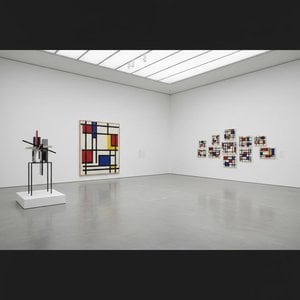
Composición con rojo, amarillo y azul

Descubre ‘Composición con rojo, amarillo y azul’ (1922) de Piet Mondrian. Una obra maestra revolucionaria del Neoplasticismo con colores primarios y formas geométricas. ¡Compra reproducciones de alta calidad ahora!

Explore la obra de Piet Mondrian (1872-1944), un pionero del arte abstracto y el movimiento De Stijl. Descubre sus icónicos cuadros geométricos, su estilo Neoplasticismo y su influencia duradera en el diseño moderno, la arquitectura y el arte del siglo XX.

Giclée / Impresión de arte

Impresiones giclée o en lienzo de calidad de museo con producción rápida y opciones de acabado flexibles. ( Encargar reproducción pintada a mano Ver versión en imagen digital)

P118B $10
P118H $10
P118W $10
P438Z $10
P508JH $12
P508YH $12
P805H $10
P805Z $10
P919BZ $10
P919G $10
P919XJ $10
P959ZH $10
P968JZ $12
W106C $8
W218G $10
W218JH $8
W218Y $10
W307PJ $10
W316G $10
W316PJ $8
W316Y $10
W398PJ $8
W4111J $10
W500HY $15
W500JH $15
W692G $12
W849H $8
W940BG $15
W953PJ $8

Estándar
personalizado
CM
INCH

Elija entre nuestros tamaños predefinidos que respetan las proporciones originales de la obra.

ancho
altura

Puede introducir sus propias dimensiones para adaptarse a un marco o espacio específico. Si el tamaño seleccionado no coincide con las proporciones de la imagen original, recortaremos la obra de arte o extenderemos la imagen con un borde con efecto espejo o de color sólido. Se enviará una maqueta digital para su aprobación antes de que comience la producción.
Tenga en cuenta que la vista previa en pantalla no refleja el recorte o la extensión real. Solo la maqueta mostrará con precisión la composición final.
Aunque existen tamaños personalizados, recomendamos seleccionar una dimensión de la lista predefinida para preservar las proporciones originales.

Envío a todo el mundo () en 2 semanas en lugar de las 4/5 semanas estándar. (17 septiembre)

why_choose_icon
Envío exprés gratuito a todo el mundo
why_choose_icon
Lienzo de lino de alta calidad
why_choose_icon
Seguro de envío completo
why_choose_icon
Garantía de reembolso de impuestos aduaneros
why_choose_icon
Garantía de fidelidad cromática exacta
why_choose_icon
Política de devolución de 100 días (solo por defectos)
why_choose_icon
Garantía de devolución del 100% del dinero
why_choose_icon
Oferta por volumen

Precio total

$ 68

reproduction

Composición con rojo, amarillo y azul

Giclée / Impresión de arte

Tamaño de la reproducción

-

Precio total

$ 68

Datos clave

  • Movement: Neoplasticism
  • Title: Composition with Red, Blue & Yellow
  • Notable elements or techniques: Geometric abstraction; Primary colors
  • Dimensions: 16 x 19 cm
  • Year: 1922
  • Medium: Oil on Canvas
  • Influences: Theosophy

Cuestionario de arte

Cada pregunta tiene una única respuesta correcta.

Pregunta 1:
What art movement is Piet Mondrian’s ‘Composition with Red, Yellow and Blue’ associated with?
Pregunta 2:
In what year was ‘Composition with Red, Yellow and Blue’ created?
Pregunta 3:
What are the primary colors prominently featured in this painting?
Pregunta 4:
The painting utilizes geometric shapes. Which of these shapes are most evident?
Pregunta 5:
What philosophical influence is suggested by Mondrian's exploration of universal language through art?

The Essence of Pure Form: A Journey into Mondrian’s Geometric Revelation

In the quiet evolution of modernism, few works possess the radical clarity of Piet Mondrian’s Composition with Red, Yellow and Blue. Created in 1922, this masterpiece serves as a profound window into the soul of Neoplasticism, a movement that sought to strip away the distractions of the physical world to reveal a deeper, universal truth. While many artists of his era were still tethered to the representational beauty of landscapes and figures, Mondrian embarked on a daring intellectual voyage. He moved beyond the lush textures of Dutch Impressionism toward a visual language composed of nothing but the most fundamental elements: straight lines, primary colors, and a rigorous sense of equilibrium.

To gaze upon this canvas is to witness a deliberate distillation of reality. The painting does not attempt to mimic the organic chaos of nature; instead, it constructs an architectural meditation on order. Through a masterful use of horizontal and vertical black lines, Mondrian establishes a structural grid that anchors the viewer’s eye. Within this framework, the vibrant pulses of red, yellow, and blue emerge not as mere decorations, but as elemental forces. There is a rhythmic tension at play here—a silent dialogue between the weight of the bold color blocks and the airy lightness of the white spaces, creating a sense of dynamic stability that feels both ancient and avant-garde.

A Symphony of Primary Truths

The technical brilliance of this work lies in its deceptive simplicity. Though the palette is strictly limited to the primary triad, the emotional resonance is vast. For the discerning collector or interior designer, this piece offers a timeless sophistication that transcends fleeting trends. The use of primary colors—red for energy, yellow for light, and blue for depth—mirrors the philosophical pursuits of Theosophy, which heavily influenced Mondrian’s search for spiritual harmony through geometric purity. Every intersection of line and color is calculated to achieve a state of "relational opposites," where asymmetry provides a much more complex and engaging balance than traditional symmetry ever could.

For those looking to infuse a contemporary space with intellectual depth, a high-quality reproduction of this composition acts as a focal point of clarity. It brings an atmosphere of structured calm and modern elegance to any room, whether it be a minimalist gallery setting or a vibrant, eclectic living area. The painting does not merely occupy space; it organizes it. By introducing such a disciplined aesthetic, the artwork invites contemplation, encouraging the viewer to find beauty in the essential and strength in the simple.

The Legacy of Neoplasticist Vision

Understanding this work requires acknowledging the transformative era from which it emerged. Mondrian’s transition from the soft, atmospheric studies of his youth to this uncompromising abstraction represents one of the most significant shifts in art history. This 1922 composition stands as a pivotal moment where the artist successfully translated complex philosophical inquiries into a visual shorthand that remains legible and powerful over a century later. It is an invitation to look past the surface of things and appreciate the underlying geometry of existence.

Owning or displaying such a piece is more than a decorative choice; it is an engagement with the very foundations of 20th-century modernism. As a cornerstone of the De Stijl spirit, this artwork continues to inspire architects, designers, and art lovers alike, proving that true innovation does not require complexity, but rather the courage to find perfection in the most basic building blocks of our visual world.


Biografía del artista

**vida temprana y carrera en los Países Bajos (1872-1911)**

pieter cornelis mondriaan, conocido a partir de 1911 como piet mondrian, fue un pintor y teórico del arte holandés nacido el 7 de marzo de 1872, en Amersfoort, Países Bajos. Comenzó su carrera como maestro en educación primaria mientras practicaba la pintura, inicialmente en el estilo impresionista holandés de la Escuela de Ámsterdam.
  • Su obra temprana, caracterizada por paisajes naturalistas, se puede ver en pinturas como the red mill y trees in moonrise, que se exhibieron en el kunstmuseum den haag.
  • La búsqueda de Mondrian por parte de un estilo personal lo llevó a explorar diversos movimientos artísticos, incluyendo el puntillismo y el fauvismo.
  • Su primera exposición en 1893 marcó el comienzo de su prolífica carrera.

**la evolución del estilo de Mondrian**

de figurativo a abstracto La dirección artística de Mondrian se desplazó hacia un estilo cada vez más abstracto, culminando en una forma no representacional que llamó neoplasticismo. Esta 'arte plástico puro' tenía como objetivo crear 'belleza universal', limitando su vocabulario formal a los colores primarios (rojo, azul y amarillo), valores (negro, blanco y gris) y direcciones (horizontal y vertical).

**legado e influencia**

El legado de Mondrian se extiende más allá de su propia obra, influyendo en estilos y movimientos importantes como la pintura de campo de color, el expresionismo abstracto y el minimalismo. El historiador del diseño stephen bayley señaló que Mondrian se ha convertido en un símbolo para todo lo que el modernismo pretendía ser.
  • Explore más de la obra de Mondrian en WahooArt.com.
  • Aprenda sobre el movimiento De Stijl y su influencia en el arte moderno en wikipedia.
  • Descubra otros artistas influyentes como vincent van gogh y su impacto en el mundo del arte.

**obras clave y exposiciones**

* piet mondrian: apple blossom (cubismo) (ver en WahooArt.com) * piet mondrian: still life with vase of spices ii (cubismo) (ver en WahooArt.com) * piet mondrian: passionflower (73 x 48 cm, kunstmuseum den haag, post impressionismo, acuarela) (ver en WahooArt.com)
Piet Mondrian

Piet Mondrian

1872 - 1944 , Países Bajos

Datos clave

  • Artistas Que Influyeron:
    • Hague School
    • Puntillismo
    • Fauvismo
    • Cubismo
  • Estilo Artístico: Neoplasticismo, De Stijl
  • Fecha De Nacimiento: 7 de marzo de 1872
  • Influenciado A Artistas:
    • Expresionismo abstracto
    • Minimalismo
    • Color Field painting
  • Lugar De Nacimiento: Amersfoort, Países Bajos
  • Nacionalidad: Holandés
  • Nombre Completo: Piet Mondrian
  • Obras Notables:
    • Nueva York I
    • Composición con Rojo, Azul y Amarillo
    • Broadway Boogie Woogie
    • Tableau no. 2
Explore obras de arte organizadas por temas, estilos y características.