Impresiones giclée o en lienzo de calidad de museo con producción rápida y opciones de acabado flexibles. ( Comprar pintura hecha a mano Cambiar a imagen digital)
Elija entre nuestros tamaños predefinidos que respetan las proporciones originales de la obra.

Introduzca el ancho y el alto que necesite para adaptarse a su marco o pared. Una impresión solo puede recortarse, nunca hacerse más grande que la imagen original, por lo que un tamaño con una forma distinta perderá parte de la obra. Le enviaremos una maqueta digital para su aprobación antes de realizar cualquier impresión. La imagen que se muestra en esta página no refleja el recorte real; solo la maqueta lo hace.
Envío a todo el mundo () en 2 semanas en lugar de las 4/5 semanas estándar. (8 noviembre)
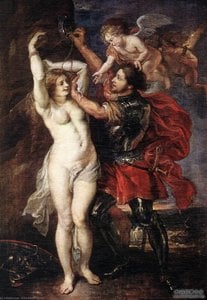
Perseus and Andromeda
Dimensiones de la reproducción
In the hallowed halls where art meets immortality, few works command the room with as much visceral intensity as Pierre Puget’s Perseus and Andromeda. Completed in 1678, this monumental marble masterpiece is far more than a mere sculptural group; it is a theatrical performance frozen in stone. As a cornerstone of the French Baroque tradition, the work captures the very essence of an era defined by movement, tension, and profound emotional release. To behold this sculpture is to witness a moment where the cold rigidity of marble is transformed into breathing flesh, capturing the precise second where mythic heroism intersects with anatomical perfection.
The narrative etched into the stone recounts one of the most gripping legends of Greek mythology: the heroic rescue of Andromeda by Perseus from the clutches of Cetus, the monstrous sea serpent. The composition is a masterclass in Baroque dynamism. Puget positions Perseus atop a jagged, rocky outcrop, his body a study in triumphant power as he holds aloft the severed head of Medusa. Below him, Andromeda is depicted bound to the stone, her form embodying a poignant vulnerability and an exquisite sense of anguish. This dramatic contrast between the conqueror’s dominance and the maiden's distress creates a visual tension that draws the viewer into the heart of the struggle.
Puget’s technical prowess is nothing short of extraordinary, showcasing an unwavering commitment to anatomical realism that sets his work apart from the more restrained classical styles of the Louis XIV era. Every muscle fiber of Perseus’s powerful physique and every delicate fold of Andromeda’s drapery has been meticulously rendered, demonstrating a profound command over the medium of marble. The sculptor utilizes the natural properties of the stone to create a subtle interplay of light and shadow; the smooth, luminous texture of skin contrasts sharply with the rugged, abrasive surfaces of the rocky terrain and the terrifying visage of Medusa.
The color palette of the piece remains inherently tied to the medium itself, relying on the muted, sophisticated earth tones of gray, brown, and cream derived from the marble. This lack of external pigment allows the viewer to focus entirely on the sculptural depth and the play of light across the surfaces. For the discerning collector or interior designer, this understated palette offers a unique versatility, providing a focal point that exudes grandeur and prestige without overwhelming a curated space. It is a work that brings with it an atmosphere of historical weight and classical elegance.
Beyond its physical beauty, Perseus and Andromeda serves as a powerful allegory for the human condition. The struggle depicted is not merely a battle against a sea monster, but a symbolic triumph of courage and intellect over fear and chaos. Andromeda’s nudity serves as a symbol of innocence and vulnerability, while Perseus’s helmet and triumphant posture signify divine protection and the strength of the heroic spirit. This layer of profound meaning ensures that the artwork resonates on an intellectual level long after the initial visual impact has been felt.
For those seeking to adorn a space with art that inspires awe, this reproduction offers an unparalleled opportunity. It is a piece designed for those who appreciate the intersection of history, myth, and technical mastery. Whether placed in a grand gallery or a sophisticated private study, the sculpture’s ability to evoke emotion—ranging from the terror of the monster to the relief of the rescue—makes it a timeless addition to any high-end collection. It remains a testament to Puget's legacy as a master who could make stone weep and marble breathe.
"Perseus and Andromeda" presenta un brillo general de brilliant y una luminancia de Bright Balance.
"Perseus and Andromeda" de Pierre Puget transmite una atmósfera Dramatic y se recomienda para un/a Hotel Lobby. El estado de ánimo es la esencia que la obra aporta al espacio que la rodea.
El artista detrás de "Perseus and Andromeda" es Pierre Puget. La obra está catalogada bajo el nombre de Pierre Puget.


1620 - 1694 , Francia

Transforme sus fotografías en legados eternos con WahooArt. Especialistas en recreaciones maestras y esculturas 3D que elevan el diseño de hoteles de lujo. Calidad académica, técnica al óleo y un proceso exclusivo para interioristas exigentes. Descubra la excelencia artística hoy.

Descubra la maestría técnica y el legado de la escultura en mármol desde Miguel Ángel. Explore la eternidad de la piedra con nosotros.

Descubre la maestría técnica de la escultura clásica y su materia. Explora el arte del volumen ahora.

Embark on a sophisticated journey through the eternal allure of mythological art. Discover how master painters breathe life into ancient legends, from Greek deities to Baroque masterpieces, and learn to curate these timeless narratives within your own exquisite art collection.
 Enviar
 Compartir
 Detalles
 Guía
Guía

 Descargar
 Similares
 Presentación de diapositivas
 Preguntas y respuestas
 Estadísticas


 Ver más






































 La opción de vidrio solo está disponible en tamaños inferiores a 110 cm.