Un Glimpse into a Golden Age: Pierre-Auguste Renoir’s *Lydia Sieligmann*
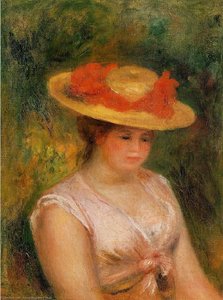
Pierre-Auguste Renoir's 1917 portrait of *Lydia Sieligmann* transcends the simple depiction of a young woman; it embodies the enduring allure of Impressionism and stands as a testament to Renoir’s unparalleled mastery in capturing fleeting beauty. Currently residing within the walls of The Allen Memorial Art Museum in Oberlin, Ohio, this oil on canvas invites viewers into a world bathed in soft light, delicate color palettes, and an atmosphere of quiet contemplation—a sanctuary of serenity amidst the bustle of Parisian life. More than just a likeness, it’s a distillation of Renoir's artistic philosophy: to seize the ephemeral moment, the dance of light upon skin, the whisper of fabric, and the very essence of mood.
The painting’s foundation lies in Renoir’s unwavering commitment to the principles of Impressionism. Rejecting the rigid constraints of academic realism, he prioritized the subjective experience of perception—the way light and color interact to create an impression rather than a precise representation. *Lydia Sieligmann* exemplifies this approach through its loose, visible brushstrokes – a signature characteristic of the movement. These aren’t carefully blended lines designed for photographic accuracy; instead, they are vibrant, individual marks that coalesce to evoke a shimmering atmosphere. The canvas doesn't strive for sharp edges or photographic detail; it aims for *impression*—the feeling of sunlight warming skin, the subtle texture of silk, and the overall sense of peacefulness. The dominant hues – warm reds and yellows – contribute to an intimate and inviting scene, reminiscent of Renoir’s beloved depictions of Parisian cafes and gardens.
Portrait of an Era: Lydia Sieligmann
Lydia Sieligmann herself is a captivating subject, radiating a quiet confidence that immediately engages the viewer. Her direct gaze suggests both awareness and vulnerability, inviting us into her world. Adorned with a flower-laden straw hat – a symbol of summer leisure and feminine grace – and possessing flowing, unrestrained hair, she embodies the youthful vibrancy characteristic of the early 20th century. The background subtly hints at a garden setting, further enhancing the painting’s sense of natural beauty and tranquility. The composition is deliberately focused on Lydia, drawing our attention to her presence and creating an intimate connection. Renoir skillfully uses space to emphasize her importance within the scene, making her a focal point of immediate interest.
Historical Context & Renoir's Late Style
Painted in 1917, *Lydia Sieligmann* represents a pivotal moment in Renoir’s artistic journey. While he continued to refine his Impressionistic techniques – experimenting with color and light—there’s a noticeable shift towards a more lyrical and expressive style during this period. The painting reflects the changing social landscape of post-war Europe, capturing a sense of optimism and renewal. It's important to note that Renoir was increasingly interested in portraying women as independent and self-assured figures, challenging traditional representations of female subjects. The soft lighting and delicate colors contribute to an overall feeling of nostalgia—a longing for a bygone era of elegance and beauty. The painting’s mood is one of gentle melancholy, tempered by the promise of springtime.
Symbolism & Emotional Resonance
Beyond its technical brilliance, *Lydia Sieligmann* is rich in subtle symbolism. The flower-laden hat speaks to a sense of leisure and summer days, while the pink dress evokes femininity and grace. The direct gaze of Lydia suggests self-possession and intelligence. More profoundly, the painting captures a fleeting moment of beauty—a reminder of the ephemeral nature of life itself. Renoir’s masterful use of light and color creates an emotional resonance that transcends mere representation, inviting viewers to contemplate themes of youth, beauty, and the passage of time. It's a work that lingers in the memory long after viewing, prompting reflection on the enduring power of art to capture the essence of human experience.



 Ver en contexto
 Comprar pintura hecha a mano
 Enviar
 Compartir
 Detalles

 Descargar
 Similares
 Radiografía
 Presentación de diapositivas
 Estadísticas

 Ver más






































 La opción de vidrio solo está disponible en tamaños inferiores a 110 cm.