A Symphony of Motion: The Equestrian Mastery of Philips Wouwerman
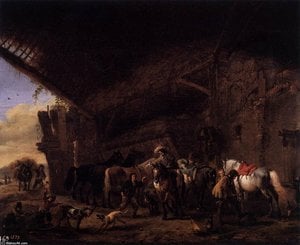
In the heart of the Dutch Golden Age, few artists captured the spirited elegance of animal and human interaction as masterfully as Philips Wouwerman. His work, Riding School, serves as a breathtaking window into a bygone era, inviting the viewer to step into a lively seventeenth-century assembly. The scene is a choreographed dance of muscle, cloth, and light, where the rhythmic movement of horses and the poised dignity of their riders create a sense of perpetual motion. As one gazes upon this composition, the atmosphere of a bustling equestrian event unfolds, characterized by the subtle interplay between the grandeur of the subjects and the tranquil, rolling landscapes that frame them. It is not merely a depiction of training; it is an evocative celebration of life, status, and the enduring bond between man and beast.
The technical brilliance of Wouwerman is most evident in his command of the Baroque aesthetic, particularly through his sophisticated use of chiaroscuro. The painting breathes through its dramatic lighting, which suggests the soft, golden descent of a late afternoon sun. This light catches the sheen of a horse's coat, the heavy folds of period-accurate seventeenth-century attire, and the distant, misty hills, casting long, poetic shadows that ground the figures in a tangible reality. His brushwork, while precise enough to render the intricate details of hats, coats, and equestrian gear, possesses a fluid vitality that prevents the scene from feeling static. The color palette is masterfully restrained, utilizing earthy tones and subtle highlights to evoke a sense of historical authenticity and atmospheric depth.
Historical Resonance and Aesthetic Appeal
To possess or display a reproduction of Riding School is to bring a piece of the Dutch Golden Age into a contemporary space. Historically, Wouwerman’s work resonated with an era that valued the prestige of hunting and equestrian skill as symbols of nobility and discipline. For the modern collector or interior designer, this piece offers more than just historical interest; it provides a sophisticated focal point that commands attention through its narrative complexity. The painting’s ability to balance a busy foreground of activity with a serene, expansive background makes it an incredibly versatile addition to a curated collection.
Whether placed in a grand library, a formal dining room, or a contemporary gallery setting, the artwork acts as a conversation starter, evoking feelings of nostalgia and admiration for classical craftsmanship. The emotional impact lies in its ability to transport the observer—offering a momentary escape into a world of grace, tradition, and the timeless beauty of the natural landscape. It is an investment in atmosphere, providing a sense of permanence and cultured elegance that transcends fleeting decorative trends.
Preguntas y respuestas
¿Qué técnica y estilo caracterizan a "Riding School" de Philips Wouwermans?
En "Riding School", la técnica de Oil se encuentra con el movimiento Baroque.
¿Qué proporciones tiene "Riding School" de Philips Wouwermans y cuáles son sus dimensiones?
"Riding School" de Philips Wouwermans tiene las proporciones de una obra en Landscape de 68 x 83 cm.
¿Dónde debería colgarse una reproducción de "Riding School" de Philips Wouwermans?
El formato (Landscape) y el espacio recomendado (Living Room) son los dos datos de colocación registrados para "Riding School" de Philips Wouwermans.



 Vista previa
 Encargar reproducción pintada a mano
 Compartir
 Compartir
 Ver detalles
 Guía
Guía

 Descargar
 Ver artículos similares
 Radiografía
 Presentación de diapositivas
 Estadísticas


 Leer más






































 La opción de vidrio solo está disponible en tamaños inferiores a 110 cm.