


 WatercolorWallArtExpressionist abstraction
 1919Modern
 17.0 x 28.0 cm
Impresiones giclée o en lienzo de calidad de museo con producción rápida y opciones de acabado flexibles. ( Comprar pintura hecha a mano Comprar imagen)





























Elija entre nuestros tamaños predefinidos que respetan las proporciones originales de la obra.

Puede introducir sus propias dimensiones para adaptarse a un marco o espacio específico. Si el tamaño seleccionado no coincide con las proporciones de la imagen original, recortaremos la obra de arte o extenderemos la imagen con un borde con efecto espejo o de color sólido. Se enviará una maqueta digital para su aprobación antes de que comience la producción.
Tenga en cuenta que la vista previa en pantalla no refleja el recorte o la extensión real. Solo la maqueta mostrará con precisión la composición final.
Aunque existen tamaños personalizados, recomendamos seleccionar una dimensión de la lista predefinida para preservar las proporciones originales.
Envío a todo el mundo () en 2 semanas en lugar de las 4/5 semanas estándar. (7 septiembre)


Summer houses
Dimensiones de la reproducción
Paul Klee's "Summer Houses," painted in 1919, is more than just a charming depiction of idyllic dwellings; it’s a window into the burgeoning world of early modern art and a testament to Klee’s uniquely intuitive approach. This watercolor, measuring 17 x 28 cm, captures a scene brimming with quiet joy and a subtle sense of movement, inviting the viewer to step into a realm where color and form dance in harmonious conversation.
Klee’s technique is immediately recognizable – a delicate layering of washes that build up texture and depth. The use of vibrant blues, greens, and yellows isn't merely representational; it’s an expressive choice, reflecting the artist’s fascination with color theory and his desire to evoke emotion through purely visual means. Notice how he employs broken brushstrokes and hatched lines, a technique influenced by both Impressionism and Post-Impressionism, creating a sense of shimmering light and airiness. The slightly uneven application of paint adds to the artwork's charm and reinforces its handmade quality – a crucial element in Klee’s artistic philosophy.
"Summer Houses" was created during a pivotal moment in art history, just as Cubism and Expressionism were challenging traditional notions of representation. While undeniably influenced by these movements, Klee developed his own distinct style, characterized by simplified forms, flattened perspectives, and an emphasis on subjective experience. The painting’s whimsical composition – the three houses nestled amongst trees, with birds flitting about – speaks to a desire for escape and tranquility, themes that resonated deeply with artists and audiences alike at the time. Klee's work was part of a broader movement towards abstraction, moving away from strict realism toward exploring the underlying structure and emotional content of art.
The title itself, "Summer Houses," immediately evokes feelings of warmth, comfort, and domesticity. The houses themselves aren’t merely architectural structures; they represent a sanctuary, a place of refuge from the complexities of modern life. The birds, scattered throughout the scene, symbolize freedom, joy, and perhaps even a longing for connection. Klee's use of repetitive motifs – the rectangular shapes of the buildings, the circular forms of the trees – creates a sense of rhythm and balance, reinforcing the painting’s overall feeling of serenity. The placement of the houses suggests a narrative, a quiet story unfolding within this idyllic setting.
"Summer Houses" remains a captivating work of art, demonstrating Klee's mastery of watercolor technique and his profound understanding of color and form. Its enduring appeal lies in its ability to transport the viewer to a place of peace and beauty, reminding us of the simple pleasures of life. Reproductions of this piece offer an accessible way to experience Klee’s vision, bringing a touch of artistic elegance and contemplative charm to any interior space.


1879 - 1940 , Suiza

Descubre las 25 obras maestras de Paul Klee, el genio del arte moderno. Explora su expresionismo único, composiciones abstractas y vibrantes paletas de colores. Reproducciones de alta calidad y decoración con arte en WahooArt.com.
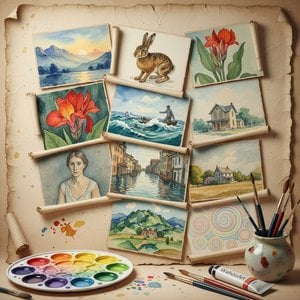
Descubre 10 acuarelas legendarias de Turner, Monet y Sargent que revolucionaron el arte. Explora la historia, técnica y belleza de estas obras maestras impresionistas y románticas. Reproducciones de museo en WahooArt.com.

Descubre las 10 obras maestras del Expresionismo Abstracto: Pollock, Rothko y más. Explora la historia, técnica y significado de estos lienzos icónicos. Reproducciones de arte exclusivas en .

Explore the captivating world of Paul Klee! Discover his innovative art, Bauhaus influence, & unique symbolic language. Expert analysis & high-quality reproductions at WahooArt.

Explore the captivating world of watercolor painting! Discover its rich history, essential techniques, influential artists & collecting tips. A comprehensive guide for art enthusiasts from WahooArt.

 Ver en contexto
 Enviar
 Compartir
 Detalles

 Descargar
 Similares
 Radiografía
 Presentación de diapositivas
 Ver más







 La opción de vidrio solo está disponible en tamaños inferiores a 110 cm.


