


Impresiones giclée o en lienzo de calidad de museo con producción rápida y opciones de acabado flexibles. ( Comprar pintura hecha a mano Comprar imagen)





























Elija entre nuestros tamaños predefinidos que respetan las proporciones originales de la obra.

Puede introducir sus propias dimensiones para adaptarse a un marco o espacio específico. Si el tamaño seleccionado no coincide con las proporciones de la imagen original, recortaremos la obra de arte o extenderemos la imagen con un borde con efecto espejo o de color sólido. Se enviará una maqueta digital para su aprobación antes de que comience la producción.
Tenga en cuenta que la vista previa en pantalla no refleja el recorte o la extensión real. Solo la maqueta mostrará con precisión la composición final.
Aunque existen tamaños personalizados, recomendamos seleccionar una dimensión de la lista predefinida para preservar las proporciones originales.
Envío a todo el mundo () en 2 semanas en lugar de las 4/5 semanas estándar. (6 septiembre)


Still life in Width
Dimensiones de la reproducción
In the quiet realm of Paul Klee’s "Still Life in Width," the boundaries between the tangible world and the abstract imagination begin to dissolve. Painted during the transformative years between 1924 and 1930, this masterpiece transcends the traditional genre of still life. While the eye may initially recognize a humble arrangement of a vase, bowl, cup, and spoon resting upon a tabletop, Klee invites us to look much deeper. This is not merely a study of objects, but an exploration of the very essence of form and color. Through his unique lens, the mundane becomes monumental, and the simple act of arranging household items becomes a profound exercise in visual poetry.
The painting is anchored by a breathtakingly warm palette, dominated by rich oranges and deep, earthy browns. This selection of hues creates an immediate sense of intimacy and comfort, wrapping the viewer in a tactile embrace. Klee’s technique is far from clinical; instead, he employs loose, gestural brushstrokes that prioritize texture and movement over rigid precision. The layering of paint lends a palpable surface quality to the work, making the canvas feel alive with energy. Each stroke serves as a conduit for spontaneous expression, reflecting Klee's belief that painting should function much like music—a rhythmic, intuitive flow of emotion captured in pigment.
To understand "Still Life in Width" is to listen with one's eyes. Klee, the son of a music teacher, famously infused his visual compositions with the principles of musical harmony. In this piece, he utilizes an asymmetrical arrangement to create a delicate tension, much like the counterpoint found in a classical composition. The shapes within the work—the soft curves of the bowl and the structural silhouette of the vase—suggest organic forms that echo musical notation. There is a deliberate balance at play here, where weight and emptiness dance together to guide the viewer's gaze across the canvas in a melodic progression.
The stylistic DNA of this work is a fascinating tapestry of early 20th-century movements. One can detect the fragmented geometry of Cubism in the way objects are simplified, yet the emotional resonance and dreamlike atmosphere pull heavily from Expressionism and Surrealism. This fusion allows the artwork to resonate on multiple levels: it is intellectually stimulating for the scholar, visually captivating for the decorator, and emotionally stirring for the soul. For the collector or interior designer, this piece offers a sophisticated focal point—a work that brings both warmth and intellectual depth to any curated space.
For those seeking to bring a sense of timelessness and soulful energy into their homes, "Still Life in Width" serves as an exquisite inspiration. It is a piece that does not demand attention through loud or jarring imagery, but rather earns it through subtle complexity and a soothing, grounded presence. As a high-quality reproduction, it allows the intricate textures and vibrant, sun-drenched tones to illuminate a room, offering a daily moment of quiet reflection.
Ultimately, Klee’s work remains a testament to the power of abstraction to convey the human experience. By stripping away the unnecessary details of reality, he reveals the underlying heartbeat of the objects themselves. To possess such a work is to hold a fragment of a larger visual symphony, a reminder that even in the simplest arrangement of life, there is profound beauty and infinite depth waiting to be discovered.


1879 - 1940 , Suiza

Descubre las 25 obras maestras de Paul Klee, el genio del arte moderno. Explora su expresionismo único, composiciones abstractas y vibrantes paletas de colores. Reproducciones de alta calidad y decoración con arte en WahooArt.com.

Descubre las 10 obras maestras del Expresionismo Abstracto: Pollock, Rothko y más. Explora la historia, técnica y significado de estos lienzos icónicos. Reproducciones de arte exclusivas en .
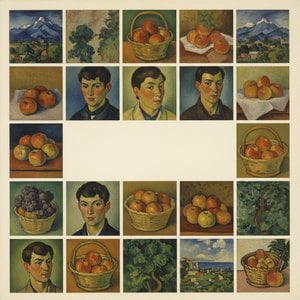
Descubre las 25 obras maestras de Paul Cézanne que revolucionaron el arte moderno. Explora su técnica, inspiración y significado en paisajes, bodegones y retratos. Reproducciones de alta calidad para decorar tu hogar con arte inolvidable. ¡Explora la colección completa en WahooArt.com!

Explore the captivating world of Paul Klee! Discover his innovative art, Bauhaus influence, & unique symbolic language. Expert analysis & high-quality reproductions at WahooArt.

Descubre las 10 obras maestras de la abstracción geométrica que revolucionaron el arte moderno. Explora a Mondrian, Malevich y Kandinsky en WahooArt.com. Reproducciones de alta calidad para tu hogar.

 Ver en contexto
 Enviar
 Compartir
 Detalles

 Descargar
 Similares
 Radiografía
 Presentación de diapositivas

 Ver más







 La opción de vidrio solo está disponible en tamaños inferiores a 110 cm.


