Vista previa Vista previa en RA Encargar reproducción pintada a mano Ver versión en imagen digital Compartir
Ver detalles Guía Añadir a favoritos Descargar Ver artículos similares Radiografía Presentación de diapositivas Estadísticas

Profundo Patos

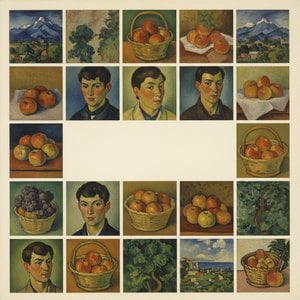
"Deep Pathos" de Paul Klee: Una obra maestra del expresionismo, cubismo y surrealismo que explora emociones profundas con colores armoniosos y formas geométricas evocadoras. Descubre esta fascinante pieza artística en El Museo Metropolitano de Arte.

Descubre a Paul Klee (1879-1940), artista suizo-alemán que fusiona Expresionismo, Cubismo y Surrealismo. Explora su estilo único, teoría del color y legado Bauhaus.

Giclée / Impresión de arte

Impresiones giclée o en lienzo de calidad de museo con producción rápida y opciones de acabado flexibles. ( Encargar reproducción pintada a mano Ver versión en imagen digital)

Corner sample of the P118B picture frame: moulded polystyrene, 5 cm wide and 3 cm thick
P118B €10
Corner sample of the P118H picture frame: moulded polystyrene, 5 cm wide and 3 cm thick
P118H €10
Corner sample of the P118W picture frame: moulded polystyrene, 5 cm wide and 3 cm thick
P118W €10
Corner sample of the P438Z picture frame: moulded polystyrene, 5.5 cm wide and 3.5 cm thick
P438Z €10
Corner sample of the P508JH picture frame: moulded polystyrene, 7 cm wide and 3.5 cm thick
P508JH €12
Corner sample of the P508YH picture frame: moulded polystyrene, 7 cm wide and 3.5 cm thick
P508YH €12
Corner sample of the P805H picture frame: moulded polystyrene, 5 cm wide and 3.5 cm thick
P805H €10
Corner sample of the P805Z picture frame: moulded polystyrene, 5 cm wide and 3.5 cm thick
P805Z €10
Corner sample of the P919BZ picture frame: moulded polystyrene, 7 cm wide and 3.5 cm thick
P919BZ €10
Corner sample of the P919G picture frame: moulded polystyrene, 7 cm wide and 3.5 cm thick
P919G €10
Corner sample of the P919XJ picture frame: moulded polystyrene, 7 cm wide and 3.5 cm thick
P919XJ €10
Corner sample of the P959ZH picture frame: moulded polystyrene, 5 cm wide and 3 cm thick
P959ZH €10
Corner sample of the P968JZ picture frame: moulded polystyrene, 6 cm wide and 4 cm thick
P968JZ €12
Corner sample of the W106C picture frame: solid wood, 5 cm wide and 3 cm thick
W106C €8
Corner sample of the W218G picture frame: solid wood, 5 cm wide and 3 cm thick
W218G €10
Corner sample of the W218JH picture frame: solid wood, 5 cm wide and 3 cm thick
W218JH €8
Corner sample of the W218Y picture frame: solid wood, 5 cm wide and 3 cm thick
W218Y €10
Corner sample of the W307PJ picture frame: solid wood, 6 cm wide and 3 cm thick
W307PJ €10
Corner sample of the W316G picture frame: solid wood, 6 cm wide and 3 cm thick
W316G €10
Corner sample of the W316PJ picture frame: solid wood, 6 cm wide and 3 cm thick
W316PJ €8
Corner sample of the W316Y picture frame: solid wood, 6 cm wide and 3 cm thick
W316Y €10
Corner sample of the W398PJ picture frame: solid wood, 5 cm wide and 3 cm thick
W398PJ €8
Corner sample of the W4111J picture frame: solid wood, 6.5 cm wide and 3.5 cm thick
W4111J €10
Corner sample of the W500HY picture frame: solid wood, 7 cm wide and 5 cm thick
W500HY €15
Corner sample of the W500JH picture frame: solid wood, 7 cm wide and 5 cm thick
W500JH €15
Corner sample of the W692G picture frame: solid wood, 8 cm wide and 4 cm thick
W692G €12
Corner sample of the W849H picture frame: solid wood, 5 cm wide and 3 cm thick
W849H €8
Corner sample of the W940BG picture frame: solid wood, 7.5 cm wide and 4.5 cm thick
W940BG €15
Corner sample of the W953PJ picture frame: solid wood, 6 cm wide and 3.5 cm thick
W953PJ €8

Estándar
personalizado
CM
INCH

Elija entre nuestros tamaños predefinidos que respetan las proporciones originales de la obra.

ancho
altura

Puede introducir sus propias dimensiones para adaptarse a un marco o espacio específico. Si el tamaño seleccionado no coincide con las proporciones de la imagen original, recortaremos la obra de arte o extenderemos la imagen con un borde con efecto espejo o de color sólido. Se enviará una maqueta digital para su aprobación antes de que comience la producción.
Tenga en cuenta que la vista previa en pantalla no refleja el recorte o la extensión real. Solo la maqueta mostrará con precisión la composición final.
Aunque existen tamaños personalizados, recomendamos seleccionar una dimensión de la lista predefinida para preservar las proporciones originales.

Envío a todo el mundo () en 2 semanas en lugar de las 4/5 semanas estándar. (10 octubre)

Envío exprés gratuito a todo el mundo
Lienzo de lino de alta calidad
Seguro de envío completo
Garantía de reembolso de impuestos aduaneros
Garantía de fidelidad cromática exacta
Política de devolución de 100 días (solo por defectos)
Garantía de devolución del 100% del dinero
Oferta por volumen

Precio total

€ 59

Profundo Patos

Giclée / Impresión de arte

Tamaño de la reproducción

-

Precio total

€ 59

Datos clave

  • Subject or theme: Emotion
  • Year: 1915
  • Location: The Metropolitan Museum of Art
  • Artist: Paul Klee
  • Medium: Oil on paper
  • Influences:
    • Cubism
    • Surrealism
  • Movement: Expressionism

Cuestionario de arte

Cada pregunta tiene una única respuesta correcta.

Pregunta 1:
What artistic movement is Paul Klee’s ‘Deep Pathos’ primarily associated with?
Pregunta 2:
In what year was ‘Deep Pathos’ created?
Pregunta 3:
What medium did Paul Klee use to create ‘Deep Pathos’?
Pregunta 4:
‘Deep Pathos’ utilizes a grid-like structure. What does this structural element symbolize?
Pregunta 5:
Which artistic influences are evident in Klee's use of color theory within ‘Deep Pathos’?

Deep Pathos: An Exploration of Color and Emotion in Paul Klee’s Masterpiece

Paul Klee, a Swiss-German artist whose legacy continues to inspire awe and contemplation, stands apart as one of the most distinctive voices of the early twentieth century. His singular approach to painting—a harmonious fusion of Expressionism, Cubism, and Surrealism—transformed visual art into a realm of profound psychological depth and imaginative freedom. “Deep Pathos,” created in 1915, exemplifies this genius perfectly, offering viewers an unforgettable journey into Klee’s artistic vision.
  • The Artwork: Deep Pathos by Paul Klee – Measuring 9 1/4 × 11 1/2 inches (23.5 × 29.2 cm), this oil painting on paper mounted on cardboard is a testament to Klee’s meticulous craftsmanship. Its surface is dominated by a complex grid structure composed of rectangular and square blocks—a deliberate architectural element that subtly underscores the artwork's underlying order amidst apparent chaos.
  • Composition & Color Palette: The dominant hues are muted earth tones – ochre, brown, red, and blue – punctuated by vibrant splashes of yellow, green, and orange. These colors aren’t merely decorative; they convey emotion directly, mirroring the painting's evocative title. Klee’s masterful use of color theory contributes to a palpable sense of depth and luminosity.
  • Style & Technique: “Deep Pathos” embodies Klee’s signature style—a revolutionary blend of influences that defies easy categorization. He employed layering techniques, incorporating thin washes alongside impasto (thickly applied paint), creating textural surfaces that invite tactile exploration. The artist's meticulous attention to detail reveals a profound understanding of artistic expression as a conduit for inner experience.
  • Historical Context & Influences: Born in Münchenbuchsee, Switzerland, in 1879, Klee’s formative years were marked by exposure to musical traditions and a keen interest in literature—influences that profoundly shaped his artistic sensibility. He studied at the Munich Academy under Franz von Stuck and became associated with influential art movements like Der Blaue Reiter (The Blue Rider) and Die Brücke (The Bridge), where he engaged in spirited debates about artistic innovation.
  • Symbolism & Emotional Impact: The grid-like structure itself serves as a powerful symbol—representing both order and fragmentation, mirroring the complexities of human emotion. “Deep Pathos” invites contemplation on themes of sorrow, longing, and resilience, prompting viewers to confront their own inner landscapes. It’s a painting that transcends mere visual representation, communicating profound psychological truths through its carefully orchestrated colors and forms.
Experience Deep Pathos at The Metropolitan Museum of Art: Currently housed at The Metropolitan Museum of Art (The ME), this artwork offers an unparalleled opportunity to immerse oneself in the artistic genius of Paul Klee. Its enduring appeal lies not only in its aesthetic beauty but also in its capacity to resonate deeply with audiences across generations.

Preguntas y respuestas

¿A qué edad creó Paul Klee "Profundo Patos"?

Paul Klee tenía 36 años cuando creó "Profundo Patos" en 1915. La edad se calcula a partir del año de nacimiento del artista, 1879.

¿Hacia qué tono se inclina "Profundo Patos"?

El tono dominante de "Profundo Patos" de Paul Klee es Gama de amarillos dorados. El tono es la base cromática de la paleta.

¿Qué técnica y estilo caracterizan a "Profundo Patos" de Paul Klee?

"Profundo Patos" está realizada en Gouache, con el estilo Cubist Expressionism.

¿A qué artista se le atribuye "Profundo Patos"?

"Profundo Patos" se atribuye a Paul Klee.

¿Cuál es la fecha de creación de "Profundo Patos" de Paul Klee?

"Profundo Patos" data de 1915. La fecha sitúa la obra dentro de la trayectoria de Paul Klee y de su época.

¿Cómo se describe la atmósfera de "Profundo Patos" de Paul Klee?

El ambiente general de "Profundo Patos" de Paul Klee es Calma. Esta atmósfera describe la esencia general de la obra.

¿Dónde puedo comprar una imagen digital de "Profundo Patos" de Paul Klee?

Puede adquirir una imagen digital de "Profundo Patos" de Paul Klee en esta página: descarga de una imagen digital en alta resolución.


Biografía del artista

Paul Klee: Una Vida en Color y Forma

Primeros Años y Educación

  • Paul Klee nació el 18 de diciembre de 1879, en Münchenbuchsee, Suiza.
  • Su padre era profesor de música alemán y su madre una cantante suiza, fomentando una temprana apreciación por las artes.
  • Inicialmente, Klee se dedicó al dibujo pero finalmente abandonó la representación realista en favor de formas más expresivas.

  • Estudió en la Academia de Bellas Artes de Múnich entre 1898 y 1901.

Desarrollo Artístico e Influencias

  • La obra temprana de Klee mostraba influencias del Art Nouveau y el Simbolismo, pero rápidamente comenzó a desarrollar su estilo único.
  • Un viaje crucial a Túnez en 1914 impactó profundamente su uso del color y la abstracción – la luz y la atmósfera inspiraron un cambio hacia paletas más audaces.
  • Estuvo influenciado por movimientos como el Expresionismo, el Cubismo y el Surrealismo, aunque nunca se alineó completamente con ninguno de ellos.
  • Su interés en la música informó profundamente su enfoque artístico, a menudo comparando la pintura con la composición musical.

Los Años Bauhaus y Más Allá

  • De 1931 a 1933, Klee enseñó en la influyente escuela Bauhaus de arte, diseño y arquitectura junto a Wassily Kandinsky.
  • Este período vio florecer su obra abstracta, explorando la teoría del color y las relaciones formales.
  • Con el ascenso del nazismo en Alemania, Klee fue despedido de la Bauhaus en 1933 debido a su “arte degenerado”.
  • Regresó a Suiza y continuó pintando, pero su salud se deterioró durante este tiempo.

Temas Principales y Estilo Artístico

  • La obra de Klee se caracteriza por una exploración juguetona pero profunda del color, la línea y la forma.
  • A menudo empleaba imágenes infantiles y composiciones caprichosas, impregnadas de significado simbólico.
  • Temas recurrentes incluyen jardines, paisajes, retratos y arreglos abstractos.
  • Sus “Cuadernos de Paul Klee”, publicados póstumamente, revelan sus extensas investigaciones teóricas sobre el color y el diseño.

Legado e Importancia Histórica

  • Paul Klee murió el 29 de junio de 1940, en Muralto, Suiza.
  • Se considera uno de los artistas más importantes del siglo XX, conectando el abismo entre el arte figurativo y el abstracto.
  • Su uso innovador del color y sus escritos teóricos continúan inspirando a artistas e diseñadores hoy en día.
  • La obra de Klee sigue siendo muy buscada por coleccionistas y museos de todo el mundo, consolidando su lugar como una figura icónica en la historia del arte moderno.
Paul Klee

Paul Klee

1879 - 1940 , Suiza

Datos clave

  • Fecha De Fallecimiento: 29 de junio de 1940
  • Fecha De Nacimiento: 18 de diciembre de 1879
  • Lugar De Nacimiento: Münchenbuchsee, Suiza
  • Movimiento Artístico:
    • Expresionismo
    • Cubismo
    • Surrealismo
  • Nacionalidad: Suizo-alemán
  • Nombre Completo: Paul Klee
  • Obras Notables:
    • Ritmos RojoVerde y VioletaAmarillo
    • Contemplación
    • En las casas de Saint Germain
    • Nubes sobre Bor
    • Hermanos
    • Carta Fantasma
    • Flora sobre rocas Sol
Explore obras de arte organizadas por temas, estilos y características.