Vista previa Vista previa en RA Cambiar a formato impreso Ver versión en imagen digital Compartir
Ver detalles Guía Añadir a favoritos Descargar Ver artículos similares Radiografía Presentación de diapositivas Estadísticas

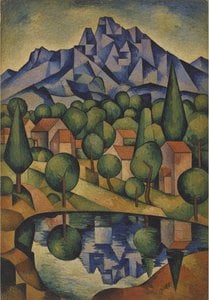
Pine Tree in the Arc Valley

Experience Paul Cézanne's "Pine Tree in the Arc Valley" (1885). This iconic watercolor captures Provençal beauty with innovative brushstrokes, bridging Impressionism and Cubism. A masterpiece of modern art.

Explora el arte revolucionario de Paul Cézanne (1839-1906), un maestro del Postimpresionismo que conectó el Impresionismo y el Cubismo. Descubre sus formas geométricas, pinceladas únicas, pinturas de bodegones e impacto duradero en el arte moderno. #Cézanne #PostImpres

Reproducción al óleo hecha a mano

Óleo sobre lienzo pintado a mano en el tamaño y marco de su elección, realizado por encargo por nuestros artistas. ( Cambiar a formato impreso Ver versión en imagen digital)

P118B $10
P118H $10
P118W $10
P438Z $10
P508JH $12
P508YH $12
P805H $10
P805Z $10
P919BZ $10
P919G $10
P919XJ $10
P959ZH $10
P968JZ $12
W106C $8
W218G $10
W218JH $8
W218Y $10
W307PJ $10
W316G $10
W316PJ $8
W316Y $10
W398PJ $8
W4111J $10
W500HY $15
W500JH $15
W692G $12
W849H $8
W940BG $15
W953PJ $8

Estándar
personalizado
CM
INCH

Elija entre nuestros tamaños predefinidos que respetan las proporciones originales de la obra.

ancho
altura

Puede ingresar sus propias dimensiones para adaptarse a un marco o espacio específico. Si el tamaño seleccionado no coincide con las proporciones de la imagen original, recortaremos la obra o extenderemos la pintura con elementos adicionales pintados a mano. Se le enviará una maqueta digital para su aprobación antes de comenzar la producción.
Tenga en cuenta que la vista previa en pantalla no refleja el recorte o la extensión reales. Solo la maqueta mostrará con precisión la composición final.
Si bien existen tamaños personalizados, recomendamos seleccionar una dimensión de la lista predefinida para preservar las proporciones originales.

Ejemplos de lo que se puede personalizar: Reemplace el rostro con una foto del cliente; Agregue una mascota (por ejemplo, cambie un gato por un perro); Incluya un mensaje oculto en el fondo; Cambie el paisaje o los elementos del fondo.
Tras realizar el pedido, el equipo de WahooArt.com enviará un correo electrónico al cliente para solicitar instrucciones y proporcionarle una vista previa del boceto.

Envío a todo el mundo () en 3-4 semanas en lugar de las 5 semanas estándar. (24 septiembre). Sin comprometer la calidad.

why_choose_icon
Envío exprés gratuito a todo el mundo
why_choose_icon
Lienzo de lino de alta calidad
why_choose_icon
Seguro de envío completo
why_choose_icon
Garantía de reembolso de impuestos aduaneros
why_choose_icon
Garantía de fidelidad cromática exacta
why_choose_icon
Política de devolución de 100 días (solo por defectos)
why_choose_icon
Garantía de devolución del 100% del dinero
why_choose_icon
Oferta por volumen

Precio total

$ 272

reproduction

Pine Tree in the Arc Valley

Técnica de reproducción

Tamaño de la reproducción

-

Precio total

$ 272

Datos clave

  • Location: Albertina, Vienna
  • Title: Pine Tree in the Arc Valley
  • Artist: Paul Cézanne
  • Influences: Cézanne
  • Artistic style: Landscapes
  • Notable elements: Loose brushstrokes
  • Subject or theme: Nature scene

Cuestionario de arte

Cada pregunta tiene una única respuesta correcta.

Pregunta 1:
What is the primary subject of Paul Cézanne’s "Pine Tree in the Arc Valley"?
Pregunta 2:
In what year was "Pine Tree in the Arc Valley" painted?
Pregunta 3:
The painting utilizes which technique to create a sense of depth and form?
Pregunta 4:
The Arc Valley depicted in the painting is located in which region?
Pregunta 5:
Considering Cézanne’s artistic development, what movement does "Pine Tree in the Arc Valley" most closely align with?

The Serene Majesty of “Pine Tree in the Arc Valley”

Paul Cézanne’s “Pine Tree in the Arc Valley,” painted around 1885, isn't merely a depiction of a landscape; it’s a profound meditation on perception and the very nature of seeing. This watercolor masterpiece, now housed within the Albertina Museum in Vienna, captures a pivotal moment in Cézanne’s artistic evolution – a shift away from the fleeting impressions of Impressionism towards a more structured, geometric approach that would profoundly influence the course of modern art. The scene unfolds in the Arc Valley of southwestern France, a region Cézanne frequently revisited and imbued with an almost obsessive fascination. It's a place he sought to distill into its essential forms, a challenge reflected in the painting’s deliberate simplification and layering of color. The composition isn’t about photographic realism; instead, it’s an exploration of how the eye *interprets* reality – a core tenet of Cézanne’s revolutionary vision.

A Revolutionary Technique: Breaking with Tradition

Cézanne's technique in “Pine Tree in the Arc Valley” is instantly recognizable and deliberately unconventional for its time. He abandons traditional perspective, flattening space and suggesting depth through the manipulation of color and form rather than linear recession. The tree itself isn’t rendered as a single, unified shape; it’s built up from countless small, overlapping brushstrokes – a technique he termed “alla prima,” meaning “at first go.” These strokes aren't blended smoothly; they retain their individual texture and direction, creating a vibrant, almost mosaic-like surface. The background landscape is treated similarly, with washes of color applied in broad, gestural strokes that evoke the atmosphere and light of the valley without attempting to accurately represent its contours. Notice how Cézanne uses complementary colors – blues and oranges, greens and reds – not to create harmonious blends, but to heighten contrast and intensify the visual impact of each element. This deliberate disruption of conventional painting methods was a radical statement, signaling a move away from mimicking nature and towards expressing an artist’s subjective experience of it.

Symbolism in the Natural World

Beyond its technical innovations, “Pine Tree in the Arc Valley” is rich with symbolic meaning. The pine tree itself has long been associated with resilience, longevity, and connection to the earth – qualities that resonate deeply within Cézanne's work. The valley, with its winding river and distant mountains, represents a sense of tranquility and timelessness. The subtle inclusion of a bridge in the background hints at human presence, but it’s dwarfed by the scale of nature, reinforcing the idea of humanity’s place within the larger natural order. Some art historians have interpreted the painting as an allegory for Cézanne's own artistic journey – a solitary figure striving to capture the essence of his subject matter and overcome the limitations of traditional representation. The distant mountains, bathed in hazy light, could symbolize the challenges and uncertainties that lie ahead on any creative path.

An Enduring Emotional Resonance

Despite its intellectual complexity, “Pine Tree in the Arc Valley” possesses a remarkable emotional resonance. There’s a quiet serenity to the scene – a sense of peace and contemplation that invites the viewer to slow down and simply *be* present with the image. The interplay of light and shadow, the vibrant colors, and the textured brushstrokes all contribute to this feeling of immersion. It's not a painting that shouts for attention; rather, it whispers its beauty with understated elegance. The work’s enduring appeal lies in its ability to evoke a sense of connection to nature – a reminder of the simple pleasures and profound truths that can be found in the world around us. Reproductions of this piece offer a window into Cézanne's unique vision, allowing viewers to experience firsthand the transformative power of his art. It’s a testament to the artist’s ability to capture not just what he saw, but *how* he felt about what he saw – a truly remarkable achievement that continues to inspire artists and captivate audiences today.

Biografía del artista

vida temprana e influencias

paul cézanne, un pintor postimpresionista francés, nació el 19 de enero de 1839 en Aix-en-Provence, Francia. Su vida temprana estuvo marcada por una fuerte conexión con la empresa bancaria de su familia, lo que le proporcionó seguridad financiera. Esto le permitió concentrarse en sus aspiraciones artísticas sin la carga del estrés financiero. les nabis, neoimpresionismo y simbolismo influyeron en el trabajo temprano de Cézanne, que se caracterizó por su énfasis en las formas geométricas y una paleta de colores limitada. Su interés en las obras de paul gauguin y georges seurat fortaleció aún más su estilo postimpresionista.

estilo artístico y técnicas

El uso innovador de Cézanne de los planos de color y pequeños trazos repetitivos creó campos complejos que transmitían su intenso estudio de los temas. Su enfoque a menudo exploratorio del arte condujo al desarrollo de un nuevo lenguaje pictórico, que enfatizaba la estructura subyacente de los objetos en una composición.

legado e impacto

El trabajo pionero de Cézanne en el postimpresionismo allanó el camino para diversos movimientos vanguardistas, incluyendo cubismo, fauvismo y surrealismo. Su influencia se puede ver en las obras de pablo picasso, henri matisse y georges braque. El legado de Cézanne continúa inspirando a artistas y entusiastas del arte por igual, consolidando su lugar como una figura fundamental en la historia del arte moderno.
Paul Cézanne

Paul Cézanne

1839 - 1906 , Francia

Datos clave

  • Artistas Que Influyeron:
    • Paul Gauguin
    • Georges Seurat
  • Estilo Artístico: Postimpresionismo
  • Fecha De Muerte: Octubre 22, 1906
  • Fecha De Nacimiento: 19 de enero de 1839
  • Influenciado A Artistas:
    • Pablo Picasso
    • Henri Matisse
    • Georges Braque
  • Lugar De Nacimiento: Aix-en-Provence, Francia
  • Nacionalidad: Francés
  • Nombre Completo: Paul Cézanne
  • Obras Notables:
    • El estanque de Jas de Bouffan
    • Retrato de Émile Zola
    • Bosque
    • Grandes Bañistas
Explore obras de arte organizadas por temas, estilos y características.