Vista previa Vista previa en RA Encargar reproducción pintada a mano Ver versión en imagen digital Compartir
Ver detalles Guía Añadir a favoritos Descargar Ver artículos similares Radiografía Presentación de diapositivas Estadísticas

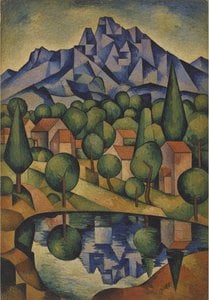
Huerto

Descubre el impresionante Huerto de Paul Cézanne, una obra maestra impresionista que captura la esencia de la naturaleza y la belleza del paisaje francés. Admira su estilo único y legado artístico.

Explora el arte revolucionario de Paul Cézanne (1839-1906), un maestro del Postimpresionismo que conectó el Impresionismo y el Cubismo. Descubre sus formas geométricas, pinceladas únicas, pinturas de bodegones e impacto duradero en el arte moderno. #Cézanne #PostImpres

Giclée / Impresión de arte

Impresiones giclée o en lienzo de calidad de museo con producción rápida y opciones de acabado flexibles. ( Encargar reproducción pintada a mano Ver versión en imagen digital)

Corner sample of the P118B picture frame: poliestireno moldeado, 5 cm wide and 3 cm thick
P118B €10
Corner sample of the P118H picture frame: poliestireno moldeado, 5 cm wide and 3 cm thick
P118H €10
Corner sample of the P118W picture frame: poliestireno moldeado, 5 cm wide and 3 cm thick
P118W €10
Corner sample of the P438Z picture frame: poliestireno moldeado, 5.5 cm wide and 3.5 cm thick
P438Z €10
Corner sample of the P508JH picture frame: poliestireno moldeado, 7 cm wide and 3.5 cm thick
P508JH €12
Corner sample of the P508YH picture frame: poliestireno moldeado, 7 cm wide and 3.5 cm thick
P508YH €12
Corner sample of the P805H picture frame: poliestireno moldeado, 5 cm wide and 3.5 cm thick
P805H €10
Corner sample of the P805Z picture frame: poliestireno moldeado, 5 cm wide and 3.5 cm thick
P805Z €10
Corner sample of the P919BZ picture frame: poliestireno moldeado, 7 cm wide and 3.5 cm thick
P919BZ €10
Corner sample of the P919G picture frame: poliestireno moldeado, 7 cm wide and 3.5 cm thick
P919G €10
Corner sample of the P919XJ picture frame: poliestireno moldeado, 7 cm wide and 3.5 cm thick
P919XJ €10
Corner sample of the P959ZH picture frame: poliestireno moldeado, 5 cm wide and 3 cm thick
P959ZH €10
Corner sample of the P968JZ picture frame: poliestireno moldeado, 6 cm wide and 4 cm thick
P968JZ €12
Corner sample of the W106C picture frame: madera maciza, 5 cm wide and 3 cm thick
W106C €8
Corner sample of the W218G picture frame: madera maciza, 5 cm wide and 3 cm thick
W218G €10
Corner sample of the W218JH picture frame: madera maciza, 5 cm wide and 3 cm thick
W218JH €8
Corner sample of the W218Y picture frame: madera maciza, 5 cm wide and 3 cm thick
W218Y €10
Corner sample of the W307PJ picture frame: madera maciza, 6 cm wide and 3 cm thick
W307PJ €10
Corner sample of the W316G picture frame: madera maciza, 6 cm wide and 3 cm thick
W316G €10
Corner sample of the W316PJ picture frame: madera maciza, 6 cm wide and 3 cm thick
W316PJ €8
Corner sample of the W316Y picture frame: madera maciza, 6 cm wide and 3 cm thick
W316Y €10
Corner sample of the W398PJ picture frame: madera maciza, 5 cm wide and 3 cm thick
W398PJ €8
Corner sample of the W4111J picture frame: madera maciza, 6.5 cm wide and 3.5 cm thick
W4111J €10
Corner sample of the W500HY picture frame: madera maciza, 7 cm wide and 5 cm thick
W500HY €15
Corner sample of the W500JH picture frame: madera maciza, 7 cm wide and 5 cm thick
W500JH €15
Corner sample of the W692G picture frame: madera maciza, 8 cm wide and 4 cm thick
W692G €12
Corner sample of the W849H picture frame: madera maciza, 5 cm wide and 3 cm thick
W849H €8
Corner sample of the W940BG picture frame: madera maciza, 7.5 cm wide and 4.5 cm thick
W940BG €15
Corner sample of the W953PJ picture frame: madera maciza, 6 cm wide and 3.5 cm thick
W953PJ €8

Estándar
personalizado
CM
INCH

Elija entre nuestros tamaños predefinidos que respetan las proporciones originales de la obra.

ancho
altura

Introduzca el ancho y el alto que necesite para adaptarse a su marco o pared. Una impresión solo puede recortarse, nunca hacerse más grande que la imagen original, por lo que un tamaño con una forma distinta perderá parte de la obra. Le enviaremos una maqueta digital para su aprobación antes de realizar cualquier impresión. La imagen que se muestra en esta página no refleja el recorte real; solo la maqueta lo hace.

Envío a todo el mundo () en 2 semanas en lugar de las 4/5 semanas estándar. (23 octubre)

Envío exprés gratuito a todo el mundo
Lienzo de lino de alta calidad
Seguro de envío completo
Garantía de reembolso de impuestos aduaneros
Garantía de fidelidad cromática exacta
Política de devolución de 100 días (solo por defectos)
Garantía de devolución del 100% del dinero
Oferta por volumen

Precio total

€ 60

Huerto

Giclée / Impresión de arte

Tamaño de la reproducción

-

Precio total

€ 60

Datos clave

  • Artist: Paul Cézanne
  • Subject or theme: Landscape
  • Influences: Camille Pissarro
  • Location: Honolulu Academy of Arts
  • Year: 1885

Cuestionario de arte

Cada pregunta tiene una única respuesta correcta.

Pregunta 1:
¿Quién pintó el cuadro "Orchard"?
Pregunta 2:
¿En qué año fue creado este cuadro?
Pregunta 3:
¿Dónde se encuentra actualmente el cuadro "Orchard"?
Pregunta 4:
¿Qué estilo artístico caracteriza la obra de Cézanne?
Pregunta 5:
¿Cuál es una característica importante del cuadro en términos de perspectiva y profundidad?

Paul Cézanne: A Pioneer of Modern Art

Paul Cézanne (1839 – 1906) stands as an undeniable cornerstone of artistic innovation, bridging the gap between Impressionism’s fleeting glimpses of light and color with the groundbreaking fragmentation that would herald the arrival of Cubism. His journey wasn't one of immediate acclaim; rather, it was a gradual unfolding of artistic exploration, punctuated by periods of self-doubt and critical dismissal—a path ultimately paved with recognition as a visionary who irrevocably transformed the landscape of modern art. Born in Aix-en-Provence to a family enjoying considerable financial stability – his father initially a hatmaker before transitioning into banking – Cézanne benefited from privileges uncommon for aspiring artists, affording him the freedom to dedicate himself wholly to his passion without the pressures of commercial considerations. Though initially steered toward legal studies by his father’s ambitions, the irresistible allure of artistic expression prevailed, prompting him to abandon law and embrace painting, a decision that would shape his entire career.

The Essence of Cézanne's Orchard

Cézanne’s “Orchard,” painted in 1885 using oil on canvas, exemplifies his singular artistic vision—a distillation of Impressionistic principles tempered by a profound engagement with Post-Impressionist concerns. The painting resides at the Honolulu Academy of Arts, showcasing Cézanne's masterful manipulation of perspective and color to convey not merely what he saw but how he *felt* about it. The scene depicts an orchard brimming with life—several trees dominate the canvas, positioned strategically to create a sense of depth and spatial illusion. Lush green foliage envelops the viewer’s gaze, evoking tranquility and celebrating the beauty inherent in nature. Two figures are subtly integrated into the landscape, adding human presence to this serene tableau – a deliberate choice reflecting Cézanne's fascination with capturing both visual reality and psychological experience.

Stylistic Innovation: Bridging Impressionism and Cubism

Cézanne’s stylistic approach distinguishes him from his contemporaries, marking him as a pivotal figure in the transition between Impressionism and Cubism. Like Monet and Renoir, Cézanne sought to capture the ephemeral qualities of light and atmosphere—yet he departed decisively from Impressionistic conventions by employing bold brushstrokes and applying color palettes that prioritized emotional resonance over strict optical accuracy. This technique foreshadowed the geometric fragmentation championed by Picasso and Braque, demonstrating Cézanne’s willingness to experiment with form and representation. His influence extended far beyond his immediate circle, inspiring generations of artists to reconsider the role of abstraction in conveying artistic ideas.

Symbolism and Emotional Impact

“Orchard” transcends mere visual depiction; it embodies a deeper symbolic significance rooted in Cézanne’s preoccupation with capturing the essence of existence itself. The repetition of forms—the trees, the figures—creates a rhythm that speaks to the cyclical nature of life and renewal. Cézanne's deliberate simplification of shapes – flattening planes of color and reducing contours – invites contemplation on how we perceive the world around us. More than just a beautiful landscape, “Orchard” is an invitation to engage with Cézanne’s profound understanding of human experience and his unwavering commitment to artistic innovation. It remains a testament to his enduring legacy as one of the most influential artists of the late nineteenth century.

Exploring Cézanne's Legacy

For those seeking inspiration or considering commissioning a high-quality reproduction, delve deeper into Cézanne’s oeuvre through WahooArt.com and explore the Honolulu Academy of Arts collection. Furthermore, consider visiting The Oskar Reinhart Collection Winterthur, Switzerland, to immerse yourself in a rich panorama of artworks from diverse eras—a journey that honors the enduring brilliance of Paul Cézanne and his transformative contribution to modern art history.

Preguntas y respuestas

¿Los colores de "Huerto" se ven intensos o suaves?

Los colores en "Huerto" de Paul Cézanne tienen una intensidad Equilibrado.

¿A qué etapa de la evolución de Paul Cézanne pertenece "Huerto"?

"Huerto" representa el Mature Period de Paul Cézanne.

¿A qué se debe la situación de los derechos de autor de "Huerto" de Paul Cézanne?

"Huerto" de Paul Cézanne es de en el dominio público: sus derechos de autor han expirado. Los términos de derechos de autor se calculan a partir del fallecimiento del artista, y Paul Cézanne murió en 1906.


Biografía del artista

vida temprana e influencias

paul cézanne, un pintor postimpresionista francés, nació el 19 de enero de 1839 en Aix-en-Provence, Francia. Su vida temprana estuvo marcada por una fuerte conexión con la empresa bancaria de su familia, lo que le proporcionó seguridad financiera. Esto le permitió concentrarse en sus aspiraciones artísticas sin la carga del estrés financiero. les nabis, neoimpresionismo y simbolismo influyeron en el trabajo temprano de Cézanne, que se caracterizó por su énfasis en las formas geométricas y una paleta de colores limitada. Su interés en las obras de paul gauguin y georges seurat fortaleció aún más su estilo postimpresionista.

estilo artístico y técnicas

El uso innovador de Cézanne de los planos de color y pequeños trazos repetitivos creó campos complejos que transmitían su intenso estudio de los temas. Su enfoque a menudo exploratorio del arte condujo al desarrollo de un nuevo lenguaje pictórico, que enfatizaba la estructura subyacente de los objetos en una composición.

legado e impacto

El trabajo pionero de Cézanne en el postimpresionismo allanó el camino para diversos movimientos vanguardistas, incluyendo cubismo, fauvismo y surrealismo. Su influencia se puede ver en las obras de pablo picasso, henri matisse y georges braque. El legado de Cézanne continúa inspirando a artistas y entusiastas del arte por igual, consolidando su lugar como una figura fundamental en la historia del arte moderno.
Paul Cézanne

Paul Cézanne

1839 - 1906 , Francia

Datos clave

  • Artistas Que Influyeron:
    • Paul Gauguin
    • Georges Seurat
  • Estilo Artístico: Postimpresionismo
  • Fecha De Muerte: Octubre 22, 1906
  • Fecha De Nacimiento: 19 de enero de 1839
  • Influenciado A Artistas:
    • Pablo Picasso
    • Henri Matisse
    • Georges Braque
  • Lugar De Nacimiento: Aix-en-Provence, Francia
  • Nacionalidad: Francés
  • Nombre Completo: Paul Cézanne
  • Obras Notables:
    • El estanque de Jas de Bouffan
    • Retrato de Émile Zola
    • Bosque
    • Grandes Bañistas
Explore obras de arte organizadas por temas, estilos y características.