Ver en contexto Vista previa en RA Cambiar a impresiones Cambiar a imagen digital Enviar
Detalles Guía Añadir a favoritos Descargar Similares Radiografía Presentación de diapositivas Estadísticas

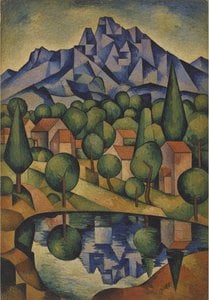
El Jardín

"El Jardín" de Paul Cézanne: Una obra maestra impresionista que captura la esencia del paisaje francés con pinceladas audaces y colores vibrantes, reflejo de una nueva visión artística."

Explora el arte revolucionario de Paul Cézanne (1839-1906), un maestro del Postimpresionismo que conectó el Impresionismo y el Cubismo. Descubre sus formas geométricas, pinceladas únicas, pinturas de bodegones e impacto duradero en el arte moderno. #Cézanne #PostImpres

Reproducción al óleo hecha a mano

Óleo sobre lienzo pintado a mano en el tamaño y marco de su elección, realizado por encargo por nuestros artistas. ( Cambiar a impresiones Cambiar a imagen digital)

Corner sample of the P118B picture frame: poliestireno moldeado, 5 cm wide and 3 cm thick
P118B €10
Corner sample of the P118H picture frame: poliestireno moldeado, 5 cm wide and 3 cm thick
P118H €10
Corner sample of the P118W picture frame: poliestireno moldeado, 5 cm wide and 3 cm thick
P118W €10
Corner sample of the P438Z picture frame: poliestireno moldeado, 5.5 cm wide and 3.5 cm thick
P438Z €10
Corner sample of the P508JH picture frame: poliestireno moldeado, 7 cm wide and 3.5 cm thick
P508JH €12
Corner sample of the P508YH picture frame: poliestireno moldeado, 7 cm wide and 3.5 cm thick
P508YH €12
Corner sample of the P805H picture frame: poliestireno moldeado, 5 cm wide and 3.5 cm thick
P805H €10
Corner sample of the P805Z picture frame: poliestireno moldeado, 5 cm wide and 3.5 cm thick
P805Z €10
Corner sample of the P919BZ picture frame: poliestireno moldeado, 7 cm wide and 3.5 cm thick
P919BZ €10
Corner sample of the P919G picture frame: poliestireno moldeado, 7 cm wide and 3.5 cm thick
P919G €10
Corner sample of the P919XJ picture frame: poliestireno moldeado, 7 cm wide and 3.5 cm thick
P919XJ €10
Corner sample of the P959ZH picture frame: poliestireno moldeado, 5 cm wide and 3 cm thick
P959ZH €10
Corner sample of the P968JZ picture frame: poliestireno moldeado, 6 cm wide and 4 cm thick
P968JZ €12
Corner sample of the W106C picture frame: madera maciza, 5 cm wide and 3 cm thick
W106C €8
Corner sample of the W218G picture frame: madera maciza, 5 cm wide and 3 cm thick
W218G €10
Corner sample of the W218JH picture frame: madera maciza, 5 cm wide and 3 cm thick
W218JH €8
Corner sample of the W218Y picture frame: madera maciza, 5 cm wide and 3 cm thick
W218Y €10
Corner sample of the W307PJ picture frame: madera maciza, 6 cm wide and 3 cm thick
W307PJ €10
Corner sample of the W316G picture frame: madera maciza, 6 cm wide and 3 cm thick
W316G €10
Corner sample of the W316PJ picture frame: madera maciza, 6 cm wide and 3 cm thick
W316PJ €8
Corner sample of the W316Y picture frame: madera maciza, 6 cm wide and 3 cm thick
W316Y €10
Corner sample of the W398PJ picture frame: madera maciza, 5 cm wide and 3 cm thick
W398PJ €8
Corner sample of the W4111J picture frame: madera maciza, 6.5 cm wide and 3.5 cm thick
W4111J €10
Corner sample of the W500HY picture frame: madera maciza, 7 cm wide and 5 cm thick
W500HY €15
Corner sample of the W500JH picture frame: madera maciza, 7 cm wide and 5 cm thick
W500JH €15
Corner sample of the W692G picture frame: madera maciza, 8 cm wide and 4 cm thick
W692G €12
Corner sample of the W849H picture frame: madera maciza, 5 cm wide and 3 cm thick
W849H €8
Corner sample of the W940BG picture frame: madera maciza, 7.5 cm wide and 4.5 cm thick
W940BG €15
Corner sample of the W953PJ picture frame: madera maciza, 6 cm wide and 3.5 cm thick
W953PJ €8

Tamaño estándar
a medida
CM
INCH

Elija entre nuestros tamaños predefinidos que respetan las proporciones originales de la obra.

ancho
altura

Indique el ancho y el alto que necesite para adaptarse a su marco o pared. Al tratarse de una obra pintada a mano, si requiere un tamaño con una proporción distinta, el artista puede pintar un poco más alrededor de la imagen o recortarla ligeramente; usted elige. Le enviaremos una maqueta digital para su aprobación antes de comenzar la pintura. La imagen que se muestra en esta página no refleja el resultado real; solo la maqueta lo hace.

Ejemplos de lo que se puede personalizar: Reemplace el rostro con una foto del cliente; Agregue una mascota (por ejemplo, cambie un gato por un perro); Incluya un mensaje oculto en el fondo; Cambie el paisaje o los elementos del fondo.
Tras realizar el pedido, el equipo de WahooArt.com enviará un correo electrónico al cliente para solicitar instrucciones y proporcionarle una vista previa del boceto.

Envío a todo el mundo () en 3-4 semanas en lugar de las 5 semanas estándar. (27 octubre). Sin comprometer la calidad.

Envío exprés gratuito a todo el mundo
Lienzo de lino de alta calidad
Seguro de envío total
Garantía de reembolso de aranceles aduaneros
Garantía de fidelidad cromática exacta
Política de devolución de 100 días (solo por defectos)
Garantía de devolución del 100% del dinero
Descuento por cantidad

Precio total

€ 239

El Jardín

Técnica de reproducción

Dimensiones de la reproducción

-

Precio total final

€ 239

Datos clave

  • Artistic style: Género paisajístico con figuras geométricas.
  • Notable elements or techniques: Aplicación de pinceladas expresivas y colores vibrantes.
  • Subject or theme: Paisaje urbano con árboles frutales.
  • Movement: Postimpresionismo
  • Year: 1877
  • Dimensions: Desconocidas

Test de conocimientos artísticos

Cada pregunta tiene una única respuesta correcta.

Pregunta 1:
¿Cuál es el movimiento artístico al que pertenece Cézanne?
Pregunta 2:
¿En qué año fue pintada "La Orchard"?
Pregunta 3:
¿Qué característica principal distingue el estilo de Cézanne del impresionismo tradicional?
Pregunta 4:
¿Dónde se encuentra una representación famosa de Cézanne?
Pregunta 5:
¿Qué artista influyó en el estilo de Cézanne?

The Orchard: A Vision of Geometric Harmony

Paul Cézanne’s The Orchard (c. 1877) stands as a cornerstone of Post-Impressionism, marking a decisive break from the fleeting impressions of light and color championed by Impressionists like Monet and Renoir. Instead of capturing momentary sensations, Cézanne sought to distill the essence of nature into fundamental geometric forms—a radical departure that profoundly influenced subsequent artistic movements, notably Cubism. This oil on canvas masterpiece resides in the Musée d’Orsay, Paris, offering visitors a glimpse into Cézanne's groundbreaking approach to landscape painting and his unwavering dedication to exploring the underlying structure of visual experience.

Cézanne’s fascination with mathematics stemmed from his lifelong study of Apollonian geometry—a belief that he considered “the most beautiful form.” He meticulously analyzed the shapes of trees, rocks, and buildings, reducing them to cylinders, cones, and cubes – elements that would become central to his artistic vocabulary. This obsession isn't merely intellectual curiosity; it’s a deliberate effort to transcend illusion and represent reality with unwavering precision.

Analysis of Post-Impressionism Style

While Cézanne undeniably drew inspiration from Impressionist techniques—particularly the use of vibrant color palettes—he fundamentally rejected their preoccupation with optical effects. Unlike Impressionists who aimed to reproduce what the eye perceives, Cézanne prioritized conveying what he *knows* about his subject matter. This distinction is evident in the painting’s bold brushstrokes and deliberate flattening of perspective. The artist eschewed traditional aerial perspective, opting instead for a technique that emphasizes solidity and volume—a characteristic hallmark of Post-Impressionism.

  • Color Palette: Cézanne employed a muted palette dominated by greens, browns, and ochres, reflecting the subdued hues of the forest environment. However, he juxtaposed these earthy tones with splashes of brighter colors – primarily yellows and reds – to create visual interest and subtly suggest underlying emotional resonance.
  • Brushstrokes: Cézanne’s brushwork is characterized by thick, impasto strokes that build up layers of pigment on the canvas surface. These textured marks aren't merely decorative; they actively contribute to the painting’s sculptural quality, conveying a sense of physicality and immediacy.
  • Composition: The arrangement of elements within “The Orchard” adheres to Cézanne’s geometric principles—particularly the use of interlocking planes that create a dynamic interplay between foreground and background. This compositional strategy reinforces the painting's underlying structure and invites contemplation about its spatial relationships.

Elements of the Painting

The scene depicts an orchard bathed in dappled sunlight, dominated by mature trees with gnarled trunks and branches—a motif that Cézanne revisited repeatedly throughout his career. The inclusion of a humble house nestled amongst the foliage serves as a grounding element, providing scale and context to the expansive landscape. Cézanne’s meticulous observation of natural forms is palpable in every detail – from the contours of the tree bark to the subtle variations in color across the grass blades.

  • Trees: The trees are rendered with simplified geometric shapes—primarily cylinders and cones—that capture their essential form while simultaneously conveying a sense of movement and dynamism.
  • Grass: Cézanne’s depiction of grass utilizes horizontal brushstrokes to create a textured surface that mimics the undulating contours of the meadow.
  • House: The house is positioned strategically within the composition, anchoring the scene and emphasizing its relationship to the surrounding trees.

Symbolism and Emotional Impact

Beyond its formal innovations, “The Orchard” possesses a profound symbolic significance—reflecting Cézanne’s preoccupation with themes of permanence and transformation. The artist sought to capture not merely what he saw but also what he felt—a desire to express the underlying spiritual essence of nature. Cézanne's work invites viewers to engage in a meditative contemplation about the beauty and complexity of the natural world, prompting us to consider how art can transcend mere representation and communicate deeper truths.

Handmade oil painting reproductions of The Orchard and other masterpieces by Cézanne are available at https://WahooArt.com.

Preguntas y respuestas

¿De qué manera "El Jardín" de Paul Cézanne vincula el Post-Impressionism con el país de origen del artista?

La obra de Post-Impressionism "El Jardín" fue realizada por un artista nacido en Francia.

¿Los colores de "El Jardín" son intensos o suaves?

La intensidad cromática de "El Jardín" es Equilibrado. La intensidad describe la fuerza con la que se perciben los colores.

¿Dónde puedo ver una vista previa de "El Jardín"?

Puedes ver una vista previa de "El Jardín" de Paul Cézanne en la página de Vista previa de la obra de la obra.


Biografía del artista

vida temprana e influencias

paul cézanne, un pintor postimpresionista francés, nació el 19 de enero de 1839 en Aix-en-Provence, Francia. Su vida temprana estuvo marcada por una fuerte conexión con la empresa bancaria de su familia, lo que le proporcionó seguridad financiera. Esto le permitió concentrarse en sus aspiraciones artísticas sin la carga del estrés financiero. les nabis, neoimpresionismo y simbolismo influyeron en el trabajo temprano de Cézanne, que se caracterizó por su énfasis en las formas geométricas y una paleta de colores limitada. Su interés en las obras de paul gauguin y georges seurat fortaleció aún más su estilo postimpresionista.

estilo artístico y técnicas

El uso innovador de Cézanne de los planos de color y pequeños trazos repetitivos creó campos complejos que transmitían su intenso estudio de los temas. Su enfoque a menudo exploratorio del arte condujo al desarrollo de un nuevo lenguaje pictórico, que enfatizaba la estructura subyacente de los objetos en una composición.

legado e impacto

El trabajo pionero de Cézanne en el postimpresionismo allanó el camino para diversos movimientos vanguardistas, incluyendo cubismo, fauvismo y surrealismo. Su influencia se puede ver en las obras de pablo picasso, henri matisse y georges braque. El legado de Cézanne continúa inspirando a artistas y entusiastas del arte por igual, consolidando su lugar como una figura fundamental en la historia del arte moderno.
Paul Cézanne

Paul Cézanne

1839 - 1906 , Francia

Datos clave

  • Artistas Que Influyeron:
    • Paul Gauguin
    • Georges Seurat
  • Estilo Artístico: Postimpresionismo
  • Fecha De Muerte: Octubre 22, 1906
  • Fecha De Nacimiento: 19 de enero de 1839
  • Influenciado A Artistas:
    • Pablo Picasso
    • Henri Matisse
    • Georges Braque
  • Lugar De Nacimiento: Aix-en-Provence, Francia
  • Nacionalidad: Francés
  • Nombre Completo: Paul Cézanne
  • Obras Notables:
    • El estanque de Jas de Bouffan
    • Retrato de Émile Zola
    • Bosque
    • Grandes Bañistas
Explore obras de arte organizadas por temas, estilos y características.