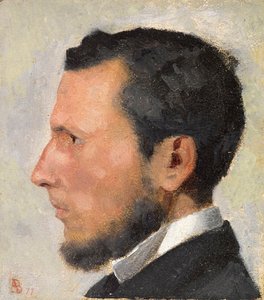
Asesoría de arte gratuita

x
Encargar reproducción Encargar reproducciónComprar imagen en alta resolución Comprar imagen en alta resolución EnviarEnviar
DetallesDetalles Añadir a favoritos Añadir a favoritos DescargarDescargar SimilaresSimilares Rayos XRayos X Presentación de diapositivasPresentación de diapositivas

Morphine Addicts

The artwork is a monochrome etching depicting two women in what appears to be a somber or distressed state. The composition focuses on their faces and upper bodies, set against a backdrop of laboratory equipment suggesting a medical or scientific context. The image evokes a sense of melancholy and introspection.

Paul Albert Besnard fue pintor impresionista francés conocido por sus frescos monumentales, retratos expresivos y una profunda exploración de la belleza femenina. Influenciado por Gainsborough, su obra maestra captura la luz y el espíritu artístico del siglo XIX.

Giclée / Impresión de arte

Impresión giclée o en lienzo de calidad de museo con producción rápida y opciones de acabado flexibles.

P118B $10
P118H $10
P118W $10
P438Z $10
P508JH $12
P508YH $12
P805H $10
P805Z $10
P919BZ $10
P919G $10
P919XJ $10
P959ZH $10
P968JZ $12
W106C $8
W218G $10
W218JH $8
W218Y $10
W307PJ $10
W316G $10
W316PJ $8
W316Y $10
W398PJ $8
W4111J $10
W500HY $15
W500JH $15
W692G $12
W849H $8
W940BG $15
W953PJ $8

Standard
custom
CM
INCH

Elija entre nuestros tamaños predefinidos que respetan las proporciones originales de la obra.

ancho
altura

Puede introducir sus propias dimensiones para adaptarse a un marco o espacio específico. Si el tamaño seleccionado no coincide con las proporciones de la imagen original, recortaremos la obra de arte o extenderemos la imagen con un borde con efecto espejo o de color sólido. Se enviará una maqueta digital para su aprobación antes de que comience la producción.
Tenga en cuenta que la vista previa en pantalla no refleja el recorte o la extensión real. Solo la maqueta mostrará con precisión la composición final.
Aunque existen tamaños personalizados, recomendamos seleccionar una dimensión de la lista predefinida para preservar las proporciones originales.

Entrega mundial () en 2 semanas en lugar de las 4/5 semanas estándar. (3 julio)

why_choose_icon
Envío exprés gratuito a todo el mundo
why_choose_icon
Lienzo de lino de alta calidad
why_choose_icon
Seguro de envío total
why_choose_icon
Garantía de reembolso de impuestos aduaneros
why_choose_icon
Garantía de fidelidad de color
why_choose_icon
Política de devolución de 60 días (solo por defectos)
why_choose_icon
Garantía de devolución del 100% del dinero
why_choose_icon
Descuento por pedido múltiple

Precio total

-

reproduction

Morphine Addicts

Giclée / Impresión de arte

Tamaño de la reproducción

-

Precio total final

-

Datos clave

  • Movement: Impressionism
  • Artistic style: Realism
  • Artist: Paul Albert Besnard
  • Title: Morphine Addicts
  • Year: 1887
  • Influences: Alexandre Cabanel
  • Dimensions: 23.7 × 37 cm

Test de arte

Solo hay una respuesta correcta para cada pregunta.

Pregunta 1:
What artistic movement is Paul Albert Besnard’s ‘Morphine Addicts’ primarily associated with?
Pregunta 2:
The etching technique employed by Besnard utilizes which prominent artistic method to build up tonal variations and create texture?
Pregunta 3:
What is the predominant color palette used in ‘Morphine Addicts’?
Pregunta 4:
Besnard’s depiction of the women's faces emphasizes which aspect of his artistic style?
Pregunta 5:
The composition of ‘Morphine Addicts’ features a tightly framed view, creating what kind of visual effect?

Descripción de la obra

Paul Albert Besnard - Morphine Addicts

Paul Albert Besnard (1849-1934) stands as a singular figure in French art of the late nineteenth and early twentieth centuries—a painter who stubbornly resisted categorization while simultaneously achieving remarkable success across diverse artistic mediums. Born in Paris, he possessed an innate talent nurtured by formal training at the École des Beaux-Arts under Jean Bremond and profoundly shaped by the pioneering spirit of Alexandre Cabanel, whose meticulous realism served as a cornerstone for Besnard’s initial artistic explorations. His academic grounding provided a disciplined foundation upon which he would later forge his own distinctive path, one characterized by an unwavering fascination with color and light—concepts championed by the Impressionists. Despite eschewing the overtly dramatic aesthetic favored by his contemporaries, Besnard skillfully adapted Impressionistic techniques to monumental decorative pro Besnard’s oeuvre is marked by a profound sensitivity to human emotion and psychological nuance, particularly evident in his portraits of women – figures rendered with exquisite detail and imbued with an aura of melancholy. “Morphine Addicts,” completed in 1887, exemplifies this artistic approach, presenting two women presented in a starkly lit laboratory setting—a juxtaposition that immediately invites contemplation on themes of illness, addiction, and the complexities of human experience. The artist’s masterful command of etching technique contributes significantly to the artwork's expressive power, capturing subtle tonal variations and textural nuances with remarkable precision. The composition itself is deliberately restrained, focusing intently on the faces and upper bodies of the subjects—a stylistic choice that underscores Besnard’s commitment to realism while simultaneously conveying a sense of intimacy. The figures are positioned slightly off-center, creating visual balance and drawing the viewer's gaze towards their expressive eyes. A table laden with scientific glassware serves as a grounding element, anchoring the scene within its clinical context and subtly hinting at the underlying narrative. Besnard’s meticulous hatching and crosshatching techniques—inherited from Cabanel’s influence—are employed to build up areas of shadow, enhancing depth and creating an atmosphere of quiet contemplation. Color plays a crucial role in conveying emotion, though Besnard eschews vibrant hues characteristic of Impressionism, opting instead for a monochrome palette dominated by shades of grey and white. This tonal scheme amplifies the artwork’s melancholic mood, emphasizing the vulnerability of the subjects and fostering a connection with the viewer on an emotional level. The artist skillfully utilizes light and shadow to sculpt the forms of the women's faces, highlighting their expressions and conveying subtle nuances of emotion—a testament to Besnard’s artistic prowess. Ultimately, “Morphine Addicts” transcends mere visual representation; it functions as a poignant meditation on human suffering and resilience. Besnard’s stylistic blend of academic realism with Impressionistic sensibilities captures the essence of his era—a period marked by intellectual curiosity and an exploration of psychological states. The artwork's enduring appeal lies in its ability to provoke reflection on themes of addiction, vulnerability, and the profound beauty found within moments of quiet introspection. It remains a compelling example of Besnard’s artistic vision and a testament to the power of art to communicate complex emotions with grace and subtlety.

Biografía del artista

Paul Albert Besnard: Bridging Impressionism and Decorative Grandeur

Paul Albert Besnard (1849-1934) stands as a singular figure in French art of the late nineteenth and early twentieth centuries—a painter who stubbornly resisted categorization while simultaneously achieving remarkable success across diverse artistic mediums. Born in Paris, he possessed an innate talent nurtured by formal training at the École des Beaux-Arts under Jean Bremond and profoundly shaped by the pioneering spirit of Alexandre Cabanel, whose meticulous realism served as a cornerstone for Besnard’s initial artistic explorations. His academic grounding provided a disciplined foundation upon which he would later forge his own distinctive path, one characterized by an unwavering fascination with color and light—concepts championed by the Impressionists. Despite eschewing the overtly dramatic aesthetic favored by his contemporaries, Besnard skillfully adapted Impressionistic techniques to monumental decorative projects. This decision cemented his reputation as a master craftsman and visionary artist. His frescoes adorning prestigious locations like the Sorbonne, École de Pharmacie, Comédie Française’s Salle des Sciences, Hôtel de Ville, and Berck Hospital's chapel exemplify this ambition—each station of the cross meticulously rendered in an entirely modern idiom that departed dramatically from traditional religious iconography. These ambitious undertakings underscore Besnard’s belief that art could serve as a vehicle for conveying profound ideas while simultaneously captivating the senses. Besnard’s artistic journey wasn’t solely defined by grand commissions; he cultivated a prodigious talent across watercolor, pastel, oil, and etching. His portraits captivated audiences with their psychological depth and expressive subtlety—particularly his depiction of Madame Georges Rodenbach, a daring exploration of unconventional beauty and stylistic innovation. Similarly, “The King and Queen of Belgium” showcased Besnard’s ability to capture regal dignity alongside nuanced emotional resonance. Influenced by Gainsborough and Reynolds during his formative years in England, he honed his observational skills and incorporated elements of landscape painting into his oeuvre. Furthermore, Besnard's meticulous study of light—evident in works like “La Femme qui se chauffe” at the Luxembourg Museum—demonstrated a commitment to scientific rigor alongside artistic intuition. His exploration of India in 1911 yielded striking nude studies that captured the ethereal beauty of the subcontinent and solidified his reputation as one of France’s foremost artists. He bravely confronted the looming shadow of impending war with “Peace by Arbitration,” completing it just days before hostilities erupted, reflecting a humanist sensibility deeply rooted in the artistic traditions of his time. Besnard's legacy extends beyond individual masterpieces; he established himself as a pivotal figure in shaping the visual culture of the Belle Époque and beyond. His unwavering dedication to mastering technique combined with an imaginative spirit ensured that his work continues to inspire admiration and scholarly inquiry—a testament to his enduring contribution to French art history.
Paul Albert Besnard

Paul Albert Besnard

1849 - 1934 , Francia

Datos clave

  • Artistic Movement Or Style: Impresionismo
  • Artists Who Influenced This Artist:
    • Alexandre Cabanel
    • Thomas Gainsborough
  • Date Of Birth: Paris, Francia (1849)
  • Date Of Death: 1934
  • Full Name: Paul Albert Besnard
  • Nationality: Francés
  • Notable Artworks:
    • La Femme qui se chauffe
    • Death of Timophanes
    • Portrait de Madame Georges Rodenbach
  • Place Of Birth: París