Asesoría de arte gratuita

x
Encargar reproducción Encargar reproducciónComprar imagen en alta resolución Comprar imagen en alta resolución EnviarEnviar
DetallesDetalles Añadir a favoritos Añadir a favoritos DescargarDescargar SimilaresSimilares RadiografíaRadiografía Presentación de diapositivasPresentación de diapositivas

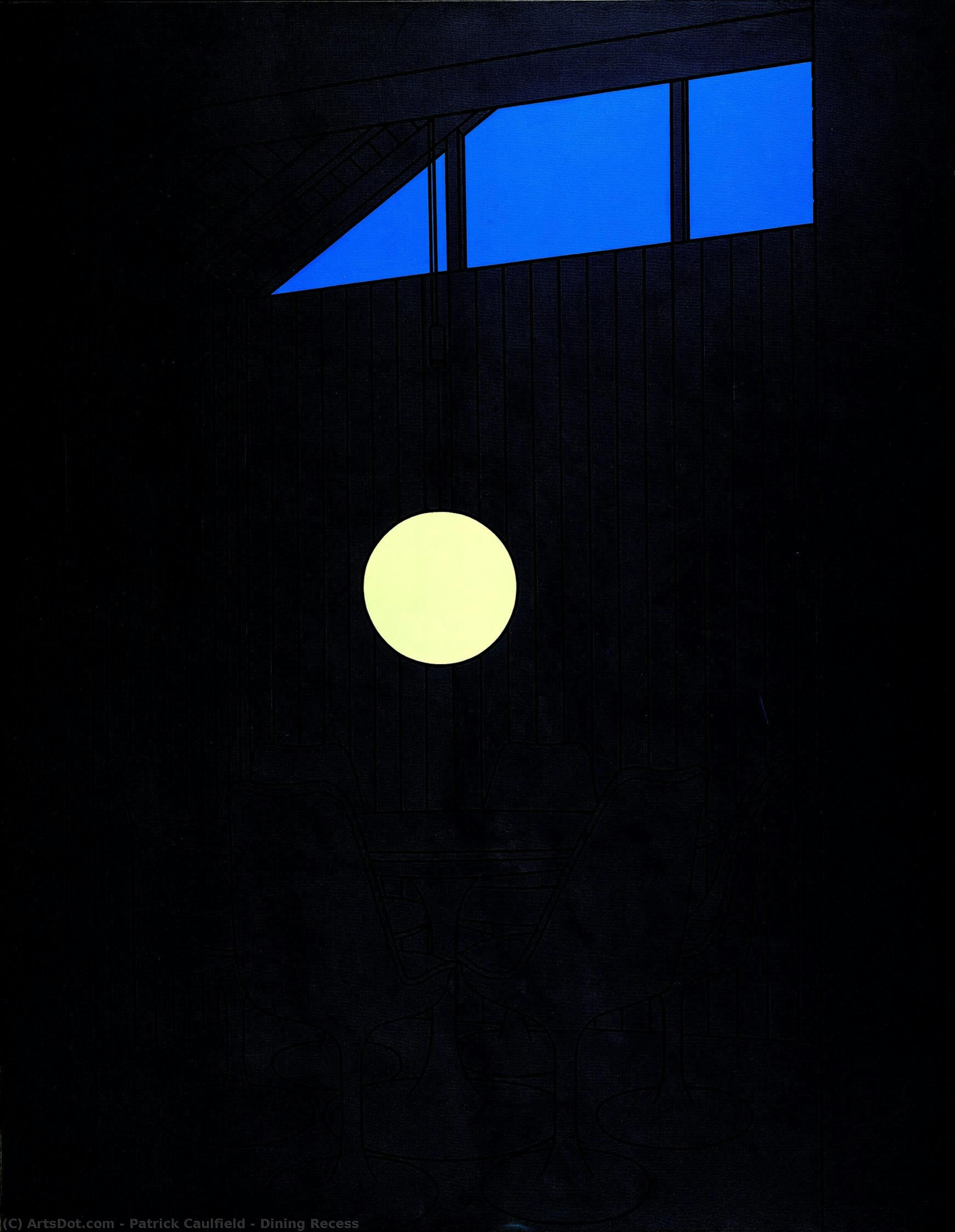
Dining Recess

Patrick Caulfield’s ‘Dining Recess,’ a stark black-and-white masterpiece from 1972, presents an eerie, minimalist dining scene with a dominant globe lamp and molded tulip chairs, capturing the loneliness of observation within British Pop Art.

Descubre el icónico cuadro 'Crucifijo' de Patrick Caulfield – una obra maestra minimalista y audaz. Explora esta pieza única del Pop Art y su importancia histórica. #PatrickCaulfield #PopArt

Giclée / Impresión de arte

Impresión giclée o en lienzo de calidad de museo con producción rápida y opciones de acabado flexibles.

P118B $10
P118H $10
P118W $10
P438Z $10
P508JH $12
P508YH $12
P805H $10
P805Z $10
P919BZ $10
P919G $10
P919XJ $10
P959ZH $10
P968JZ $12
W106C $8
W218G $10
W218JH $8
W218Y $10
W307PJ $10
W316G $10
W316PJ $8
W316Y $10
W398PJ $8
W4111J $10
W500HY $15
W500JH $15
W692G $12
W849H $8
W940BG $15
W953PJ $8

Standard
custom
CM
INCH

Elija entre nuestros tamaños predefinidos que respetan las proporciones originales de la obra.

ancho
altura

Puede introducir sus propias dimensiones para adaptarse a un marco o espacio específico. Si el tamaño seleccionado no coincide con las proporciones de la imagen original, recortaremos la obra de arte o extenderemos la imagen con un borde con efecto espejo o de color sólido. Se enviará una maqueta digital para su aprobación antes de que comience la producción.
Tenga en cuenta que la vista previa en pantalla no refleja el recorte o la extensión real. Solo la maqueta mostrará con precisión la composición final.
Aunque existen tamaños personalizados, recomendamos seleccionar una dimensión de la lista predefinida para preservar las proporciones originales.

Entrega mundial () en 2 semanas en lugar de las 4/5 semanas estándar. (4 julio)

why_choose_icon
Envío exprés gratuito a todo el mundo
why_choose_icon
Lienzo de lino de alta calidad
why_choose_icon
Seguro de envío total
why_choose_icon
Garantía de reembolso de impuestos aduaneros
why_choose_icon
Garantía de fidelidad de color
why_choose_icon
Política de devolución de 60 días (solo por defectos)
why_choose_icon
Garantía de devolución del 100% del dinero
why_choose_icon
Descuento por pedido múltiple

Precio total

-

reproduction

Dining Recess

Giclée / Impresión de arte

Tamaño de la reproducción

-

Precio total final

-

Datos clave

  • Medium: Painting
  • Title: Dining Recess
  • Influences:
    • Magritte
    • Duchamp
  • Subject or theme: Dining, Loneliness
  • Artist: Patrick Caulfield
  • Notable elements: Circular lamp, tulip chairs
  • Year: 1972

Descripción de la obra

Patrick Caulfield’s ‘Dining Recess’: A Study in Isolation and Design

Patrick Caulfield's “Dining Recess,” completed in 1972, is more than just a depiction of a dining room; it’s a meticulously crafted meditation on loneliness, observation, and the subtle power of design. Measuring an imposing 274 x 213 cm, this large-scale work immediately commands attention with its stark simplicity – a brilliant white globe lamp dominating the center, juxtaposed against the muted grey tones of the interior space. This deliberate contrast isn’t merely aesthetic; it actively heightens the sense of mystery and unease that permeates the entire composition.

  • The Iconography of Absence: Caulfield famously stated his intention to present “something that’s either happened or is about to happen,” creating a palpable feeling of anticipation and, crucially, isolation. The absence of human figures amplifies this effect, forcing the viewer into an uncomfortable role as detached observer.
  • A Dialogue with Design History: The inclusion of Eero Saarinen's iconic ‘tulip’ chairs – frequently featured in design books of the era – isn’t accidental. Caulfield was deeply interested in the social implications of interior design, using these familiar objects to ground the scene in a specific historical context while simultaneously questioning their function and purpose within this unsettling tableau.
  • Technique and Impact: Caulfield's signature style—characterized by flat areas of color and bold black outlines—is employed with masterful precision here. The meticulous rendering of the lamp, the chairs, and even the wall texture creates a deceptively realistic effect, further emphasizing the strangeness of the scene.

Exploring the Roots of Minimalism

Caulfield’s artistic journey was profoundly shaped by his early exposure to Surrealism and Dada movements, particularly the work of René Magritte and Marcel Duchamp. This influence is evident in “Dining Recess” through its conceptual approach – a deliberate rejection of traditional representational art in favor of exploring ideas and emotions through simplified forms and carefully considered compositions. The minimalist aesthetic, so central to Caulfield’s work, was a direct response to the burgeoning Pop Art movement of the 1960s, which sought to challenge established artistic conventions by embracing popular culture imagery.

Symbolism and Emotional Resonance

The dominant image of the lamp within “Dining Recess” is particularly evocative. It functions as a visual metaphor for illumination – both literal and metaphorical – yet its inability to dispel the gloom of the room suggests a deeper, perhaps unresolvable, sense of darkness. The empty dining table itself becomes a symbol of missed connections, lost opportunities, or simply the quiet contemplation of solitude. The clock on the wall adds another layer of complexity, hinting at the passage of time and the inevitability of change – themes frequently explored in Caulfield’s work.

Historical Context and Significance

Created in 1972, “Dining Recess” reflects a pivotal moment in British art history. Caulfield was part of a generation of artists who were pushing the boundaries of traditional painting while simultaneously engaging with the social and cultural shifts of the time. His work is now recognized as a key example of minimalist Pop Art, demonstrating a unique ability to combine conceptual rigor with striking visual impact. This piece represents a significant contribution to Caulfield’s oeuvre and offers a compelling insight into his artistic vision.


Biografía del artista

Patrick Caulfield: The Minimalist Maestro of Bold Color

Patrick Joseph Caulfield (1936-2005) stands as a pivotal figure in British Pop Art, recognized for his distinctive aesthetic – deceptively simple compositions dominated by flat areas of color and punctuated by stark black outlines. Born in Acton, London, Caulfield’s artistic journey began with an early fascination for graphic design and sculpture, shaping the trajectory of his groundbreaking visual language. He honed his skills at Chelsea School of Art before graduating from Wimbledon College of Arts in 1960, establishing himself as a freelance illustrator and designer. Early Influences: Caulfield’s formative years were profoundly impacted by exposure to Surrealism and Dada movements, particularly the work of René Magritte and Marcel Duchamp. These artists instilled in him a rebellious spirit and an unwavering appreciation for conceptual art—a desire to challenge conventions and explore ideas beyond mere representation. The deliberate ambiguity inherent in Magritte's imagery and Duchamp’s ready-made sculptures served as crucial catalysts for Caulfield’s artistic sensibility, fostering his conviction that art could communicate powerfully through understated forms. The Rise of Pop Art: Embracing the burgeoning Pop Art movement in the mid-1960s, Caulfield swiftly adopted its core principles – referencing popular culture and utilizing bold visual elements to convey meaning. This stylistic decision wasn’t merely a reaction to prevailing artistic trends; it represented a deliberate rejection of academic formalism and an embrace of accessibility. His iconic ‘Cross’ painting exemplifies this approach, distilling complex theological concepts into a minimalist graphic form—a testament to Caulfield's belief that “the simplest thing is often the most powerful.” The stark black outline against vibrant color became his signature technique, instantly recognizable and emblematic of the movement’s ethos. Signature Style: Caulfield’s artistic style quickly solidified into a distinctive visual language characterized by geometric shapes rendered in flat hues against black backgrounds. This method prioritized clarity of form and color over meticulous detail—a conscious decision that reflected his philosophical stance on art's communicative potential. He famously declared, “I don’t want to make things look complicated,” encapsulating the essence of his artistic vision. The deliberate reduction of visual elements underscored Caulfield’s conviction that impactful imagery could emerge from simplicity itself. Notable Works & Achievements Caulfield’s oeuvre extended far beyond painting, demonstrating his versatility as an artist and designer. He undertook significant commissions for architectural spaces—creating stained glass windows for Ivy Restaurant and carpets for British Council headquarters—transforming functional environments into aesthetically stimulating experiences. Furthermore, he collaborated on set designs for theatrical productions like ‘Party Game’ and ‘Rhapsody’ at the Royal Opera House, cementing his reputation as a multidisciplinary creative force. His involvement in the 2004 Saatchi Collection fire tragically resulted in the loss of numerous artworks—a poignant reminder of the fragility inherent in artistic legacies. Despite this setback, Caulfield's enduring influence continues to resonate within the art world, securing his place among Britain’s most celebrated artists. He was awarded Commander of the Order of the British Empire (CBE) by Queen Elizabeth II in 1996 recognizing his distinguished service to the arts and culture. His work is held in prominent collections worldwide including Saatchi & Bowie's.
  • Turner Prize Nomination (1987): Caulfield’s exhibition ‘The Artist’s Eye’ at the National Gallery garnered significant acclaim and earned him a nomination for the prestigious Turner Prize—a recognition of his contribution to contemporary art discourse and aesthetic innovation.
  • Yale Center Exhibition (2010): His inclusion in ‘The Independent Eye’ exhibition at Yale Center for British Art alongside fellow artists Howard Hodgkin, John Walker, Ian Stephenson, John Hoyland, and R.B. Kitaj underscored Caulfield's enduring relevance within the broader context of British art history—a testament to his pioneering approach to abstraction and figurative representation.
Caulfield’s legacy resides not merely in his artistic output but also in his profound impact on subsequent generations of designers and artists who embraced his minimalist aesthetic—a style characterized by simplicity, boldness, and unwavering conviction that “the simplest thing is often the most powerful.” His work continues to inspire contemplation and dialogue about art's role in conveying meaning and shaping perceptions.
Patrick Caulfield

Patrick Caulfield

1936 - 2005 , Reino Unido

Datos clave

  • Artistic Movement Or Style: Pop Art
  • Artists Or Movements Influenced By This Artist: ['Minimalismo']
  • Artists Who Influenced This Artist:
    • Andy Warhol
    • Jasper Johns
  • Date Of Birth: 29 enero 1936
  • Full Name: Patrick Joseph Caulfield
  • Nationality: Británico
  • Notable Artworks:
    • Cross
    • Greece expiring…
    • Les demoiselles d’Avignon vues de derrière
  • Place Of Birth: Acton, Reino Unido
Explore obras de arte organizadas por temas, estilos y características.